Get Full Government Meeting Transcripts, Videos, & Alerts Forever!
Get email alerts on the Night Hunting Coyotes topic
No spam. Unsubscribe anytime.
Commission expands night-hunting window for coyotes, excludes antlered deer seasons and adds three-year sunset
Summary
The Kansas Department of Wildlife & Parks Commission voted 5–2 to extend the overnight/thermal coyote-hunting season to run from Sept. 1 through March 31, excluding antlered deer seasons, and added a three-year sunset to the rule. The decision followed extended public comment and debate among commissioners, law enforcement and biologists.
The Kansas Department of Wildlife & Parks Commission voted 5–2 to expand the department’s authorized night-vision/thermal coyote-hunting season and to include a three-year sunset provision. The new season runs Sept. 1 through March 31 and excludes antlered deer seasons (rifle and muzzleloader antlered deer seasons); the regulation will be reviewed after three years.
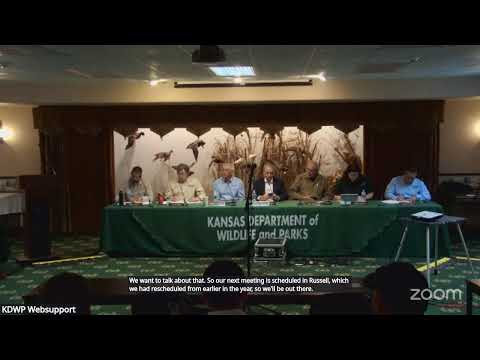
The proposal had drawn strong public input on both sides during the meeting at Flint Oak, with several residents, representatives of a newly formed Kansas Night Hunters Association and a former commissioner urging extension and others — including trappers, houndsmen and commenters concerned about impacts to denning females and public perception — urging restraint or no change.
Commission discussion covered public-safety and enforcement concerns, biological implications and access. Greg Kaiser, colonel of KDWP’s law enforcement division, said wardens had encountered enforcement challenges tied to nighttime activities but also noted many enforcement issues occur outside high-technology contexts. Biologists briefed commissioners that available modeling and research indicate extended hunting pressure is unlikely to drive statewide coyote population collapse; commissioners noted the need for continued monitoring.
Supporters of extending the season argued the current season is too short and limits landowner and hunter options for addressing fawn depredation and other conflicts caused by abundant coyotes. Justin (online commenter) representing the Kansas Night Hunters Association said the group wants safe, ethical night hunting and also proposed collaboration with the department on hunter-education content related to night hunting.
Opponents cautioned that extending the season into spring risks increased take of denning females and pups, could damage public perceptions of hunting, and might increase encounters with nonhunters and private-land users during summer-field activities. Public commenters asked for safeguards such as required education, a permit fee to fund enforcement, or a sunset review if the commission approved an extension.
After debate, the commission voted to extend the night-vision season as described and included the three-year sunset to require a reexamination of evidence and impacts. Roll call was recorded; the motion passed five to two.
Why it matters: Night-vision and thermal optics change how hunters can detect and take nocturnal species; extending the season affects when and where hunters and landowners may address depredation, and raises questions about enforcement, wildlife welfare and public perceptions.
What’s next: The new regulation includes a three-year sunset, after which the commission must re-examine data on enforcement incidents, harvest and population indicators. Commissioners and several commenters said they want the department to explore permit-fee structures and hunter-education modules to support enforcement and safety.