Get Full Government Meeting Transcripts, Videos, & Alerts Forever!
Get email alerts on the Waterfowl Seasons topic
No spam. Unsubscribe anytime.
Kansas commission keeps pintail limit at 1, retains 6-goose daily bag limit after public debate
Summary
After staff recommended changes that would have raised the Canada goose daily bag limit to eight and increased pintail limits, the Kansas Department of Wildlife & Parks Commission voted to keep the pintail daily bag limit at one and the Canada goose limit at six following public comment and commissioner discussion.
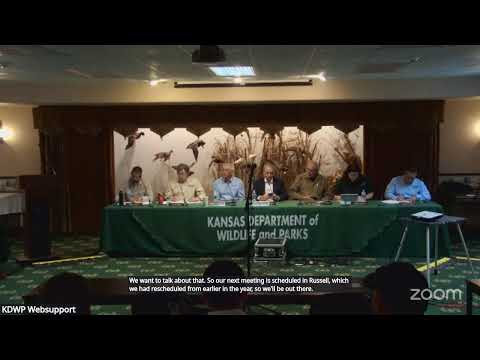
The Kansas Department of Wildlife & Parks Commission voted to retain the statewide daily bag limit of six Canada geese and to keep the pintail daily limit at one after public comment and commissioner debate at a meeting held at Flint Oak.
Staff presented recommendations and the federal context for the 2025–26 migratory game bird seasons, including U.S. Fish and Wildlife Service frameworks that set maximum bag and possession limits, earliest opening and latest closing dates, and other constraints. Staff told the commission the agency used structured decision tools and hunter surveys to develop the season dates and bag-limit recommendations.
In the briefing, staff recommended several changes for the coming seasons, including potentially increasing the daily Canada goose bag from six to eight and relaxing pintail restrictions to a three-bird bag in an experimental framework. Staff said federal frameworks allow states to adopt these options in the Central Flyway but noted biological and social tradeoffs.
Public commenters urged different outcomes. Mike Castelli said increasing the goose bag to eight would add “pressure on our private lands where the geese are mainly killed” and argued the change would favor commercial outfitters who post large harvest photos on social media. Perry Prosser, a lifelong resident of central Kansas, said he opposed increasing the Canada goose bag because the survey result favoring eight birds represented a small share of active goose hunters and the state’s recent survey sample was limited. Troy Sporer, a former commissioner, also urged the commission to maintain the six-bird limit and cautioned that higher bag limits can encourage commercial guiding.
Staff and commissioners discussed the available harvest and hunter-effort data, including federal Hunter Diary harvest reports and KDW&P survey results. Staff told the commission the department had sampled more than 21,000 resident hunters by email and received about 4,600 responses (roughly a 15% response rate), and that the Canada goose question drew about 2,073 responses; those responses showed 51% preferred an eight-bird daily limit while 35% preferred six. Staff also noted the frequency with which hunters actually achieve a six-bird limit is relatively small (estimated in the 10–15% range).
After discussion the commission moved, seconded and approved a motion to leave the pintail daily bag limit at 1 and the Canada goose daily bag limit at 6. The motion passed by voice vote; commissioners indicated consensus.
The commission did not change other season recommendations presented by staff at the meeting; staff noted final season submissions must meet the U.S. Fish and Wildlife Service deadlines for federal publication.
Why it matters: Daily bag limits and season dates shape hunter opportunity and can influence waterfowl distribution and hunter satisfaction. The decision keeps Kansas aligned with the more conservative approach favored by a sizable portion of resident hunters who spoke to the commission and in public comment.
What’s next: Staff will finalize state season dates consistent with federal frameworks and will publish the commission’s selections to meet federal deadlines. Commissioners and staff signaled they will continue to monitor population indices, harvest data and hunter preferences before future adjustments.