Get Full Government Meeting Transcripts, Videos, & Alerts Forever!
Get email alerts on the Transportation Infrastructure topic
No spam. Unsubscribe anytime.
Study funding shifted; Riley County backs focused US‑24 corridor work while local cost‑benefit analysis on second bridge remains county-led
Summary
Regional planning group and county staff described a split in funding for the US‑24 corridor study and a separate local cost‑benefit analysis for a proposed second connection between Manhattan and Blue Township. Commissioners indicated theoretical support for the refined funding split and asked staff to coordinate with neighboring jurisdictions.
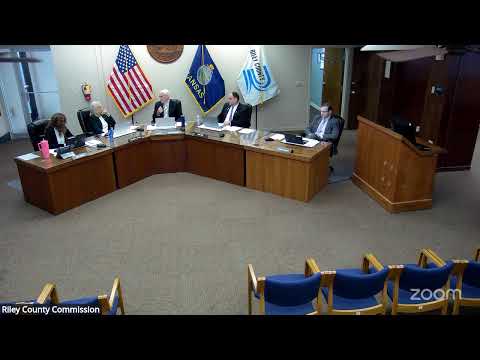
Jared Tremblay of the Flint Hills NPO briefed Riley County commissioners on April 24 about a two-part approach to studying improvements on U.S. Route 24 and the costs and benefits of a second connection across the river.
Why it matters: Residents and local officials have repeatedly raised the prospect of a second crossing to relieve congestion on the existing US‑24 bridges. The newly planned cost‑benefit analysis would quantify traffic diversion, hydrologic impacts, and preliminary cost estimates to help local jurisdictions understand trade-offs.
Tremblay presented a plan that splits the work into (1) an updated corridor study along US‑24 (segments A–C) and (2) a locally led cost‑benefit analysis for a new connection (segment D). He said Kansas Department of Transportation (KDOT) reallocated about $97,000 away from the cost‑benefit piece and toward the corridor study because KDOT’s priority is the national highway system. That reallocation leaves the NPO and local partners responsible for funding the local cost‑benefit analysis.
Tremblay said the corridor work still totals roughly $133,300 in preliminary estimates with KDOT covering most of the corridor portion; the local analysis cost was estimated near $17,050. He described how travel‑demand models for 2050 would be used to estimate how many vehicles each option would divert from US‑24 and to show congestion and hourly effects.
Commissioners said they preferred work that prioritized the segment that most affects Riley County and supported moving the local funding to the corridor study while retaining a separate, locally funded cost‑benefit analysis to examine a second connection. No funding commitment was taken at the meeting; Tremblay said he would seek consensus with Pottawatomie County and KDOT and return with interlocal agreements and an RFP for consultants.
Tremblay emphasized the value of the traffic modeling: the cost‑benefit work will show whether a new connection would remove thousands of vehicles from US‑24 or have only modest effects, and it will allow the county and partners to compare options and build realistic cost expectations before any major capital request.
Next steps: The Flint Hills NPO will continue interlocal coordination with Pottawatomie County and KDOT and, if partners concur, release an RFP for the cost‑benefit analysis. The county did not approve funding at the April 24 meeting.