Get Full Government Meeting Transcripts, Videos, & Alerts Forever!
Get email alerts on the Veterans Grants Mvaa topic
No spam. Unsubscribe anytime.
Counties say MVAA grant recalculation forced staff cuts, curtailed outreach and prompted calls for audit
Summary
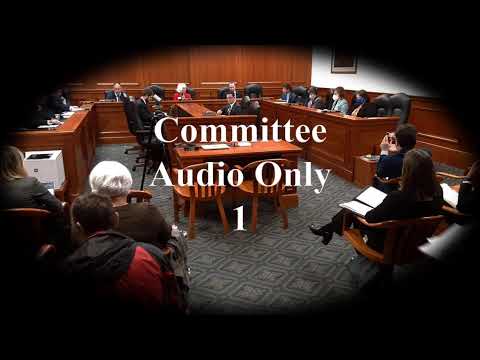
Directors of county veteran service offices told a Michigan House appropriations subcommittee on March 18, 2025, in Lansing that a midcycle recalculation of the County Veterans Service Fund by the Michigan Veterans Affairs Agency (MVAA) reduced FY25 awards, forced layoffs or the cancellation of outreach programs, and added burdensome reporting requirements.
Directors of county veteran service offices told a Michigan House appropriations subcommittee on March 18, 2025, in Lansing that a midcycle recalculation of the County Veterans Service Fund by the Michigan Veterans Affairs Agency (MVAA) reduced FY25 awards, forced layoffs or the cancellation of outreach programs, and added burdensome reporting requirements.
The testimony repeatedly linked the cuts and new reporting to immediate impacts on services for veterans, particularly in rural areas such as the Upper Peninsula. "We would most definitely like to have the money that's being cut brought back to us because our county and multiple counties in the UP . . . are cutting programs," Ramon Baca, director of Livingston County Veterans Services, told the panel.
Why it matters: County veteran service offices (VSOs) say the grant pays front-line staff, funds transportation to VA medical care in remote counties, and supports outreach that connects veterans to federal benefits. Witnesses said the MVAA change removed a longstanding $50,000 training reimbursement and reduced individual county awards by tens of thousands of dollars in some cases, undermining offices’ capacity to help veterans file claims and handle emergent needs.
County officials described concrete losses. Maureen Adams, director of the Veterans Service Office in Berrien County, said her county's FY25 award was reduced by $55,000 (about 41.8%), a cut that threatened a full-time support position her office had requested. Adams described client cases she said demonstrate the grant's downstream effects: a terminally ill veteran who applied for benefits because the county office was open, and a 101-year-old World War II veteran whose claim the county helped correct, producing a six-figure retroactive payment.
Several witnesses said the MVAA eliminated the separate $50,000 training reimbursement fund that counties historically used to pay continuing-education costs for accredited county veteran service officers. "Having the MVAA pull that money away from our service officers for training means that they now have to go into their budget and take that money out of a budget that's already going to be reduced," Denise Formolo of Dickinson County told lawmakers.
Wexford County's new director, Chris Edmonson, said he learned of FY26 application deadlines only after they had passed; his March 13, 2025, letter of intent was denied and he said he has received no update on the county's grant status despite multiple appeals. Amy Pocan, legislative officer for the Michigan Association of County Veteran Counselors (MACVC) and a county director, asked the Legislature to approve an attorney general audit of the County Veterans Service Fund and to restore the training reimbursement line.
Counties also criticized a shift to monthly financial reporting. Several witnesses said monthly reporting would divert staff time from direct service. "For me to sit there and spend three hours once a month getting all the paperwork for MVAA and then three months down the road for the quarterly report, redoing another whole set of reports for them, it doesn't make sense to us," said Denise Formolo.
MVAA officials acknowledged the recalculation and said the agency corrected the error. An MVAA representative told the committee the agency is moving to monthly financial reporting for the grant to spread workload across the year and reduce end-of-cycle bottlenecks. The agency said it has reorganized its grants team and added grant-focused staff to handle the workload.
County directors offered policy fixes: restore FY25 funding to original planned levels, reinstate the training reimbursement, approve Wexford County's FY26 letter of intent because of the new director's extenuating circumstances, and require MVAA to honor original grant terms. Amy Pocan asked the committee to "support an attorney general's audit of the county veteran service fund as well as an investigation into the removal of the county training reimbursement fund."
Panel members expressed bipartisan concern and asked MVAA to seek ways to make counties whole. Representative Rogers said MVAA "does a lot of work" but acknowledged the reporting concerns; other members pressed MVAA on whether staff numbers and processes were sufficient to handle monthly reporting.
No formal votes or committee actions were recorded on the recalculation, audit requests or funding restorations during the hearing. Witnesses and lawmakers left the panel with competing requests: counties seeking immediate funding relief and restoration of training support, and MVAA emphasizing corrected calculations and internal staffing changes to administer the grant program going forward.
The committee hearing included testimony from county directors across Michigan, including directors representing heavily rural counties in the Upper Peninsula, which witnesses said rely heavily on the grant for staff and outreach. Witnesses noted federal statutes and recent federal laws — including the Blue Water Navy provisions, the PACT Act and the Elizabeth Dole-related veterans legislation — have increased the complexity of benefits work and the continuing-education needs of county VSOs.
The hearing ended with lawmakers asking MVAA to return with additional details on its recalculation, its plans for monthly reporting, and options to make counties whole in the FY cycle. Several county witnesses said they will press for legislative remedies during ongoing appropriation deliberations.