Lifetime Citizen Portal Access — AI Briefings, Alerts & Unlimited Follows
Michigan soybean group urges tax credits to expand biodiesel made from state soy oil
Loading...
Summary
Michigan Soybean Association told the House Agriculture Committee it will introduce a bill to create retail and producer tax incentives for biodiesel made from Michigan-grown soybean oil, arguing the policy would create domestic demand, reduce emissions and support farm incomes.
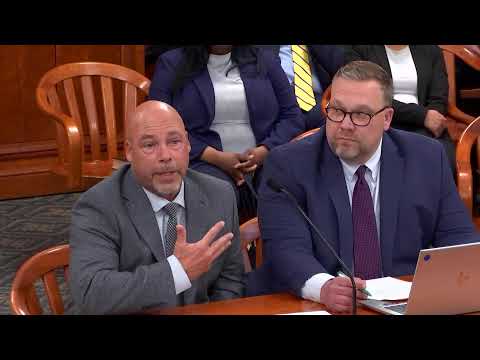
Ben Steyer, CEO of the Michigan Soybean Association, told the Michigan House Agriculture Committee that his group will introduce legislation to create tax incentives for biodiesel made from Michigan-grown soybean oil.
The bill, Steyer said, would create retail and producer tax credits modeled after other Midwestern states and is the association’s top legislative priority this session. "In the coming weeks, we'll be introducing a bill that will create tax incentives for biodiesel," Steyer said to the committee.
The nut of the proposal is to expand a domestic market for soybean oil used in biodiesel and related bioproducts. Steyer and Larry Phelps, president of the Michigan Soybean Association and a fifth-generation Michigan farmer, argued a local biodiesel market would stabilize demand for soybeans amid export uncertainty and reduce greenhouse-gas emissions from diesel fleets.
According to testimony, the draft bill would mirror incentives used elsewhere: a retail credit of 2 cents per gallon for B6–B9 blends, 5 cents per gallon for B10–B19 blends and 7 cents per gallon for blends above 20 percent biodiesel. Producers would be eligible for a 2-cent-per-gallon production incentive. The proposal described a six-year sunset for incentives, a $16 million cap for retailers and a $2 million cap for producers, with credit allocations distributed across program participants.
Steyer told the committee a recent survey of roughly 250 Michigan fuel retailers found only three stations carrying blends between B5 and B20, and he argued a tax-incentive program would increase retail availability. He said the association modeled the bill on legislation in Missouri and noted that Iowa, Minnesota, Nebraska and Illinois already incentivize or mandate biodiesel blends; Indiana, Kansas, Wisconsin and Ohio were described as working on related legislation.
Phelps described soy’s role in both food and industry. "Soybean protein makes up about 80% of the bean," Phelps said, and the remainder — the oil — can be used in applications ranging from food to biodiesel. He told the committee that crushing soybeans produces meal used in livestock feed and oil that can be processed into biodiesel in-state, creating a local supply chain.
Committee members asked about retail readiness, engine compatibility, winter blending and whether biodiesel raises costs for consumers. Steyer said other states with incentives have expanded blends at retail and that incentives should make biodiesel price-competitive at the pump. Phelps said quality standards and industry practices have improved since earlier problems with biodiesel, and that many fleets use biodiesel successfully.
Some members also raised broader concerns about land use and farm economics. Representative Alexander noted that used cooking oil from restaurants and oils reclaimed by local processors already feed regional biodiesel plants, and several members questioned whether market incentives might shift crop rotations or otherwise change farmland use. Phelps said most farmers retain diversified rotations (corn, soybeans, wheat) and that modest shifts are typical in response to market conditions but do not typically convert all acreage to a single crop.
The Michigan Soybean Association said it will seek bipartisan cosponsors and follow the committee process when the bill is formally introduced next week.
Ending: The committee did not take a vote on the biodiesel proposal during the hearing; members heard the presentation, asked questions and were told the association will submit the bill for formal introduction and committee consideration.