Get Full Government Meeting Transcripts, Videos, & Alerts Forever!
Get email alerts on the Affordable Housing topic
No spam. Unsubscribe anytime.
Planning commission approves 203‑unit Sonora Homes affordable housing project by Abode Communities
Summary
The Planning Commission conditionally approved Sonora Homes, a 203‑unit, income‑restricted development on roughly 8.87 acres at Fred Waring Drive and Hoover Avenue that includes an early childhood education center and phased delivery of amenities.
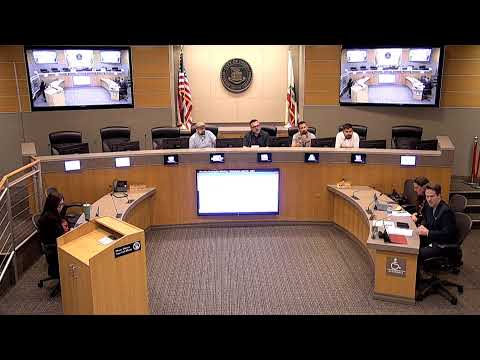
The City of Indio Planning Commission on April 23 voted to conditionally approve Sonora Homes, a 203‑unit affordable housing development proposed by Abode Communities, adopting Resolution No. 2108 and approving Case File PRD240007.
Assistant Planner Nicolas Sweetron told commissioners the project site is about 8.87 acres at the southeast corner of Fred Waring Drive and Hoover Avenue and is designated Mixed Use Neighborhood in the City of Indio General Plan 2040. The proposal comprises 12 residential buildings ranging from one to four stories, with 1‑, 2‑ and 3‑bedroom units proposed and a total density of about 23.39 units per acre. All units are proposed to be income restricted to households at or below 80% of area median income. The design includes a centralized community hub, landscaped paseos, and an early childhood education (ECE) facility and playground on the southeast corner.
Abode Communities’ project team described a three‑phase buildout: Phase 1 (about 107 units on 5.28 acres and the central community space), Phase 2 (96 units on roughly 2.33 acres), and Phase 3 (the ECE facility and community room on about 0.89 acres). Staff recommended conditions requiring that key resident amenities be completed in tandem with occupancy: the community and laundry rooms in Phase 1 must be operational prior to issuing certificates of occupancy for more than 50% of Phase 1 units, and the early childhood education facility must be completed before more than 50% of that phase is occupied.
Project architects said the buildings step down in scale toward adjacent single‑family neighborhoods, use drought‑tolerant landscaping that complies with the Unified Development Code, and include covered parking (solar carports or tree canopies). Staff said the project is consistent with the General Plan and the Unified Development Code and is exempt from further CEQA review under CEQA Guidelines section 15183 as consistent with the city's certified program EIR. The staff report noted the development includes about 297 surface parking spaces.
Abode Communities’ representative Bridal O'Donnell described the nonprofit as experienced in affordable housing and said the team is pursuing state funding through the Affordable Housing and Sustainable Communities (AHSC) program to help deliver pedestrian and mobility improvements in the surrounding neighborhood. Architect Kristin Cosgrove outlined the project's massing, materials and the proposed schedule; the applicant said the first phase aims for funding closure by early–mid 2026 with construction of Phase 1 expected to begin at the end of 2026, contingent on financing.
Public comment included more than a dozen in‑person speakers who expressed support; staff noted 243 letters of support had been received and provided to the commission. Commissioners asked about unit counts per building, operator plans for the ECE center and whether the ECE would serve the broader Indio community; Abode representatives said the center is intended to be open to the public and that operators would be selected via an RFP.
Vice Chairperson Rodriguez Seja recused themself from this item because their planning and design firm prepared the landscape plan; the commission approved Resolution No. 2108 on roll call with Commissioners Santos and Ortiz and Chairperson Fajardo voting yes. The motion carried and the item was conditionally approved. Staff noted conditions of approval are binding and infrastructure and staging must comply with the conditions prior to occupancy.