Get Full Government Meeting Transcripts, Videos, & Alerts Forever!
Get email alerts on the Child Protection Services topic
No spam. Unsubscribe anytime.
Josephine County gives informal OK to transition Children's Advocacy Center into nonprofit; staff asked to prepare formal proposal
Summary
County commissioners agreed without objection to let staff pursue a formal plan to convert the county-run Children's Advocacy Center into a nonprofit entity. The CAC manager said nonprofit status will broaden grant opportunities; staff and legal counsel will address PERS, union and records issues during the transition.
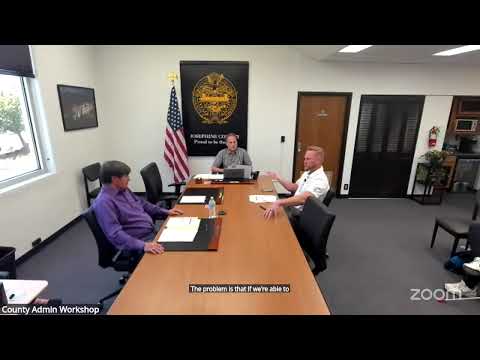
Josephine County commissioners on Tuesday gave staff informal direction to proceed with plans to convert the county-run Children's Advocacy Center into a nonprofit organization and asked staff to return with a formal proposal and feasibility package.
Carrie Compton, the CAC manager, told the board the Josephine County center was the first in Oregon when it began in 1987 and that it currently provides forensic interviews, medical exams and therapy, coordinating a multidisciplinary response with law enforcement, child welfare and the district attorney’s office. “Those interviews are structured in a very particular way so as to kind of mitigate any secondary or overlapping trauma,” Compton said.
Compton and other staff told commissioners that becoming a nonprofit would open additional foundation and grant funding streams and reduce the county’s ongoing general-fund contribution. Staff provided a preliminary budget snapshot showing about $38,000 in reduced ISF costs and a roughly $150,000 reduction in the county general-fund contribution if the CAC moves off county payroll and to a nonprofit model. The CAC building itself, staff said, was developed through a capital campaign that raised about $1.2 million with county ARPA funds, local donors and foundations; the building is currently held by the nonprofit "Friends of the CAC." Staff said the CAC serves roughly 200 forensic kits a year.
Legal counsel cautioned that several steps remain before a transition is final. Leah, county legal counsel, told commissioners the county must contact the Public Employees Retirement System to verify whether PERS would continue to cover transferred employees; she said that inquiry can take weeks. County staff also flagged potential bargaining and benefits issues: staff said state law and county process require that employees’ pay and benefits be preserved for at least one year after transfer, and that the union has been engaged in preliminary discussions and “doesn’t see a lot of things that are going to get in our way.”
Commissioners asked about record custody and property. Staff said that most furnishings had been purchased by the Friends board and that the county owns technology infrastructure which could be reclaimed; staff also said the county would retain records created up to the transfer date and would remain custodian of historical records.
The board asked staff to prepare a formal proposal detailing costs, inventories, union and PERS implications, and a timeline aiming for a June transition. Commissioner Bleck moved to approve proceeding; legal counsel then began preliminary steps regarding PERS. The board recorded no formal roll-call vote; the chair noted the item would move forward “without objection.” Staff will compile the feasibility package and return to the board for formal approval.