Get Full Government Meeting Transcripts, Videos, & Alerts Forever!
Get email alerts on the Minor Forensic Exams topic
No spam. Unsubscribe anytime.
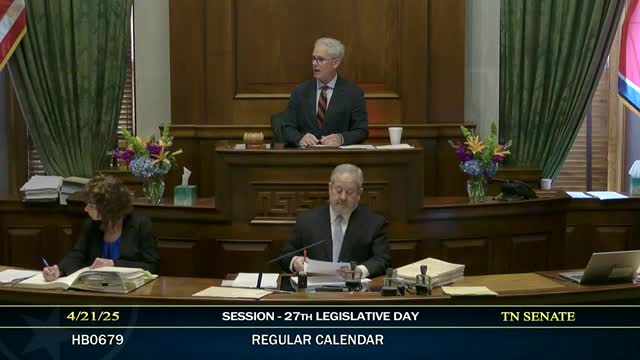
Senate refers bill on minor sexual-assault forensic exams back to judiciary committee after floor questions
Summary
Senate members debated a bill clarifying that minors may receive medical forensic exams without parental consent; questions about parental notice and process led to a successful motion to return the bill to judiciary committee for further review.
NASHVILLE — The Tennessee Senate considered a bill to clarify that minors may obtain a medical forensic exam (often called a “rape kit” or sexual-assault exam) without parental consent. Floor discussion included questions about the scope of the authority, parental notice, and the circumstances in which an examiner could proceed.
Senator Campbell, sponsor of the House substitute being considered on the floor, said the change is intended to ensure minors who seek time‑sensitive forensic exams can access them. “Minors should never be denied access to a medical forensic exam,” Campbell said on the floor, and the measure also extended existing reporting requirements for the Tennessee Bureau of Investigation on exam-processing timelines.
Several senators raised concerns about parental notification and the potential for trauma if an examination occurred without parents’ knowledge in situations where allegations involved other minors or were disputed. Senator Lowe described an example in which a young elementary-school child could be removed for an exam in a situation that might later be determined to be noncriminal; he asked whether parents would be notified if a minor were examined. Campbell replied the bill “clarifies that it is legal” for an exam to proceed in certain circumstances and that the bill seeks to protect access to time-sensitive evidence.
Following floor discussion, Senator Taylor moved to send the bill back to the judiciary committee for further consideration. By voice vote requested as a roll-call, the motion to refer prevailed: the clerk recorded Ayes 24; the bill was sent back to the Senate Judiciary Committee for further work.
Next steps: The bill will be reconsidered in committee; sponsors and opponents told the Senate they wanted additional review of procedural protections and clarity about when exams may proceed without parental consent.