Lifetime Citizen Portal Access — AI Briefings, Alerts & Unlimited Follows
U.N. briefing: Gaza aid blocked for more than 50 days; UN reports mass displacement in Haiti, major floods in Bolivia and civilian casualties in Ukraine
Loading...
Summary
At a U.N. press briefing, the spokesperson reported that hostilities in Gaza have halted aid flows for over 50 days and described mounting humanitarian needs across Gaza, Haiti, Bolivia and Ukraine, citing disrupted services, displacement and rising malnutrition.
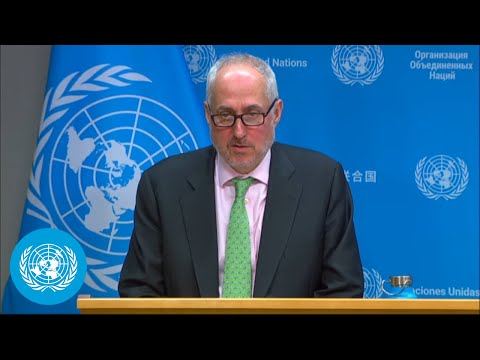
Hostilities across the Gaza Strip have continued to take a “devastating toll on civilians and critical infrastructure,” and humanitarian supplies have not entered Gaza for more than 50 days, United Nations spokesperson Eddy Lederer said on April 22, 2025.
Lederer said local authorities reported recent strikes that hit heavy machinery, halting solid‑waste and rubble‑removal operations. He said partners report work at Al Shifa Hospital in Gaza City to install a desalination plant to serve dialysis patients and that several people with severe acute malnutrition were admitted to hospitals this week.
“Some 80 community kitchens in Gaza continue to operate every day,” Lederer said, but he warned many of the kitchens are at imminent risk of closing because stocks and cooking gas are being depleted. He said families in Gaza have been resorting to burning plastic to cook meals and that fuel depots in Rafah and in northern Gaza are inaccessible because they lie in areas where humanitarian movements must be coordinated with Israeli authorities.
On a positive note, Lederer said humanitarian partners rehabilitated a temporary dumping site in Alberish, which should reduce health risks in that area and the wider Darroballah area.
Turning to Haiti, the U.N. office reported a surge in armed violence that displaced more than 51,000 people in parts of the country’s Center Department during the first half of April. The International Organization for Migration, cited by the U.N., said 95 newly established informal sites now shelter more than 12,500 people and that many displaced people remain in their home department. The spokesperson said schools in Mirabale and Souda are closed and that more than 30 schools in neighboring communes are being used as temporary shelters.
Lederer said the Pan American Health Organization supported five awareness sessions and delivered 1.5 metric tons of emergency health kits — equipment the spokesperson said was enough for 50 surgeries and more than 1,000 consultations. UNICEF has sent medical and hygiene supplies, and government partners are providing water trucking to displacement sites in Ash, the spokesperson added. Protection needs — particularly among women, children and people with disabilities — are rising, the U.N. said.
In Bolivia, the U.N. resident coordinator and partners reported major flooding. The U.N. said 55 people have died, roughly 6,000 homes have been destroyed and more than 9,000,000 hectares of land remain flooded. Nearly 700,000 people have been directly affected, with indigenous and rural communities disproportionately hit. The U.N. said roughly $103 million (USD) is required to respond to the crisis. The U.N. Emergency Relief Coordinator released $1 million from the Central Emergency Response Fund to begin life‑saving assistance; the spokesperson did not specify the beneficiary count targeted by that release.
Finally, the U.N. updated members on civilian suffering in Ukraine. U.N. humanitarian colleagues reported nearly 190 civilian casualties between April 18 and the briefing date. The most severe recent attack occurred in Kharkiv, and frontline areas in Kherson and Donetsk continue to be hit, the spokesperson said. The U.N. reported evacuations of nearly 50,000 people from frontline areas, including more than 6,700 children and about 480 people with limited mobility.
Lederer said U.N. partners continue to scale up responses despite access constraints and security risks.