Get Full Government Meeting Transcripts, Videos, & Alerts Forever!
Get email alerts on the Water Affordability topic
No spam. Unsubscribe anytime.
Senate committee advances bill to create statewide low‑income water rate assistance program
Summary
SB 350 would establish a statewide low-income water rate assistance program with auto-enrollment tied to existing energy CARE data, and allow local programs to continue if they meet or exceed state standards.
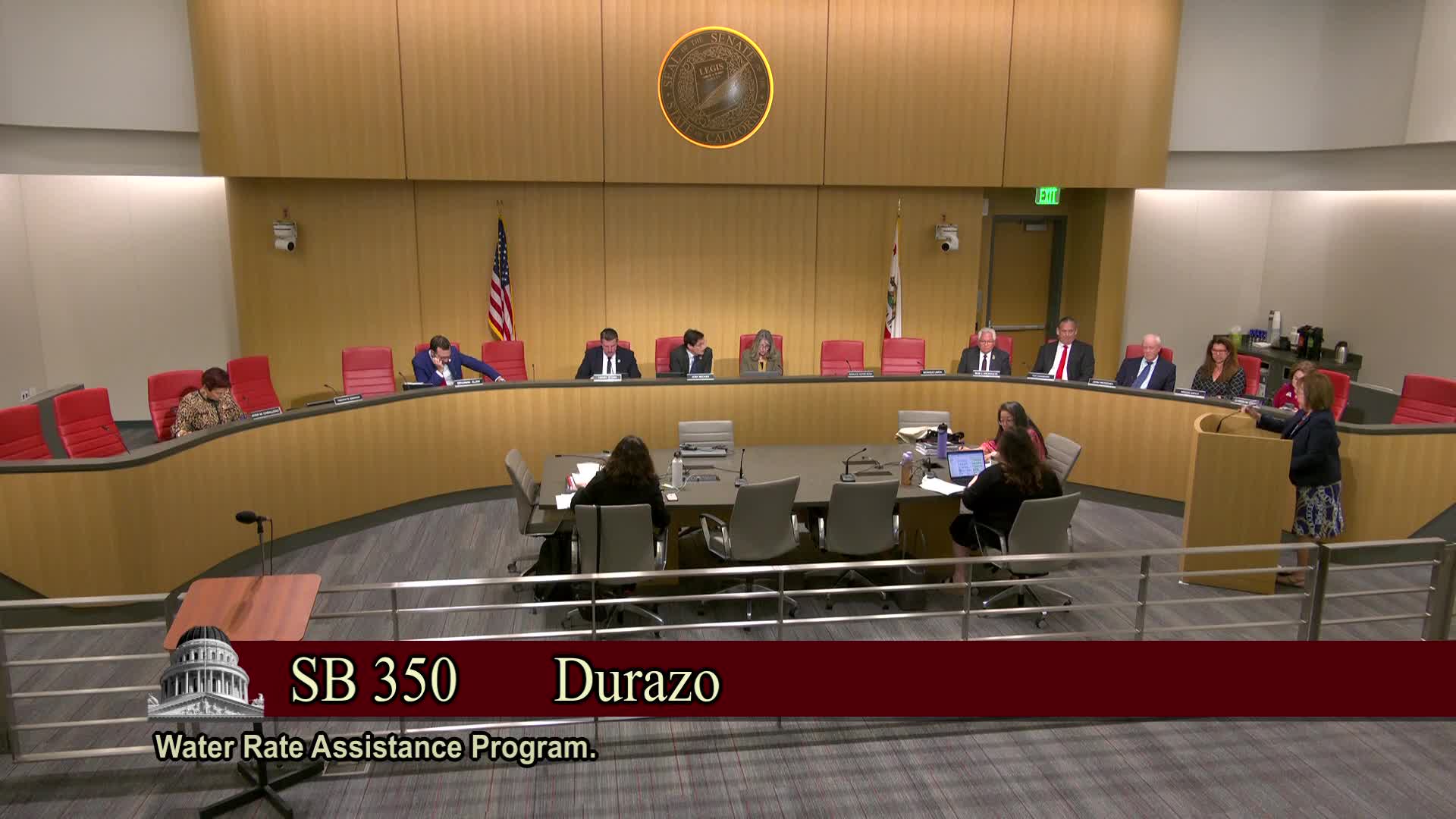
The Senate Committee on Energy, Utilities and Communications advanced SB 350 on Tuesday, a bill to create the state’s first statewide low-income water rate assistance program. The measure would automatically enroll eligible households using data from California’s existing low-income energy assistance program (CARE) and aim to preserve local affordability programs that meet or exceed the statewide benefits.
Author Sen. María Durazo said water affordability has become a statewide crisis: "No family should have to choose between eating lunch and providing her children with drinking water," she said, noting water bills in some systems rose more than 24 percent in five years.
Michael Claiborne, directing attorney at Leadership Counsel for Justice and Accountability, told the committee that many water systems either lack affordability programs or enroll only a small share of eligible households. Claiborne said the bill draws on recommendations from earlier legislative reports and the 2015 AB 401 process and would expand enrollment and funding for local systems.
Michael Rincon of Physicians for Social Responsibility testified to public-health impacts of unaffordable water, citing stress and worse health outcomes when households fear shutoffs. Multiple environmental-justice and public-health groups testified in support.
Water agencies and major statewide associations did not oppose the concept but raised implementation concerns. The Association of California Water Agencies said its stance is "not philosophically opposed" and urged the authors to streamline the program, preserve effective local programs, and consider removing wastewater from the initial scope because wastewater billing practices differ and would complicate crediting. The California Municipal Utilities Association urged clear delineation of local roles and an identified funding source.
The author and sponsors said they will continue working with the water sector to preserve successful local programs, ensure equitable funding and develop an implementation path. Committee members pressed for clarity on funding; the author said a funding source has not yet been finalized and implementation would be subject to appropriation.
The committee passed SB 350 as amended, advancing it to the Senate Appropriations Committee; the committee recorded a 63–0 (recorded 63) vote and left the roll open for absent members.