Get Full Government Meeting Transcripts, Videos, & Alerts Forever!
Get email alerts on the Planning Transparency topic
No spam. Unsubscribe anytime.
Developers warn public meetings for waiver and variance requests would slow approvals; council hears both sides
Summary
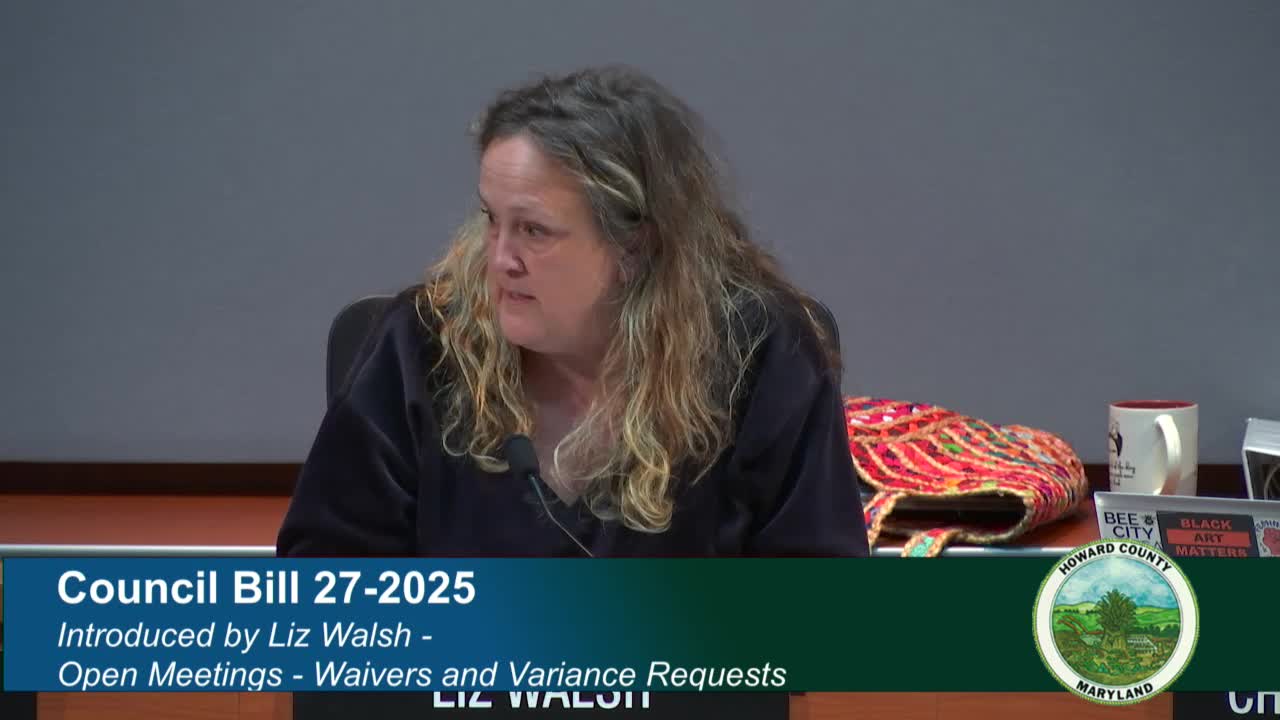
Councilmember Liz Walsh introduced a bill to make certain waiver and variance decisions subject to the Open Meetings Act. The Maryland Building Industry Association opposed the change, saying early technical reviews would be politicized and delay projects; supporters said transparency is needed, especially for projects affecting Ellicott City.
Councilmember Liz Walsh introduced a measure (CB 27‑20‑25) proposing that certain waiver and variance deliberations be subject to the state's Open Meetings Act, and public witnesses offered sharply divided views at the April legislative public hearing.
Alex Andelsman, testifying on behalf of the Maryland Building Industry Association (MBIA), argued that waiver and variance reviews are early, technical steps in project feasibility and that adding public meetings would "slow that process without improving its integrity." He said such early‑stage decisions help developers determine whether projects are viable and that the public already has opportunities to review and appeal later approval steps.
Joel Horwitz testified in favor of greater transparency and asked the council to set effective dates or celebrations tied to symbolic actions; Horwitz said making waiver decisions public would help residents track developments and raised concerns about phased applications in sensitive areas such as the Old Ellicott City watershed.
Councilmember Walsh said the bill grew from concerns that the current administrative waiver process can effectively circumvent planning rules and that decisions affecting sensitive sites should not be opaque. No final action on CB 27 was recorded at the hearing; council members asked staff to review the bill's potential impacts and legal implications.