Get Full Government Meeting Transcripts, Videos, & Alerts Forever!
Get email alerts on the Agriculture Equity Black Farmers topic
No spam. Unsubscribe anytime.
Proposal seeks $2.5 million to help Black farmers, veterans buy equipment and build capacity (SF2473)
Summary
Senate testimony supported a $2.5 million fiscal‑year‑2026 request to fund equipment and cooperative structures for Black farmers and veterans, and related incubator and training projects aiming to address historic disparities in land access, equipment and markets.
Senator Nick Hoffman introduced an informational proposal April 21 seeking a $2,500,000 appropriation in fiscal year 2026 to the Minnesota Department of Agriculture to fund grants to the Minnesota Black Farmers Association and related cooperative efforts. The request is intended to help cooperatives of Black veteran farmers and other Black and immigrant farmers purchase modern equipment (for example skid steers and tractors with attachments) and to support shared‑use models and training.
Julius Cochran and Angela Dawson provided historical and on‑the‑ground context. Cochran recounted the history of Black farmers' contributions and the systemic barriers to land, credit and equipment since the 19th century, saying Black farmers face discrimination and limited access to capital that contributed to a decline in Black land ownership. Dawson, a fourth‑generation farmer and descendant of families who settled in Fergus Falls, described practical barriers she and other Black and immigrant farmers face in Minnesota and urged investment to help them participate fully in the state's agricultural economy.
Witnesses and proponents framed the request as an equity and resilience measure: testimony described cooperative ownership models, mentorship, and the goal of preventing land loss by making farms financially viable. Julius Cochran said the equipment fund would help farmers gain "autonomy over our land" by enabling them to do work—mowing, baling hay, and harvesting—without relying on neighbors who capture profits from sales.
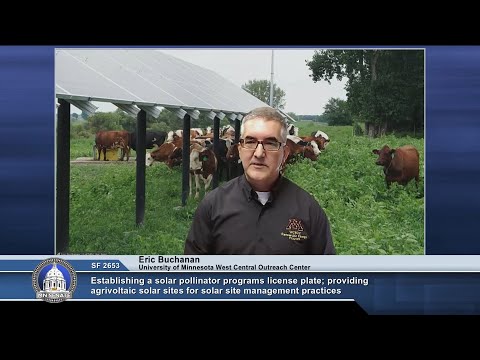
Several organizations told the committee about existing incubator and training programs that would expand with state support. Karen Clark of the Women's Environmental Institute described the organization's long‑running incubator work teaching organic farming, food processing and marketing, and said state funding would expand infrastructure and processing capacity. Testimony from the Food Group and the Big River Farms incubator described a pilot where emerging farmers worked between solar panels and on other co‑located projects to gain longer leases and land access.
Michael Cheney, an urban‑farming advocate, and Michael LeVold and others testified about workforce development and infrastructure for emerging and urban farmers. The Somali American Farmers Institute (SAFI) and individual immigrant farmers described difficulties acquiring and holding land and the value of incubator access to equipment and training while they build toward ownership.
Sponsor Senator Hoffman and the testifiers framed the request as modest relative to needs and as an investment to increase inclusion in Minnesota's agriculture economy. Committee members were given time for questions; the hearing was informational and no formal action was taken.