Get Full Government Meeting Transcripts, Videos, & Alerts Forever!
Get email alerts on the Archives topic
No spam. Unsubscribe anytime.
UNESCO adds UN archives, Geneva Conventions and 73 other collections to Memory of the World Register
Summary
UNESCO’s Executive Board approved 74 new inscriptions to the Memory of the World Register, including the UN archives that document the drafting of the Universal Declaration of Human Rights and the Geneva Conventions, UNESCO’s Memory of the World director said at a noon briefing.
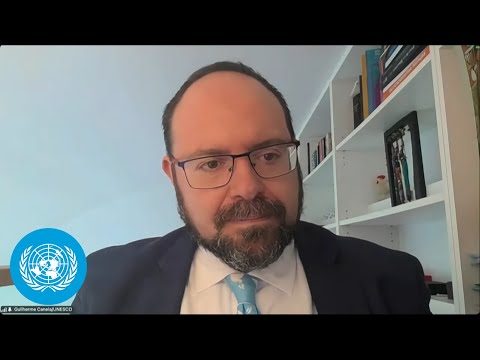
UNESCO’s Executive Board approved 74 new inscriptions to the Memory of the World Register, including the United Nations archives that document the drafting of the Universal Declaration of Human Rights and the Geneva Conventions, Guillermo Canela de Souza, director of UNESCO’s Memory of the World Programme, said at a noon briefing.
The Memory of the World Register is a UNESCO inventory of documentary heritage that the agency says helps preserve and provide access to records essential to “the free flow of information and ideas.” Canela de Souza said the newly inscribed collections were proposed by 72 countries and four international organizations and expand the register’s holdings to about 570 collections and items.
The newly inscribed collections cited by Canela de Souza at the briefing include: the United Nations archives and official documents related to the International Bill of Rights (which encompass the Universal Declaration of Human Rights); the Geneva Conventions and their protocols; the 1991 Windhoek (Vinduk) Declaration on promoting an independent and pluralistic African press; the historical archives of the International Bureau of Education; legacy collections of the International Meteorological Organization (predecessor of the World Meteorological Organization); and documents related to the founding of the Association of Southeast Asian Nations (ASEAN).
Why it matters: documentary records cited in the announcements cover foundational instruments of modern international law, human-rights practice and multilateral cooperation. Canela de Souza said the register’s role is to preserve those documentary records and increase public access so they can continue to inform legal frameworks, scholarship and public debate.
Canela de Souza described the Memory of the World Register with an analogy: "If we want to understand the human journey in this planet, it’s a good start to look into the Memory of the World Register," and listed examples already on the register, from Beethoven’s Ninth Symphony manuscripts and the archives of Nelson Mandela’s trial to film holdings such as The Wizard of Oz, and papers of educator Paulo Freire and scientist Isaac Newton.
Selection and preservation: Canela de Souza said nominations are submitted by UNESCO member states or international organizations and evaluated under published rules. "The nomination process is open every two years," he said, adding that an international committee of experts representing world regions assesses nominations and that the Executive Board endorses the committee’s recommendations. He said nominators commit to the register’s three pillars—preservation, access and awareness—and that UNESCO provides capacity-building and, where requested, targeted support for preservation and digitization efforts.
Access and digital availability: Canela de Souza said summaries for the register’s roughly 570 entries are publicly available on UNESCO’s Memory of the World website and that several items have been digitized. He noted that the UN archives’ nomination includes digitized materials related to the drafting process for the Universal Declaration of Human Rights.
Next steps: Canela de Souza said UNESCO will soon open the call for the next nomination cycle. He invited researchers and the public to consult the online register for full descriptions and nomination files, which include statements of significance and preservation commitments.
The briefing did not include formal votes or policy changes beyond the Executive Board’s endorsements of the inscriptions, and no additional funding commitments or implementation timelines were announced at the briefing.