Get Full Government Meeting Transcripts, Videos, & Alerts Forever!
Get email alerts on the Airport Security topic
No spam. Unsubscribe anytime.
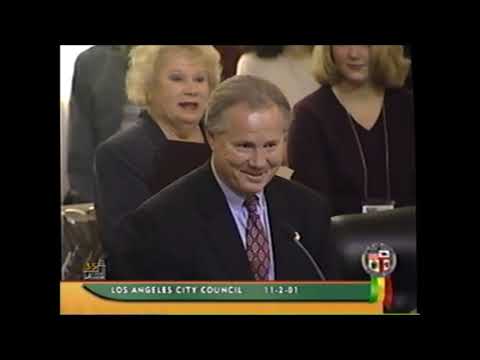
Los Angeles City Council urges federal action to standardize airport screening, backs federalized screeners
Summary
The City Council voted to back federal legislation calling for screening of all checked baggage, federal oversight or federalization of passenger-screening workers and rapid deployment of federal checkpoint supervisors following the Sept. 11 attacks.
The Los Angeles City Council on Nov. 2 voted to urge Congress and the White House to adopt federal standards for airport screening, including mandatory screening of all checked domestic baggage and federal oversight — up to federal employment — of passenger-screening personnel.
The measure, backed by Councilmember Richard Weiss and moved by Councilmember Nate Holden, says the council supports the Senate approach that would federalize screening personnel but also asks federal lawmakers to provide funding for security upgrades, including trials of facial-recognition and related technologies at Los Angeles International Airport (LAX) and for rapid deployment of federal checkpoint supervisors while longer-term changes are implemented.
The motion’s supporters said the vote was prompted by concerns about inconsistent screening standards under privately contracted screeners and by Congress’ split responses in the immediate aftermath of the Sept. 11 terrorist attacks. “We absolutely must have federal legislation that requires that all domestic checked baggage be screened prior to it being placed on airplanes,” Councilmember Richard Weiss told colleagues. Weiss also urged federal funding for technology pilots at LAX.
Councilmember Nate Holden, who made the motion on the floor, urged colleagues to press for the Senate’s federalization approach and said the city should be willing to accept federal costs or surcharges tied to any new federal employment model. “We cannot put dollars before safety,” Holden said during debate.
Councilmember Eric Garcetti and others said the city’s objective is to move forward quickly with measures that can be implemented before any full federalization is completed, urging interim steps such as placing federal checkpoint security supervisors at screening locations. Several council members and airport officials said even if Congress adopts a federalized model it will take months to recruit, screen and train employees, so federal supervisors under short-term deployment could provide earlier oversight.
Representatives from the City Legislative Analyst’s office and airport police briefed the council on differences between the House and Senate proposals then under consideration in Washington: the Senate text would make screeners federal employees; the House version would keep them employed via contract but with federal standards and oversight. City officials said a conference committee was expected to reconcile the bills.
After several hours of debate the council adopted the measure (vote recorded 13 ayes, 0 no, 1 member absent). The council asked the mayor’s office and the city’s federal advocates to deliver the city’s position to members of Congress and the White House and to press for both near-term federal supervision at checkpoints and eventual statutory changes to standardize screening nationally.
Supporters said the action was intended both to press for national standards and to give the city leverage to work with the airport commission and airlines to accelerate practical safety improvements at LAX. The measure directs the mayor’s office to transmit the council’s resolution to congressional leaders and the president.