Get Full Government Meeting Transcripts, Videos, & Alerts Forever!
Get email alerts on the Signage Ordinance topic
No spam. Unsubscribe anytime.
City planning staff begin comparative review of Erie sign ordinance; EAC invited to advise on design and illumination
Summary
Hannah Oluski, the City of Erie neighborhood resource coordinator, reported to the Environmental Advisory Council that she is reviewing the city's short sign ordinance and conducting a field survey; staff plan to use consultants for technical assistance and will return with draft recommendations in one to two months.
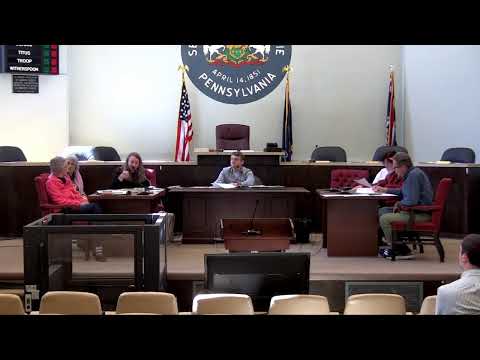
Hannah Oluski, neighborhood resource coordinator in the City of Erie Planning and Neighborhood Resources Department, updated the Environmental Advisory Council on April 24 about a citywide signage project and a comparative review of the city's current sign ordinance.
Oluski said she is reviewing the existing sign/zoning rules and comparing them to model ordinances used by similar cities, including Lancaster. "Currently, right now, what I'm doing is is I'm going over our current sign and ordinance that exists here in the city, and I'm doing basically a comparative analysis of what's in ours and then looking at other cities," Oluski said.
Nut graf: The city plans a field survey of existing signage, a review of illumination and video‑screen rules, and will use the city's open‑ended consultant contract (Michael Baker) for technical assistance. Oluski invited the EAC to provide guidance on visual design and lighting, and said she expects to present initial findings in one to two months.
Oluski told the council she has identified model ordinances ranging from technical to design‑based approaches and will collect field data on current signs. She noted the existing zoning provisions are brief — the EAC observed that the printed zoning sign section is only three or four pages — and that the review will identify gaps and recurring variances that signal needed ordinance changes.
Council members emphasized concerns about bright illuminated signs and visual accessibility. One member noted that some signage visible from sidewalks and public spaces is not accessible to people with visual impairments and asked Oluski to consider inclusive design. Oluski confirmed the current ordinance includes illumination limits for signage (turn‑off hours), permits signage exceptions for 24‑hour operations, and that more detailed guidance could be added.
The city staff have access to technical models through Michael Baker, Oluski said, and will share an early presentation with the EAC. "We will welcome your input," she added, asking members to review draft language and field findings when available.
Ending: Oluski said she expects to present a summary of research and field survey results in the next month or two and invited EAC members to help refine recommendations on illumination, design and permitting.