Get Full Government Meeting Transcripts, Videos, & Alerts Forever!
Get email alerts on the Climate Action Plan topic
No spam. Unsubscribe anytime.
Penn State LCAP students present prioritization matrix and draft framework for Erie climate action plan
Summary
Penn State LCAP students presented a prioritization matrix, a climate action plan framework and sector recommendations to the Erie City Environmental Advisory Council to help the city prioritize emissions‑reduction and resilience projects and prepare for hiring a consultant to write a formal climate action plan.
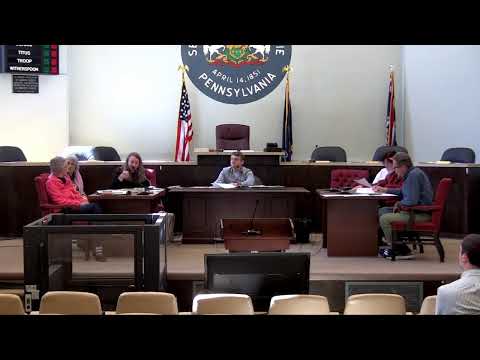
Penn State students Tyler Bogle and James Schafer on April 24 presented a prioritization matrix, a draft climate action plan (CAP) framework and sector recommendations to the Erie City Environmental Advisory Council to help the city prioritize greenhouse‑gas mitigation and resilience actions ahead of hiring a CAP consultant.
The students described the prioritization matrix as a decision tool to compare potential actions using five core criteria. "The criteria categories are greenhouse gas mitigation, resiliency improvement, cost, feasibility, and co benefits," Bogle said. The students said the matrix is adaptable: weighting can be changed depending on local goals so the city can emphasize resiliency, equity or mitigation as needed.
The nut graf: Erie has completed a greenhouse‑gas inventory, and Bogle and Schafer provided practical next steps — a scoring tool the city can use to rank actions and an example CAP outline and sectoral priorities that a hired consultant could adopt and expand. The materials are intended to make work with the community and potential funding sources more efficient.
In the presentation, the students reviewed example actions scored with the matrix. Installing solar on municipal buildings scored well for mitigation, feasibility and co‑benefits, they said. Expanding transit hubs, sidewalks and bike lanes scored highly for resiliency and co‑benefits, though it requires moderate capital investment and coordination with state and federal transportation programs. The students identified building retrofits, electrification, on‑site renewables and municipal leadership projects as key approaches in the buildings sector.
"We proposed six sectors or focus areas to include in the CAP with high level strategies and actions," Schafer said, adding that the draft framework highlights funding sources and example language a consultant could use. The students referenced state programs including Pennsylvania's Priority Climate Action Plan (PCAP) prepared by the Department of Environmental Protection, and noted federal programs such as the EPA Climate Pollution Reduction Grant (CPRG) program as potential funding pathways.
They recommended that Erie pursue commercial financing tools such as CPACE and technical assistance through PennTAP, and consider municipal measures such as green building ordinances or building performance standards that reference national rating systems (LEED, ENERGY STAR, PHIUS+). In the water and wastewater sector they recommended prioritizing electrification and efficiency at Erie Water Works facilities and studying anaerobic digestion at the wastewater plant to reduce emissions and produce biogas.
The students also advised that the CAP be concise, accessible to residents and heavily guided by community outreach. They suggested the city use the prioritization matrix to evaluate packages of actions, and to coordinate with partners including PennDOT and the Erie Metropolitan Transit Authority on transportation strategies.
Council members and attendees raised questions about life‑cycle impacts of solar panels, accessibility of active‑transport improvements for older adults and people with disabilities, and how to integrate local infrastructure plans such as EMTA's operations plan into CAP scoring. Bogle and Schafer provided contact emails for follow‑up and said they would accept additional data and feedback through EAC liaisons.
Ending: Council members thanked the students for the presentation and said the materials would be useful as Erie prepares to hire a CAP consultant and seek funding.