Get Full Government Meeting Transcripts, Videos, & Alerts Forever!
Get email alerts on the Esplanade Trid topic
No spam. Unsubscribe anytime.
Residents press for community meetings as unions and developers tout jobs for Esplanade project
Summary
At a public hearing of the Pittsburgh Public Schools Board of Directors on April 28, dozens of residents, community leaders and union representatives testified about the proposed Esplanade development and an associated transit revitalization investment district (TRID), splitting sharply between calls for immediate developer engagement with Manchester residents and appeals to move the project forward to create jobs.
At a public hearing of the Pittsburgh Public Schools Board of Directors on April 28, dozens of residents, community leaders and union representatives testified about the proposed Esplanade development and an associated transit revitalization investment district (TRID), splitting sharply between calls for immediate developer engagement with Manchester residents and appeals to move the project forward to create jobs.
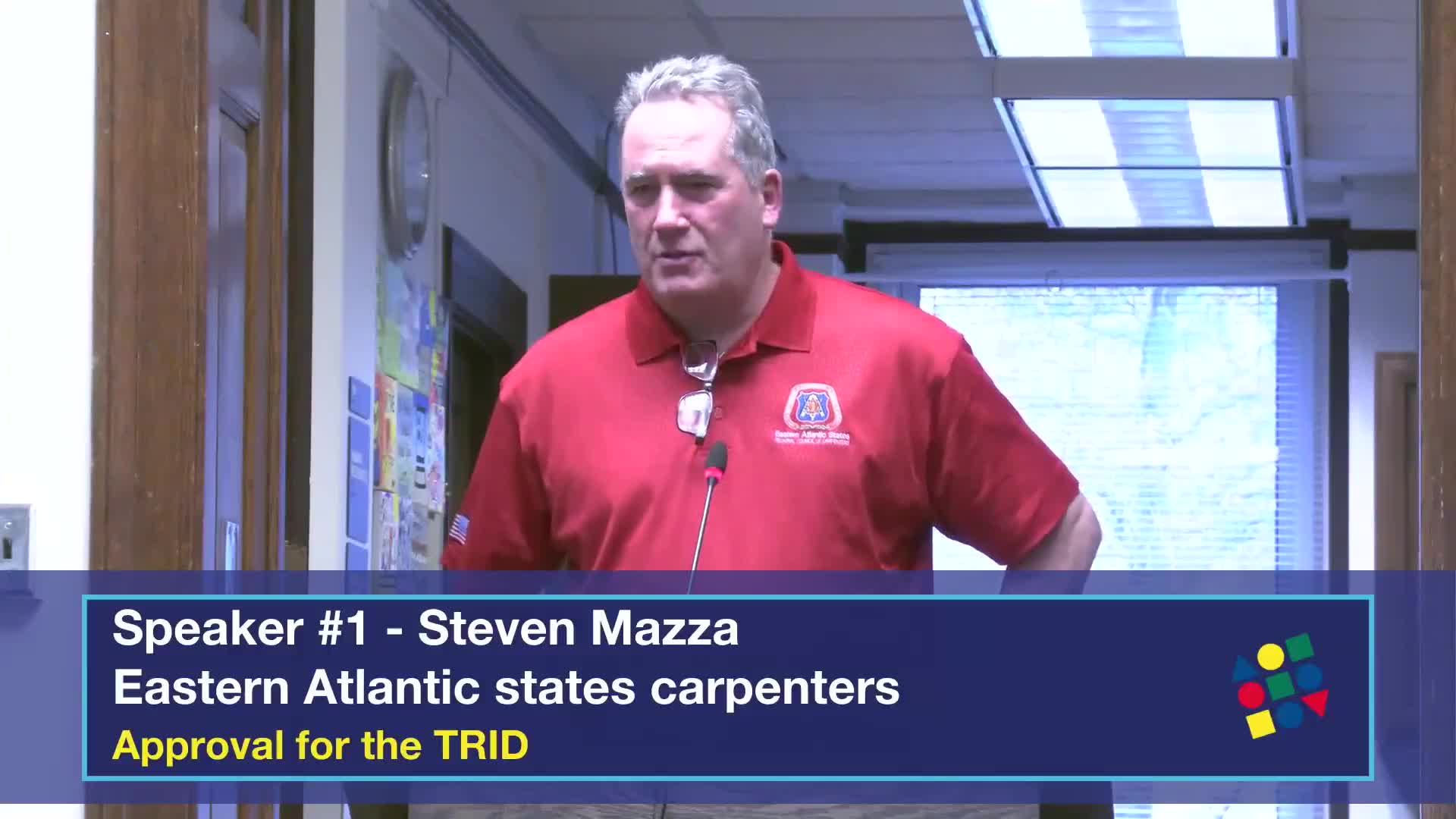
Supporters, including union and construction representatives, urged the board and the public to consider jobs and training pathways tied to the Esplanade. "For us, in my organization, this is about jobs. It's about training," said Steven Mazza, council representative for the Eastern Atlantic States Regional Council of Carpenters and vice president of a building trades labor council, who said he supports the Esplanade project. Joe Keith of Mascaro Construction said the project would "create several hundred construction jobs, union construction jobs," and in the long term create service and retail positions. Jason Markovich, business manager of Laborers Local 373 and president of Pittsburgh Regional Building Trades, said responsible development can provide career pathways for city residents.
Opponents and longtime Manchester residents pressed for greater transparency and specific, written commitments from developers and the Urban Redevelopment Authority. "At a time when transparency is really required, nothing has been in writing," said Dan Holland, who raised questions about who would benefit from projected jobs and asked for environmental assessments and details on contaminated soils. Multiple residents and Manchester Neighbors leaders said they had not been contacted directly by the developer and that no public meeting minutes or written community approvals could be produced. "We have hundreds of names on a petition of residents in Manchester that feel like they have not been included, and we turned them into you today," said Roberta Bauer of Manchester Neighbors.
Manchester Neighbors board members urged the district and city elected officials to delay any board action until the developer meets directly with the community and produces written community benefits agreements or impact statements. "We want the developer to meet with the residents," said Terrence Turk, a Manchester Neighbors board member. Turk and others asked the school board to table votes until residents and the developer have met.
Other witnesses emphasized both the potential economic benefits and the risks of displacement. "This is going to spur development of that whole region and create jobs and economic opportunities for residents and contractors and vendors alike," Joe Keith said. But speakers including Taylor Woodruff and Rebecca Sweeney described concerns that projects like the Esplanade have displaced long-time residents in other Pittsburgh neighborhoods and said they fear similar effects in Manchester.
Not all testimony aligned. LaShawn Burton Faulk, executive director of the Manchester Citizens Corporation (MCC), told the board the TRID is a tool to capture and reinvest tax revenues created by the development back into the neighborhood and said MCC paid 50 percent of the TRID study costs to ensure community input. "This TRID isn't about displacement. It's about empowerment," Faulk said, and he described plans to use TRID revenues for affordable housing and workforce development.
Speakers repeatedly asked for written documentation: copies of outreach minutes, community meeting records, and any draft community benefits agreement. Several residents said they had not received mail, notice, or meeting announcements. "Have any of you board members seen minutes on records? Have any of you seen any kind of community approval?" Roberta Bauer asked the board.
The hearing did not include a board vote on the Esplanade. Testimony reflected deeply divergent views: labor and developers emphasized job creation, while many Manchester residents demanded formal, written commitments, community meetings, and documentation before the project proceeds.
The board did not announce immediate next steps during the hearing; several speakers urged officials to require the developer to meet with the RCO and to produce written agreements before any approvals.