Get Full Government Meeting Transcripts, Videos, & Alerts Forever!
Get email alerts on the Asset Forfeiture topic
No spam. Unsubscribe anytime.
Councilor Murillo proposes $1 million for police program evaluations; council asks study of an "asset forfeiture fee"
Summary
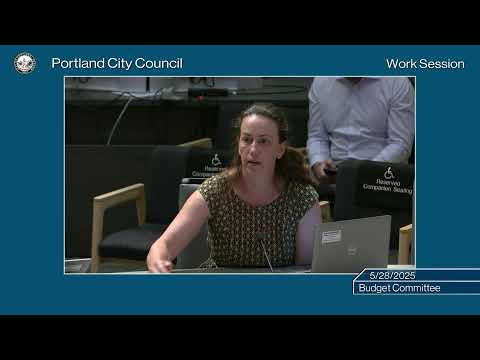
Councilor Maria Murillo on Wednesday asked the Portland City Council to direct $1,000,000 from the Portland Police Bureau’s special revenue (asset forfeiture) fund to pay academic contractors to evaluate bureau programs, and separately asked the city to study an “asset forfeiture fee” that would redirect part of forfeiture receipts to the general fund.
Councilor Maria Murillo on Wednesday asked the Portland City Council to direct $1,000,000 from the Portland Police Bureau’s special revenue (asset forfeiture) fund to pay academic contractors to evaluate bureau programs, and separately asked the city to study an “asset forfeiture fee” that would redirect part of forfeiture receipts to the general fund.
The proposal matters because the police special revenue fund — dollars from state and federal asset forfeiture — totals millions of dollars and is subject to federal and state restrictions and oversight. Council members pressed the bureau and the city attorney’s office for legal and operational details before putting either request to a formal vote.
Murillo said budget note 7 would direct the Police Bureau to use $1,000,000 of the bureau’s special-revenue balance to contract academic researchers for program evaluations. “These evaluations are just as much of a priority as getting new equipment,” Murillo said, arguing the work would make policing more evidence-based. She described the request as a one-time use of forfeiture funds for external evaluation, not a change to the bureau’s base budget.
At the same meeting Murillo also introduced budget note 17, which asks City Budget and Finance to study whether the city should impose a fee on each instance of asset forfeiture conducted by Portland police or a city-affiliated law-enforcement entity. That memo asks the finance office to return options ranging from a fee designed to deter seizures to a fee that would maximize net revenue for the city with proceeds explicitly earmarked for community programs.
Police Chief Bob Day described asset forfeiture funds to the council as “funds that are returned to the bureau through seizures,” and said the bureau has used such dollars for equipment, training and other needs when regular appropriations were not available. “Typically it’s when things come up toward the end of the fiscal year and we don’t have the money to purchase equipment, go to a mandatory training,” Day said. He said the bureau has spent about $4,000,000 of forfeiture funds since 2022 and that the funds are audited by federal partners.
City Attorney Robert Taylor told the council there are separate federal and state limitations on how forfeiture money may be used. “You have to use those funds for new items, and you can’t use them to backfill or supplant cuts,” Taylor said. He said the city’s financial policy also discourages using one-time or irregular receipts to fund ongoing positions. Taylor said federal forfeiture funds can be spent on consultant evaluations and similar one-time contracts, but the bureau must follow federal and state approval processes.
Budget staff described the size and structure of the fund in varying terms during the session. Nathan Limi, who manages budget strategy for the Public Safety Service Area, said the city budgets subfunds of forfeiture revenue as a restricted fund that has fluctuated: “They total to just under $8,000,000 in terms of how we budget for them each year,” he said. Members of the council and staff also cited other figures during the discussion including a roughly $9,000,000 total and references to $6,500,000 coming from federal and state sources; councilors and staff said the precise balances depend on final audits and year-end accounting.
Councilors asked whether using money for evaluations would violate federal restrictions or risk federal recapture; Taylor and Chief Day said evaluations appear allowable for federal funds but the bureau must follow the federal approval process. Day and Nathan Limi also said the bureau is under past federal audit scrutiny and the U.S. Department of Justice (DOJ) has told Portland to spend funds that have been idle.
Councilors voiced policy disagreements about the larger question behind the fee study. Some members said a fee could deter seizures and better align incentives; others warned that a fee could weaken law-enforcement deterrents. “There are policy differences here,” Council President (unnamed in the transcript) said, and urged colleagues to decide whether they want the information the studies would produce before turning to whether to enact policy changes.
No final vote was taken on either budget note during the work session. Staff and the bureau agreed to provide additional detail and legal guidance to the council before the budget committee meets again.
What’s next: City budget staff and the police bureau agreed to supply the council with more detailed accounting of the forfeiture funds, a list of unfunded bureau needs that could be eligible for forfeiture dollars, and legal clarifications from the city attorney’s office; councilors said they will consider whether to convert either request into a formal amendment before the June 11 budget meeting.