Get Full Government Meeting Transcripts, Videos, & Alerts Forever!
Get email alerts on the School Facilities Renovation topic
No spam. Unsubscribe anytime.
Students, parents press Howard County Board to prioritize Centennial High renovations over further delays
Summary
Dozens of Centennial High School students, parents and community members told the Board of Education at a May 1 public hearing that the 48-year-old building’s failing HVAC, leaks, pests, overcrowding and unsafe athletic facilities create health and safety risks and demand earlier capital funding.
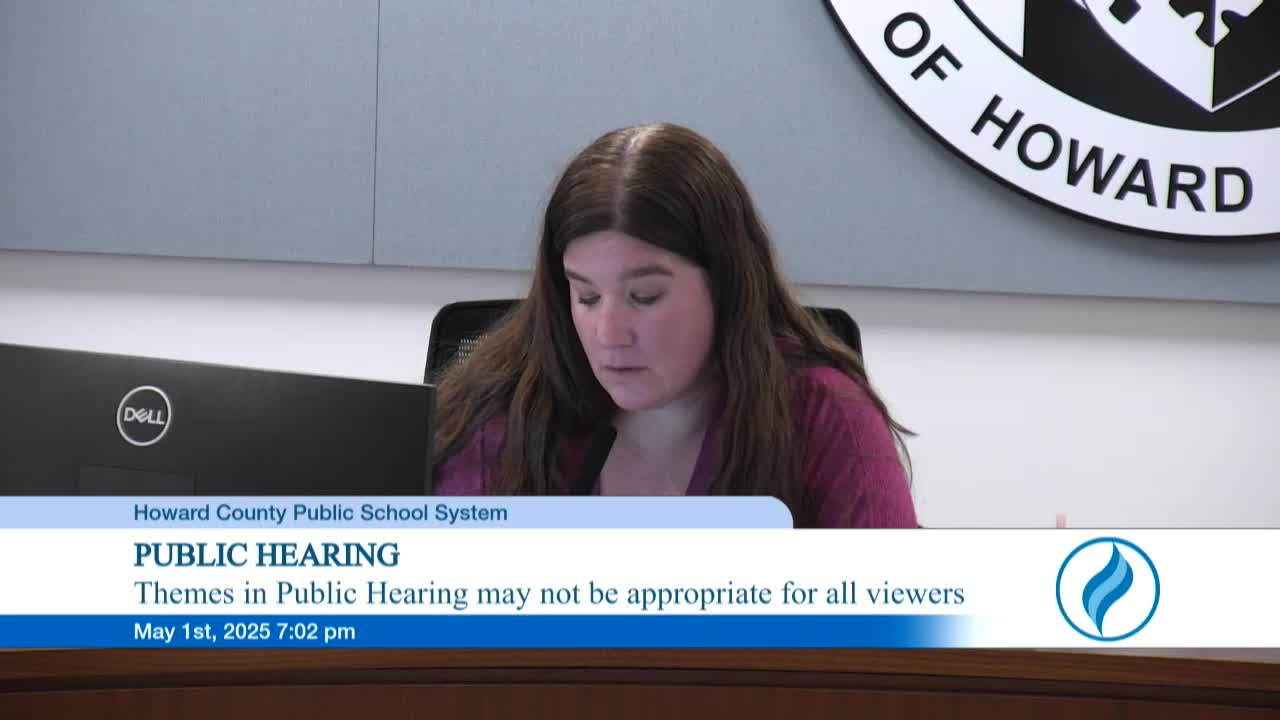
Dozens of students, parents and community members urged the Howard County Board of Education on May 1 to accelerate renovations at Centennial High School, saying a long-delayed project endangers health, safety and learning.
At a public hearing on the fiscal 2026 operating budget and the FY2027–2031 capital improvement plan, current and former Centennial students described frequent floods, falling ceiling tiles, unventilated classrooms, rodent sightings, malfunctioning toilets and an HVAC system they said dates to the school’s 1977 construction. Parent and community speakers added that some outdoor athletic fields are steep and uneven, that portable toilets are used for sporting events, and that limited access routes could delay emergency response.
The student testimony cut across grades and student organizations. “Our building is not only past its best by date. It’s to the point where it’s making you sick,” said Angela Huang, a junior and SGA liaison. Several students said classroom temperatures swing between near-freezing and stifling heat on the same day, forcing teachers to relocate classes and disrupting instruction.
Why it matters: speakers tied building conditions to health and instructional harm. Students and parents said poor ventilation and temperature extremes worsen chronic conditions such as eczema and allergies, increase absences and impede testing and labs. Multiple speakers said ceiling collapses and persistent leaks have destroyed student work and equipment.
Students quoted county planning data and school-site metrics to describe long delays. Testimony said Centennial has been on the district’s renovation list for about a decade and that scheduled work has been repeatedly postponed; speakers urged the board to apply data-driven criteria so renovation priority reflects safety and deferred-maintenance need.
Parents and community members also raised equity concerns, saying Centennial and nearby schools in the same attendance area have been passed over repeatedly while other projects advanced. Several speakers asked the board to disclose how priorities were set and to apply consistent, transparent criteria across the capital-improvement program.
Specific problems described by witnesses included:
- Repeated interior flooding, broken ceilings and water-damaged classrooms and student work, including a photography room that closed for several weeks after a ceiling collapse. - HVAC failures and large temperature swings: students reported classrooms exceeding comfortable temperatures and others so cold teachers provided portable heaters. - Rodent sightings in classrooms and common areas, and sink/toilet fixtures that do not function reliably. - Athletic facilities without nearby restrooms, steep and uneven access routes to fields, and a stadium used without permanent restroom facilities. - Crowded hallways and enrollment above stated capacity, which speakers said impedes movement and raises safety concerns for students with disabilities.
Speakers asked for near-term repairs where full renovation is not immediately affordable, including functioning toilets and sinks at athletic fields, working fume hoods in science labs, secured doors and improved pest mitigation. Several parents asked the board to prioritize projects that have demonstrated health and safety impacts in the district’s capital scoring.
The Board accepted public testimony during the hearing; no final capital decisions or votes occurred at the session. Several speakers referenced county capital planning materials, facility condition index (FCI) scores and the state 'Built to Learn' program when calling for a transparent, data-driven prioritization process.
Board and staff responses were not part of the recorded testimony excerpted here. The public hearing record shows widespread, sustained concern from Centennial students and families about building systems and safety; speakers urged the board to reflect that urgency in the FY2027–2031 capital plan.