Get Full Government Meeting Transcripts, Videos, & Alerts Forever!
Get email alerts on the Homelessness Harm Reduction topic
No spam. Unsubscribe anytime.
Council amends mobile-services ordinance after hours of public comment; amendment passes 15-2
Summary
Philadelphia City Council amended Ordinance 240665, which would regulate vehicular mobile service providers (including outreach vans and mutual-aid distribution), adopting an amendment and placing the bill on the final-passage calendar after extensive public comment and a 15–2 vote on the amendment.
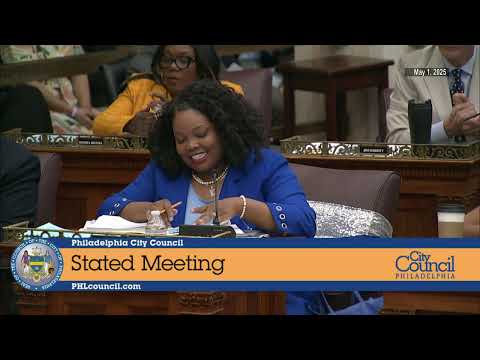
Philadelphia City Council on Thursday adopted an amendment to Ordinance 240665, the proposed mobile service providers ordinance, and placed the bill on the final-passage calendar after extensive public comment and debate.
The amendment, offered by Councilmember Ketsi Lazada, passed by voice vote with a recorded tally of 15 in favor and 2 opposed. Lazada, the bill sponsor, said the changes were intended to preserve outreach while creating a permitting process and limits she said would protect both residents and providers. “As it relates to the permitting process, we’ve worked with the administration to create a 60 day process in order for them to begin enforcement and implementation,” Lazada said during floor remarks. “This bill doesn’t stop them from doing so.”
The ordinance and later amendment prompted more than an hour of public comment, much of it from health-care providers, harm-reduction workers, mutual-aid volunteers and residents of Kensington and surrounding neighborhoods. Mobile medical providers and harm-reduction advocates warned that the ordinance as drafted would limit lifesaving care delivered in the field; Temple physician Sam Stern said, “I’m concerned that bill 240665, as written, will constrain our ability to provide life saving medical care to people in Kensington and will ultimately harm our patients.”
Advocates for mutual aid and street medicine said permitting and location restrictions would make it harder for volunteers and small providers to reach people in need. “This bill will not reduce harm,” said a representative of Positive Women’s Network who identified themself as Sam; “It will increase it as it is now.” Street medic Kelsey Leon told council the legislation risked criminalizing ordinary acts of aid and said in part, “Please vote no on this bill, which would prevent medical providers from providing compassionate, holistic care to people who need it the most.”
Council members debating the measure described a series of changes in the amendment. Lazada said language was added to allow distribution of food, clothing and nonmedical aid, to preserve overdose response and emergency care, and to permit outreach during expanded hours; she said the amendment also created a 60‑day timeline for an administrative permitting process. Opponents and some providers countered that, because the permitting rules are not yet finalized, enforcement could produce an effective ban in high-need areas until the city develops and implements the permit system.
Other specifics cited during testimony and debate included a cited fine level raised in earlier drafts to as much as $1,000 for violations (mentioned by a provider during public comment) and limits on the number and placement of service locations. Medical and outreach providers urged council to coordinate implementation with community-based groups and to delay enforcement until the permit process was operational; Dr. Sam Stern requested that council “delay implementation of the bill until after the permitting process is established and operating so that we can ensure our patients’ safety.”
Councilmember Catherine Gilmore Richardson, the majority leader, defended work on the item and urged members to consider changes aimed at balancing outreach and neighborhood quality-of-life concerns. After the amendment was adopted, council placed the amended ordinance on the final-passage calendar for a future session.
What happens next
Because the amendment passed, the ordinance (as amended) will return on a final-passage calendar at a later council meeting. Council will vote again on final passage before the ordinance becomes law; any further amendments or motions could be introduced at that time.
Clarifying details not specified in the record
• Exact permit application requirements, fees and enforcement timelines beyond the 60‑day target were discussed but not printed in the ordinance text read into the record; those specifics were described as to be developed administratively. • The transcript records concerns about fines “up to $1,000” in discussion, but the final penalty schedule as written in the amended ordinance was not read into the record during this session and is therefore “not specified.”