Get Full Government Meeting Transcripts, Videos, & Alerts Forever!
Get email alerts on the Environment Wild Rice topic
No spam. Unsubscribe anytime.
Tribal leaders seek state recognition and funding for Manoomin stewardship guide after passage of recognition law
Summary
Roger LeBain and Representative Rheingans briefed the committee on the Michigan Wild Rice Initiative's new stewardship guide, requested formal placement within a state department (preferably DNR) and said an EPA Environmental Justice grant for $3 million is on hold.
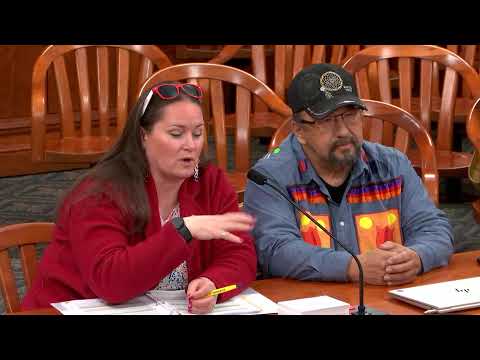
Roger LeBain, an elder and delegate for the Michigan Wild Rice Initiative, and Representative Rheingans briefed committee members on a newly published Manoomin (wild rice) stewardship guide and asked the Legislature to help secure formal recognition and funding to support restoration work.
"Chi miigwech," LeBain said, thanking the committee for past support and describing the guide as a tool drafted "with you in mind" to help restore and steward wild rice on tribal homelands and ceded territories. He said the guide explains Manoomin’s cultural, spiritual and ecological importance and lays out restoration steps and protections the tribes recommend.
LeBain told the committee the initiative had applied for a $3,000,000 Environmental Protection Agency grant through the EPA’s Environmental Justice program to support three years of implementation but that the grant is currently on hold. He said the initiative relies mainly on in-kind contributions from tribal communities and state partners such as the Department of Environment, Great Lakes, and Energy (EGLE) and the Department of Natural Resources (DNR).
LeBain asked the Legislature to consider formally housing or recognizing the Michigan Wild Rice Initiative within a state agency so it can receive funding and manage long-term implementation. He said the initiative’s preference is placement with the Department of Natural Resources because of DNR’s role as steward of natural resources, and he also requested continued coordination with the Michigan Department of Agriculture and Rural Development and EGLE to address labeling, genetic protection and cultivation safeguards.
"There is nothing in our initiative to do that. There are no funds other than in-kind services," LeBain said, describing the challenge of distributing printed stewardship materials without dedicated funding. He noted that after the Manoomin recognition bill was signed into law, he told the governor, "my work now has only begun," and that passage of recognition created new responsibilities for restoration and protection.
Representative Rheingans said lawmakers could look to neighboring states for models; she noted Minnesota and Wisconsin have statutes and programs addressing wild rice harvesting and protection. Committee members expressed interest in reviewing those approaches and in finding a state home for the initiative that could unlock federal funding.
LeBain said the stewardship guide also includes comparative examples from other states and a suite of recommended actions ranging from public education to genetic protection measures designed to prevent blending of cultivated varieties with native wild rice.
The committee did not take any formal action at the briefing; members said they would explore which agency could administratively host the initiative and how to help move the EPA grant and other funding forward.