Get Full Government Meeting Transcripts, Videos, & Alerts Forever!
Get email alerts on the Agriculture Sugar Industry topic
No spam. Unsubscribe anytime.
Michigan Sugar Company warns Farm Bill delays and factory closures are squeezing state sugar industry
Summary
John Boothroyd, director of government relations for Michigan Sugar Company, told a House committee the cooperative’s operations support small towns across Michigan but face risk from delayed federal policy, overseas subsidies and recent factory closures.
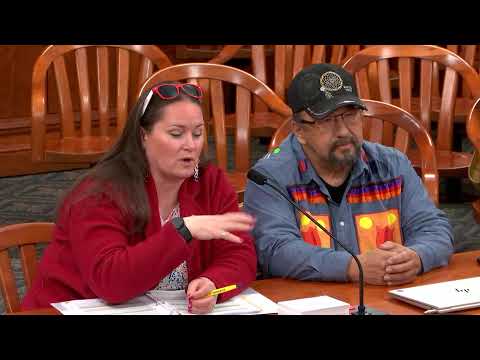
John Boothroyd, director of government relations for Michigan Sugar Company, told a Michigan House committee that the state’s grower-owned cooperative and the wider U.S. sugar industry are under pressure from delayed federal policy and international market distortions.
"We don't actually make sugar. God makes sugar in the ground. We just take everything but sugar out of it," Boothroyd said, describing sugar beet production and processing during a presentation to committee members. He said Michigan Sugar operates factories in Bay City, Carroll, Croswell and Sebring and maintains packing facilities in Ohio and multiple piling grounds across the state.
Boothroyd said Michigan Sugar oversees about 140,000 acres of sugar beets across roughly 17–20 Michigan counties, producing about 4.8 million tons of beets that are processed into roughly 1.3 billion pounds of sugar. He described the company’s direct economic impact to the state as about $700 million and estimated indirect impacts between $1.5 billion and $2 billion.
The company employs more than 1,000 year-round workers — most in union-represented manufacturing jobs — and about 1,100 seasonal workers during peak processing. Boothroyd said many seasonal workers are retirees or "work campers" who travel the country in recreational vehicles and take temporary jobs; he added the company does not use the H‑2A program for this work because it was not economically feasible.
Boothroyd warned that the industry's stability depends in part on a modern federal safety net. "When you're in an industry at risk, you need a strong safety net," he told the committee, noting the U.S. Farm Bill is two years overdue for reauthorization. He pointed to recent U.S. sugar production losses, saying a California factory that had operated for more than 100 years closed recently and that closures have cascading effects for farms and regional economies.
He criticized heavy subsidization of other countries’ sugar sectors, citing India as an example: "India alone spent nearly $11,000,000,000 last year in direct subsidization to its sugar industry. U.S. sugar farmers received $0. Our program is 0 cost to the taxpayer," Boothroyd said, arguing that distorted world prices and dumping of excess production onto global markets create unfair competition for U.S. growers.
Boothroyd discussed several company investments and sustainability efforts. Since becoming a cooperative in 2002, the company has reduced energy consumption by about 40 percent; he said 87 percent of factory operations are now powered by natural gas. He highlighted a $109 million desugarization facility that began operations in May 2024 and, he said, will produce about 80 million pounds of additional sugar "without growing a single additional sugar beet." He described that project as improving the company’s efficiency and environmental footprint.
Boothroyd also described near-zero waste processes at the factories: water is cleaned and returned to the system; pulp is sold for animal feed; molasses and related streams are used in feed or other products; and rock and soil separated during processing are sold or returned to fields.
Committee members asked about imports, tariffs, crop rotation and renewable-energy siting on farmland. Boothroyd reiterated that the United States is a net importer of sugar and said tariffs and equipment costs create nuanced effects; he explained sugar beet cultivation typically follows a three-year rotation and expressed concern about taking highly productive cropland out of production for photovoltaics. On labor, he emphasized seasonal staffing patterns and that the company hires many local workers and travelers rather than foreign temporary workers.
Boothroyd closed by urging state policymakers to consider downstream effects of policy on the supply chain and to coordinate with federal representatives on the Farm Bill. "We are losing it right now," he said of domestic sugar production, adding that state-level policy choices can still influence farm viability.
The presentation was given during the committee's scheduled presentation period and followed by member questions.