Get Full Government Meeting Transcripts, Videos, & Alerts Forever!
Get email alerts on the Public Health topic
No spam. Unsubscribe anytime.
Family treatment court requests opioid funding for national training; commissioners ask for cost and oversight details
Summary
Scotland County family treatment court staff requested use of budgeted opioid funds to send staff to All Rise training in Orlando. Presenters described the court’s structure, current caseload and goals; commissioners asked for cost details, data reporting plans and assurance of value for client services.
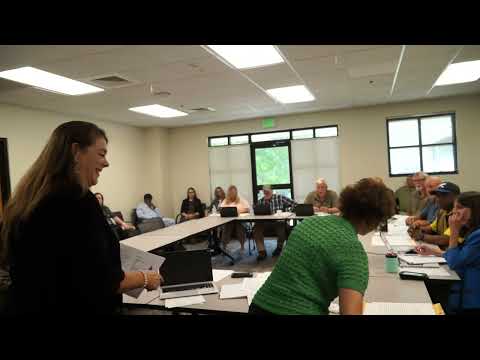
Representatives of Scotland County’s family treatment court asked the Board of Commissioners to approve using existing, budgeted opioid funds to send staff to a national training conference in Orlando this spring.
Travis Brooks, the family treatment court coordinator, and a senior assistant public defender explained the program’s operating model: biweekly court sessions with an hour-long staffing beforehand, participation of treatment providers in court, and case management and transportation services for program participants. Nehandi Califf, introduced in the meeting as the county’s opioid outreach social worker, described outreach work to adults in Scotland County with opioid addictions and the court’s coordination with the county Department of Social Services (DSS).
Presenters said the program currently has four participants with two more signed up and aims to expand to 10–15 participants. They described the program as intensive, with the goal of shortening DSS dependency timelines and improving reunification rates through frequent court contact, treatment, counseling and support services including transportation and housing referrals.
Staff requested approval to use an existing line-item in the opioid budget to send up to three people to the All Rise national conference (training noted as in Orlando). County staff and presenters said training is already included in the program’s budget but that the county collaborative that normally vets such requests was not meeting in time. Presenters estimated a per-person cost around $2,100 to $2,200, including registration and travel, and asked the board for guidance on how to proceed.
Commissioners asked for more precise cost figures, raised concerns about optics and the balance between overhead and direct client services, and suggested considering nearer or free trainings already offered in the state (presenters noted an AOC training in Winston-Salem earlier in the year and Raleigh NCACC guidance). Commissioners and presenters also discussed data collection and reporting requirements: staff must report program metrics to NCACC/related oversight and will need to include outcomes and spending in future resolutions and budget requests (presenters said a July resolution will be required for next-year funding).
Presenters described training topics as covering sanctions and incentives, treatment and medication options (for example, use of Suboxone), data collection best practices, peer-support worker roles, and how courts nationally tailor practices rather than applying a single standard. They emphasized provider shortages, transportation and housing as primary operational challenges, and said that national training would help them recruit and coordinate resource providers and develop a data-collection approach.
No formal vote or action to authorize travel was recorded in the transcript. Commissioners asked staff to return with precise cost estimates and suggested bringing the request to the opioid collaborative or otherwise documenting the justification and expected client benefits before final approval. Presenters invited commissioners to observe a session on May 9 to see the court’s operation.
Speakers referenced NCACC (North Carolina Association of County Commissioners) guidance as the source of budget format and program oversight; presenters said training funds are included in the current budget but sought the board’s guidance on release and on possible expansion for next fiscal year.