Get Full Government Meeting Transcripts, Videos, & Alerts Forever!
Get email alerts on the Vendor License Fee topic
No spam. Unsubscribe anytime.
Butler County commissioners reject creation of special fund for new $25 vendor license fee amid sharp debate
Summary
The board declined to create a special revenue fund to receive a new $25 vendor license fee created by recent state statute. Commissioners debated whether the state fee is effectively a tax and whether the county must comply; the motion to create the fund failed 1-2.
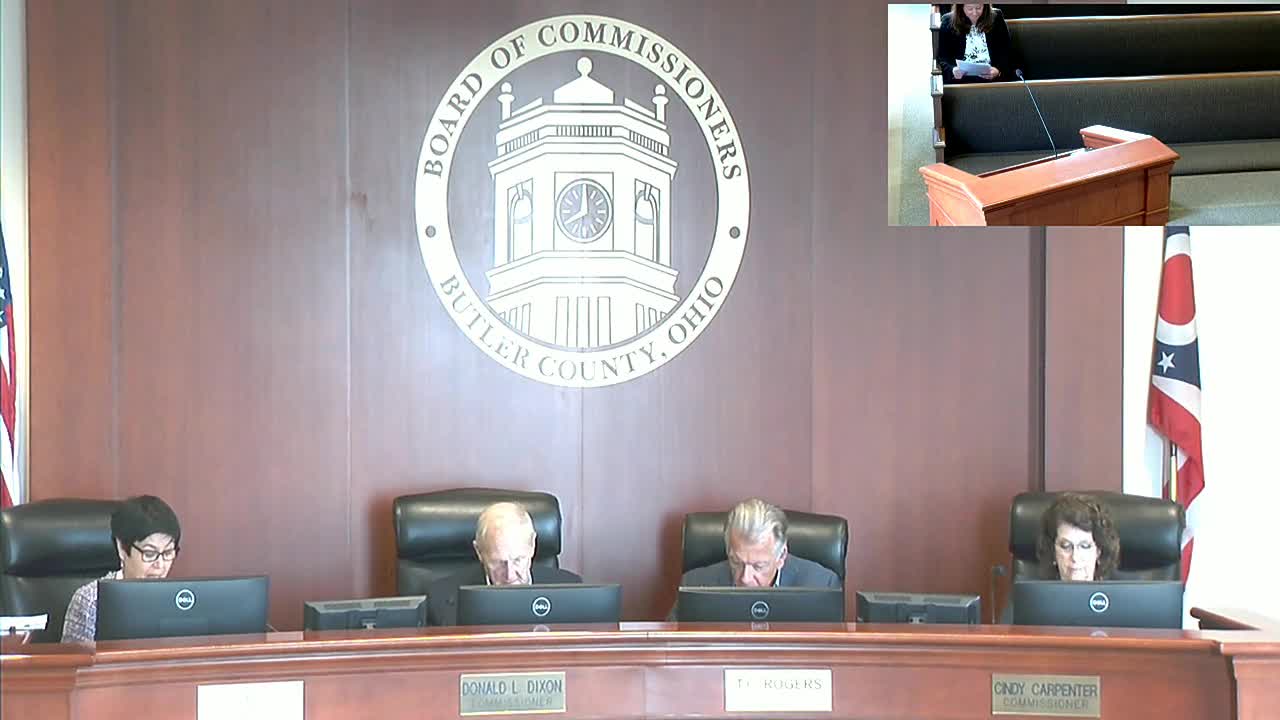
Butler County commissioners on Thursday voted against creating a special revenue fund to receipt a newly enacted $25 vendor license fee the state added to vendor licenses. The roll call on the fund creation motion was Carpenter: yes; Dixon: no; Rogers: no, resulting in the motion failing.
County staff told the board the fee increase came from a recent change to the Ohio Revised Code that added $25 to the existing vendor license fee and directed the additional funds to a state-managed organized crime commission to reimburse jurisdictions that participate in organized-crime task forces. "The statute created the Organized Crime Commission, and the additional $25 funds its operations and reimburses political subdivisions for the expenses the political subdivisions incurs when their law enforcement officers participate in an Organized Crime Task Force," staff said.
Why it mattered: Commissioners expressed strong disagreement about creating the fund. "We're raising taxes," one commissioner said during the discussion; another called it a "fee" while noting the language in the statute. Commissioners debated whether the auditor could independently implement the state requirement if the board declined to create the fund.
Vote and debate: The board first removed the item from the consent agenda for separate consideration. Commissioner Dixon moved to approve creation of the special revenue fund (item 21853) and Commissioner Rogers seconded. On the roll call to approve the fund, Carpenter voted yes; Dixon and Rogers voted no; the motion failed.
What happens next: Staff and the commissioners discussed seeking written guidance from the county prosecutor and the auditor on whether the county can refuse to establish the fund or whether the auditor is nonetheless required by state law to collect and remit the fee. Staff said the statute requires an accounting and that the fee is a pass-through to the state but acknowledged uncertainty about practical enforcement if the board declines to create the fund.
Ending: Commissioners who opposed the fund called for further review and said they preferred the prosecutor—s written opinion on the county—s obligations under the state statute.