Parents, educators demand increased school funding, homelessness supports and newcomer services during budget hearing
Loading...
Summary
Dozens of parents, teachers, union leaders and nonprofit partners testified to the Committee of the Whole on Wednesday urging substantial increases in funding for the School District of Philadelphia and specific investments to protect students’ health and learning conditions.
Dozens of parents, teachers, union leaders and nonprofit partners testified to the Committee of the Whole on Wednesday urging substantial increases in funding for the School District of Philadelphia and specific investments to protect students’ health and learning conditions.
Speakers pressed council to shift more property tax millage and to add operating dollars now — multiple witnesses asked for at least $25 million and some called for $50 million in increased local support. Advocates also sought targeted allocations: $4,500,000 over three years to sustain three community providers that serve students experiencing homelessness, $1,900,000 to expand newcomer programs and reinstate a Multilingual Assessment Center, funds for HEPA air filters in classrooms, and restoration of school libraries and full-time nurses and counselors.
Why it matters: Witnesses warned that the School District is drawing down reserves to cover operating shortfalls and that further cuts would disproportionately harm students in Black, brown and low-income neighborhoods. Education advocates framed the funding requests as necessary to prevent deeper staffing and program losses, preserve school services and address chronic health and attendance problems.
Major asks and evidence presented
- Millage shift and operating increases: Multiple witnesses asked council to raise the school share of property tax millage by 1 to 2 percentage points (one advocate suggested moving the district share from 56% to 58%) and to appropriate at least $25 million more to operations this year. Children First and parent organizations urged a local down payment while advocates continue to press Harrisburg for larger state funding increases.
- Homelessness supports: Representatives of Thrive at Hopeful, Valley Youth House and Eddie’s House described programs that provide case management, rental assistance, eviction prevention, laundry, showers and counseling for students identified under the federal McKinney-Vento law. Valley Youth House, Eddie’s House and Hopeful requested $1,500,000 annually for each of the three years (totaling $4,500,000 over three years) to sustain contracts that were originally supported by American Rescue Plan funds.
- Newcomer programs and language access: Advocate groups including Juntos and Asian Americans United asked council to allocate $1,900,000 to create three new newcomer programs, restore the Multilingual Assessment Center, and hire bilingual counseling aides to ensure appropriate placement and language access for recently arrived students.
- Health and facilities: Testimony called for immediate investments in indoor air quality: HEPA air filters for classrooms as recommended by CDC guidance, and longer-term capital plans to modernize HVAC systems and pursue electrified or geothermal systems in schools. Speakers described classrooms and buildings with mold, poor ventilation, and damaged ceilings and urged council to prioritize facilities spending and safe air now.
- Libraries, counselors, nurses and the “chief of joy”: Parents and union leaders urged restoration of school libraries and full-time librarians, reinstatement of nurses and counselors to recommended ratios, and district adoption of a “chief of joy” to coordinate child-centered practices that speakers said would reduce punitive disciplinary policies and expand arts, recess and enrichment.
Dissenting or alternative viewpoints
Speakers representing charter school networks urged the council to ensure equitable treatment for public charter schools and to examine charter renewal frameworks that, they said, penalize schools serving high-need populations. Those witnesses argued for a single standard of opportunity across public schools and asked that council review charter performance metrics used for renewal decisions.
Clarifying details from testimony
Advocates said the district plans to use roughly 40% of its reserves next year to avoid cuts; witnesses cited more than 10,000 students identified as experiencing homelessness; parents and union leaders asked council to increase school funding by $25 million to $50 million and to consider a 2% millage shift; multiple witnesses requested a $1,500,000 annual commitment to each of three homelessness service providers for three years (total $4,500,000); newcomer services were asked to receive $1,900,000 for program expansion and assessment staffing; counselor and nurse ratio guidelines mentioned in testimony were 250:1 for counselors and 750:1 for nurses (witnesses attributed these as national guidelines); and one witness asked for a $1.25M separate allocation to City Year (see related article).
No formal votes; next steps
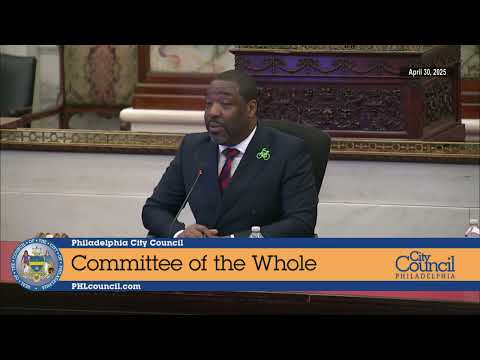
Testimony took place during the Committee of the Whole’s public hearing on the mayor’s proposed fiscal 2026 operating and capital budgets. Council members did not vote on any appropriation during the public testimony; budget amendments and final votes will occur in committee deliberations and later on the council floor.
Ending
Witnesses asked council to act immediately to shore up school operations and to fund targeted programs that supporters say prevent academic declines, improve attendance and address basic needs. Council members acknowledged the testimony and signaled continued budget negotiations ahead of final votes.