Get Full Government Meeting Transcripts, Videos, & Alerts Forever!
Get email alerts on the Education Outreach Cityyear topic
No spam. Unsubscribe anytime.
City Year leaders tell council AmeriCorps funding loss would force program cuts, ask $1.25 million
Summary
City Year Philadelphia representatives, current AmeriCorps members and partner principals urged the Committee of the Whole to include $1,250,000 in the 2026 city budget to replace threatened AmeriCorps funding that the organization says currently covers roughly 38% of its budget and supports dozens of schools and thousands of students.
City Year Philadelphia asked Philadelphia City Council’s Committee of the Whole on Wednesday to fund $1,250,000 to replace threatened AmeriCorps support and keep its in-school programming operating next school year.
The nonprofit’s executive director, Darryl Bundridge, told the committee that AmeriCorps support makes up “38% of our budget,” and that without a replacement the organization would have to “at least scale back.” He said City Year deploys 118 members who serve about 8,000 students across 11 schools.
The ask was part of a broader public hearing on the mayor’s proposed operating and capital budgets. “We know that investing in City Year is investing in the talent of Philadelphia’s future,” Bundridge said in his three-minute testimony.
Why it matters: City Year positions itself as a provider of in-class support, small-group instruction and attendance interventions that district officials and partner principals said help accelerate learning and improve attendance. Several speakers at the hearing said City Year staff improve on-the-ground capacity at schools implementing new curricula and respond to student social-emotional needs.
City Year’s case and supporting testimony
Bundridge summarized performance metrics during his remarks: he said 56% of City Year students had average daily attendance of 90% or better and that “58 percent of students in literacy and 58 percent of math students moved from a D or F to a grade of C or better.” He asked council to include $1,250,000 in the budget to help fill an AmeriCorps shortfall.
A City Year AmeriCorps member, Jada Butler, testified that she serves as a student success coach and team leader at Omni High School and described mentoring, tutoring and attendance work that she said helps student‑athletes remain eligible and complete assignments. “City Year has shaped my path and I am proof of its impact,” Butler said.
A district principal who identified himself as the principal of John F. Hartran (name not provided on the record) told council that City Year “bridges the gap created by the school’s limited resources and human capital” and pointed to internal midyear data showing that roughly 80% of focus-list students at his school were meeting reading or math targets and 75% were meeting attendance goals during the period City Year supported the school.
What council asked and what was clarified
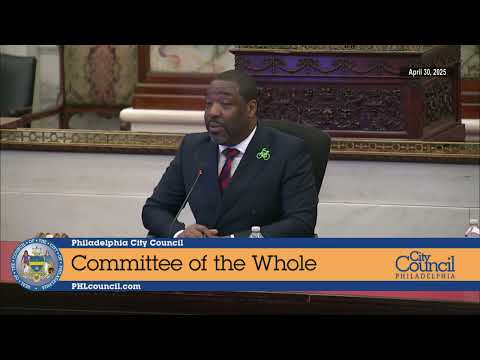
Council President Kenyatta Johnson and other members asked for clarifications. When asked how many students and schools City Year serves, Bundridge replied: “Currently, we’re serving in 11 schools and 8,000 students across those schools.”
No formal vote or commitment was made at the hearing; council members deferred budget decisions to the committee’s upcoming deliberations on the mayor’s proposals.
Ending
City Year’s request is one of many operating budget appeals the Committee of the Whole heard at a public hearing focused on the mayor’s proposed fiscal 2026 operating and capital spending measures. Council will consider the mayor’s budget proposal and companion tax and revenue ordinances in forthcoming committee deliberations and votes; no appropriation decision was taken during the testimony heard on Wednesday.