Get Full Government Meeting Transcripts, Videos, & Alerts Forever!
Get email alerts on the Youth Participation topic
No spam. Unsubscribe anytime.
House youth committee hears support, requests clarifications on bill to create 'Comité de Juventud Ahora'
Summary
The Commission on Youth Affairs of the House of Representatives of Puerto Rico held a public hearing April 30, 2025, in San Juan to consider Proyecto de la Cámara 466, a bill that would create the “Comité de Juventud Ahora” under the Department of Economic Development and Commerce’s Program of Youth Development.
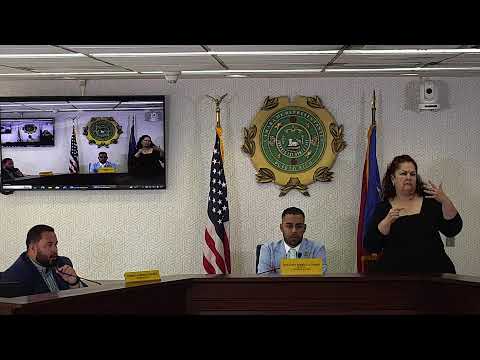
The Commission on Youth Affairs of the House of Representatives of Puerto Rico held a public hearing April 30, 2025, in Salón Audiencia 6 of the Luis A. Ferré building to consider Proyecto de la Cámara 466, which would add Article 12A to Law 171 of 2014 to create the “Comité de Juventud Ahora” under the Program of Youth Development in the Department of Economic Development and Commerce (DDEC).
The Department of Economic Development and Commerce (DDEC) told the commission it supports the measure’s objective to establish formal youth participation in policy design, but urged a number of technical changes so the new body can function. DDEC representatives said the bill, as drafted, creates potential confusion by referring both to a junta (board) and to a comité (committee) without clearly defining whether they would be distinct entities or one single body. “La recomendación que hacemos es que sean diferentes,” said Charlene Newman, director of the Program of Youth Development, recommending separate definitions and selection processes for each body.
The DDEC also recommended the bill specify the committee’s internal structure, set limits on size, and consider modest reimbursements or stipends and mileage for members who by law would otherwise serve ad honorem. DDEC noted that the Program of Youth Development currently operates with funds tied to the Código de Incentivos (Law 60 of 2019), and that an estimate of fiscal impact has not yet been performed. Bianca Rivera Román, senior attorney at the department, said a formal fiscal analysis by OPAC would be appropriate once the bill’s composition and terms are clarified.
Multiple young witnesses and civic leaders voiced broad support for the proposal while urging amendments to guarantee real, not symbolic, representation. Diego Medina Borrero, a community leader from Corozal, said the committee should have “voz y voto” and not be merely consultative. Several speakers asked that the law require geographic diversity — for example, that at least three of the six governor-appointed members reside outside the metropolitan area — and that civil-society organizations be explicitly allowed to participate in selection and outreach.
Speakers from Puerto Rico’s deaf and disability communities urged explicit, statutory representation. Emanuel Cuadrados Ramos and Luis Iván Vázquez Torres, who spoke on behalf of young deaf Puerto Ricans, asked that the statute require at least one committee member who is deaf and that the committee and implementing agencies ensure access to interpreters, communication accommodations and educational supports. Gisela Torres Sánchez and Cynthia Ramos, parents and advocates, described repeated failures to provide interpreters and timely services in health and education and said statutory guarantees are necessary to avoid leaving access to appointment-by-appointment discretion. “Quiero que sea una persona sorda que esté representada en el comité,” said Emanuel Cuadrados Ramos.
Other youths and student delegations from secondary schools and universities recommended that the committee include training and leadership development, require report filings (semiannual or annual) to document meetings and policy influence, and be given a modest operating budget so it can gather island-wide input and produce an annual recommendations report to the governor and legislature. Gabriel Andrés Ramos Cancel, a university student who identified as living with cerebral palsy, recommended explicitly amending the bill to guarantee at least one seat to a young person representing the community of persons with functional diversity.
Committee members signaled interest in many of the suggestions and — where speakers raised concerns about attendance, terms or the four-year appointment length — said they would explore options such as shorter terms, limits on committee size, and clear availability requirements for appointees.
No formal vote or committee recommendation on Proyecto de la Cámara 466 was recorded at the close of the hearing. The commission adjourned at 12:17 p.m. The department and witnesses said they are available to provide language and technical assistance as the bill is revised and as the commission requests a fiscal analysis from OPAC.