Get Full Government Meeting Transcripts, Videos, & Alerts Forever!
Get email alerts on the Education Building Needs topic
No spam. Unsubscribe anytime.
Lansing schools present building needs assessments; leaders ask to maintain staffing and expand early intervention
Summary
Alan, a building leader who presented the high school assessment, said the high school is not seeking additional positions or expenses.
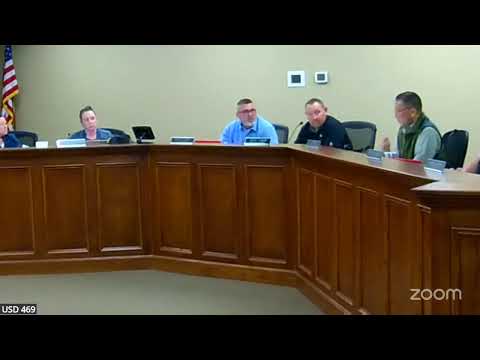
Lansing School Board work-session — School leaders on Thursday reviewed building needs assessments and urged the board to maintain current staffing levels while approving a targeted new hire at the elementary level.
Alan, a building leader who presented the high school assessment, said the high school is not seeking additional positions or expenses. “We are asking to maintain what we have, so I'm not asking for additional positions or expenses,” Alan said, and highlighted gains on state and local measures, including a rise in math proficiency at levels 3 and 4 and use of FastBridge monitoring to identify students for intervention.
The presentations tied personnel and program choices to several specific improvements. Brooks, a middle-school leader, reported a roughly 21 percent drop in discipline referrals and a 42 percent drop in out-of-school suspensions from two years earlier, and said chronic absenteeism at that school fell from 14 percent to 8 percent this past year. “Our counselors have been able to put in a lot of student support services,” Brooks said, crediting a second counselor and targeted small-group work.
Rebecca, an elementary building leader, told the board she will propose hiring one full-time equivalent certified teacher to split duties as an interventionist and as a half-day teacher for a three‑year‑old general education classroom. “I am going to propose 1, full time equivalent certified teacher, to serve as part time interventionist and part time, 3 year old general education classroom teacher,” Rebecca said, describing how that position would meet least-restrictive-environment requirements and free paraprofessionals to focus on interventions. Rebecca cited test‑screening gains this year: Tier 1 reading screening rose from about 70 percent to 84 percent and Tier 1 early math screening rose from about 75 percent to 82 percent.
Presenters across buildings emphasized maintaining recent investments. The high school described a jump in grades 10 math proficiency after distributing consistent calculators in 2023; schools said continued FastBridge use, targeted interventions and school‑within‑a‑school scheduling had supported steady graduation rates (reported at about 92 percent) and improvements in attendance.
Several presenters raised career‑and‑technical-education (CTE) access and transportation. Alan described countywide conversations about expanding CTE programs and a possible shuttling route linking multiple buildings and career centers; he and others also noted that students sometimes decline off‑site CTE options because of long drives or transportation barriers. “Some families see that and if they don't have the transportation, they don't bother to pursue that,” Alan said.
The assessments flagged a discrete shortfall for students in foster care. One building’s state template answer marked foster-care needs as “no” for being met; staff said they would review that answer and follow up. Presenters also described facility maintenance needs at older buildings — including roofing, parking‑lot repairs, intercom and camera upgrades — and routine cosmetic work to keep buildings presentable for events.
Board and staff discussed school resource officer (SRO) coverage: district staff said the city’s police force has regained capacity to offer SROs and interviews with interested officers were underway. Presenters stressed that the work-session format meant these requests and clarifications were for board review; formal personnel or budget actions would be taken at a later meeting if the board decides to authorize staffing or capital work.
The board asked staff to consolidate tonight’s building-level input into the state assessment summary that will be included in budget documents. Superintendent-level staff said they would attach the detailed building templates to the summary and return a single consolidated document for board review before the final budget submission.
The presentations combined school performance data, maintenance priorities and limited staff requests; the three principal presenters explicitly said most items were maintenance or continuation of current programs and that only the elementary request sought new certified staff in the coming year.
The board did not take formal action on the building needs assessments during the work session; staff will incorporate board input into the final state template and budget‑package documents ahead of subsequent board action.