Get Full Government Meeting Transcripts, Videos, & Alerts Forever!
Get email alerts on the Risk Management Insurance topic
No spam. Unsubscribe anytime.
Cochise County officials review risk management budget as insurance pool premiums rise
Summary
Supervisors examined risk management budget lines, including a $350,000 judgment/damages reserve and an anticipated rise in the county's pooled insurance premium after a recent property reappraisal by the Arizona Counties Insurance Pool.
Cochise County supervisors spent the work session reviewing the county's risk management budget and raised concerns about rising pooled-insurance premiums and the scope of coverage for elected officials.
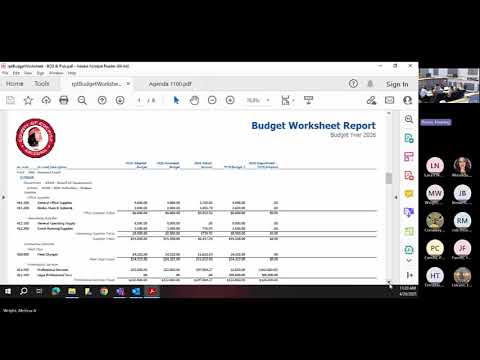
The discussion focused on the county's insurance and judgment lines within the risk-management budget. Julie Morales, the county's risk manager, told the board the budget includes a $350,000 line for judgment, damages and settlements; the county had spent about $162,000 of that amount so far this fiscal year, Morales said. She also described the risk-management fund as a "drawdown fund."
Board members flagged a projected increase in the county's pooled insurance premium. Morales told the board Cochise County paid about $709,078 in premiums in the prior year and staff were tentatively budgeting about $806,780 for the coming year. She said the increase followed an in-person property appraisal by the Arizona Counties Insurance Pool (ACIP) that showed higher replacement values than previous year-over-year estimates, which had been applied at roughly 5 percent annually. The pool's actual appraisal showed larger increases, Morales said, producing a higher premium estimate.
Why it matters: the insurance premium and judgment/damages lines cover settlements, deductibles and liability exposure across county operations. Morales said the judgment/damages line includes deductibles and is used for a range of claims, from minor vehicle damage to larger liability matters.
Board members questioned when the county files claims with the pool and whether some smaller claims should be paid from county funds instead of tendered to ACIP to avoid future premium increases. Morales said the county evaluates claims on complexity and liability; minor, noninjury claims are often handled internally or by the county attorney, while larger cases involving significant injury, death or complex ongoing medical obligations are typically tendered to the pool.
Supervisors also discussed coverage limits for elected officials. Several supervisors raised concern that the pool may not cover certain legal exposures that arise from actions taken in an elected official's capacity, and whether the board itself has any statutory immunity. Supervisor Crosby said elected officials can be vulnerable to suits or criminal prosecutions that the pool may not cover, and suggested legislative immunity as one possible remedy. Morales and other staff responded that professional liability (errors-and-omissions) coverage is available for acts "within the course and scope" of county duties but that coverage determinations depend on legal definitions and the county attorney's analysis.
The board asked staff to arrange a briefing from ACIP. Morales said Cynthia Malouf, identified in the meeting as executive director of the county insurance pool, would be invited to brief the board about services ACIP provides beyond standard insurance, such as claim mitigation, cybersecurity reviews and pool-wide training that the county may not be able to obtain independently.
Next steps: staff will provide the board with ACIP materials and a written explanation of the risk fund structure and thresholds used to determine whether the county handles a claim internally or tenders it to the pool. No formal action or vote occurred at the work session.
Ending: Supervisors placed the risk-management review on the board's continuing budget agenda and scheduled follow-up material and an ACIP briefing for a future meeting.