Get Full Government Meeting Transcripts, Videos, & Alerts Forever!
Get email alerts on the Worker Ownership Procurement topic
No spam. Unsubscribe anytime.
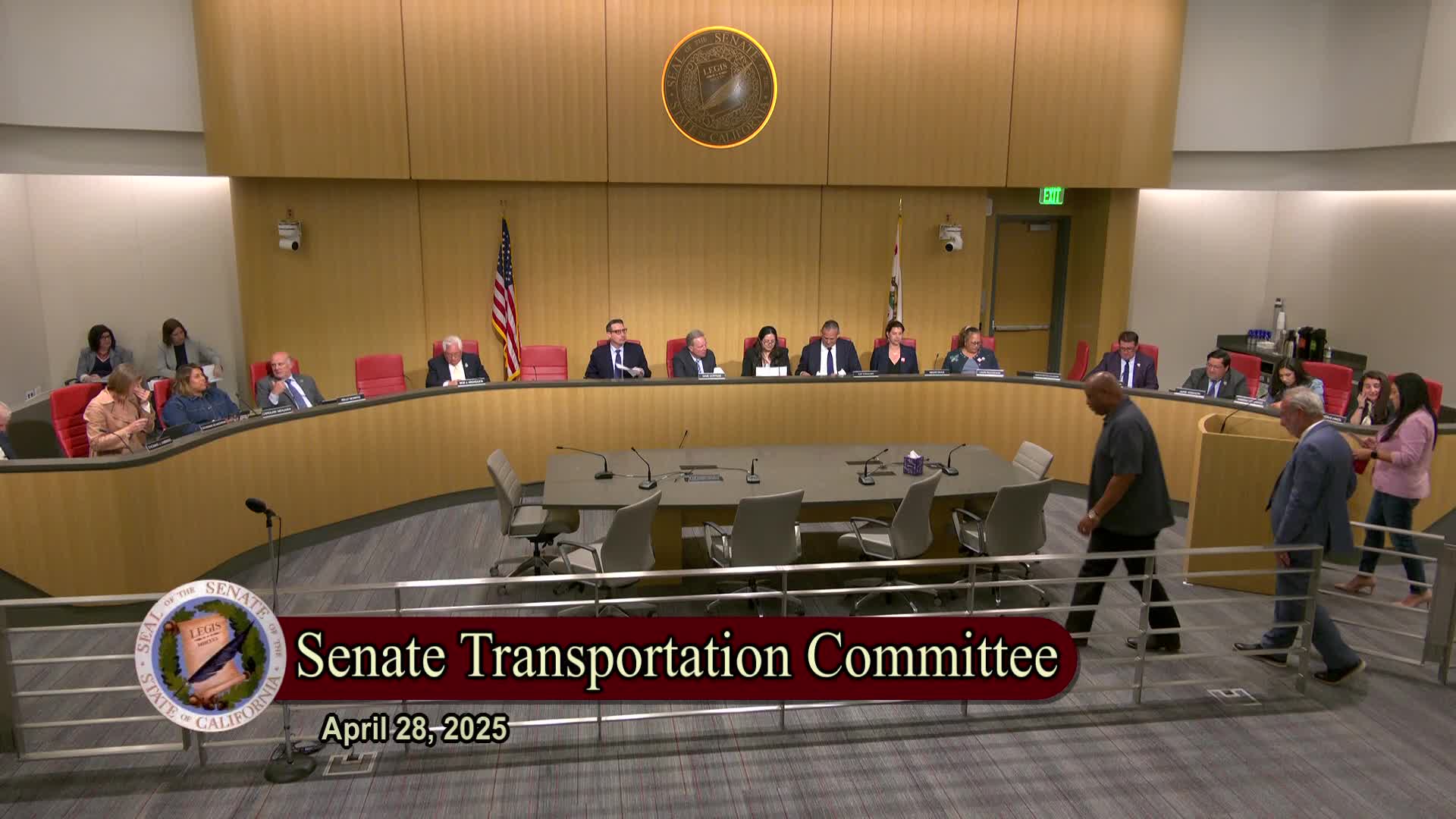
Committee advances SB 713 to give procurement preference to employee‑owned construction firms
Summary
SB 713 would create a bid preference for construction contractors that operate employee stock ownership plans (ESOPs) on state‑funded construction contracts. Supporters said ESOPs promote retirement security and worker wealth; no opposition testified at the hearing and the bill was moved to Appropriations.
The Senate Transportation Committee voted to advance SB 713, which would create a bid preference in state‑funded construction contracting for firms that operate employee stock ownership plans (ESOPs).
Author Senator Valadares said ESOPs help working people build wealth and retirement security by providing ownership stakes in the companies they work for. Supporters included worker‑owners who described ESOPs as transformational for retirement outcomes and former business owners and technical witnesses who said ESOPs had helped transition firm ownership while preserving jobs.
Witnesses Joseph Lewis and Stephen Ward, both representing employee‑owned Pavement Recycling Systems and other ESOP practitioners, described 100% employee ownership and said participation increased retirement security and inclusion of workers. The author referenced prior legislative work supporting worker ownership, including a 2022 hub and a recent Power Act report that recommended modest incentives for worker‑owned firms.
No opposition testimony was recorded in committee. The committee adopted the motion to pass SB 713 to the Committee on Appropriations; the author asked for an aye vote and the motion was recorded as passed on the roll call with ayes registered in committee. The bill would apply to state‑funded construction contracts (federal funds excluded) and the specifics of the preference and eligibility criteria will be implemented through bill language and procurement rules.
Supporters said the preference aims to expand worker ownership, preserve jobs and improve retirement outcomes; the committee forwarded the bill for appropriations review and further consideration.