Get Full Government Meeting Transcripts, Videos, & Alerts Forever!
Get email alerts on the Ports Air Quality topic
No spam. Unsubscribe anytime.
Senate committee advances bill urging coordinated port electrification planning, opponents warn it would restrict air‑district authority
Summary
The Senate Transportation Committee advanced SB 34, requiring coordinated port infrastructure and energy planning to support emissions reductions while prompting opposition from air districts and environmental justice groups.
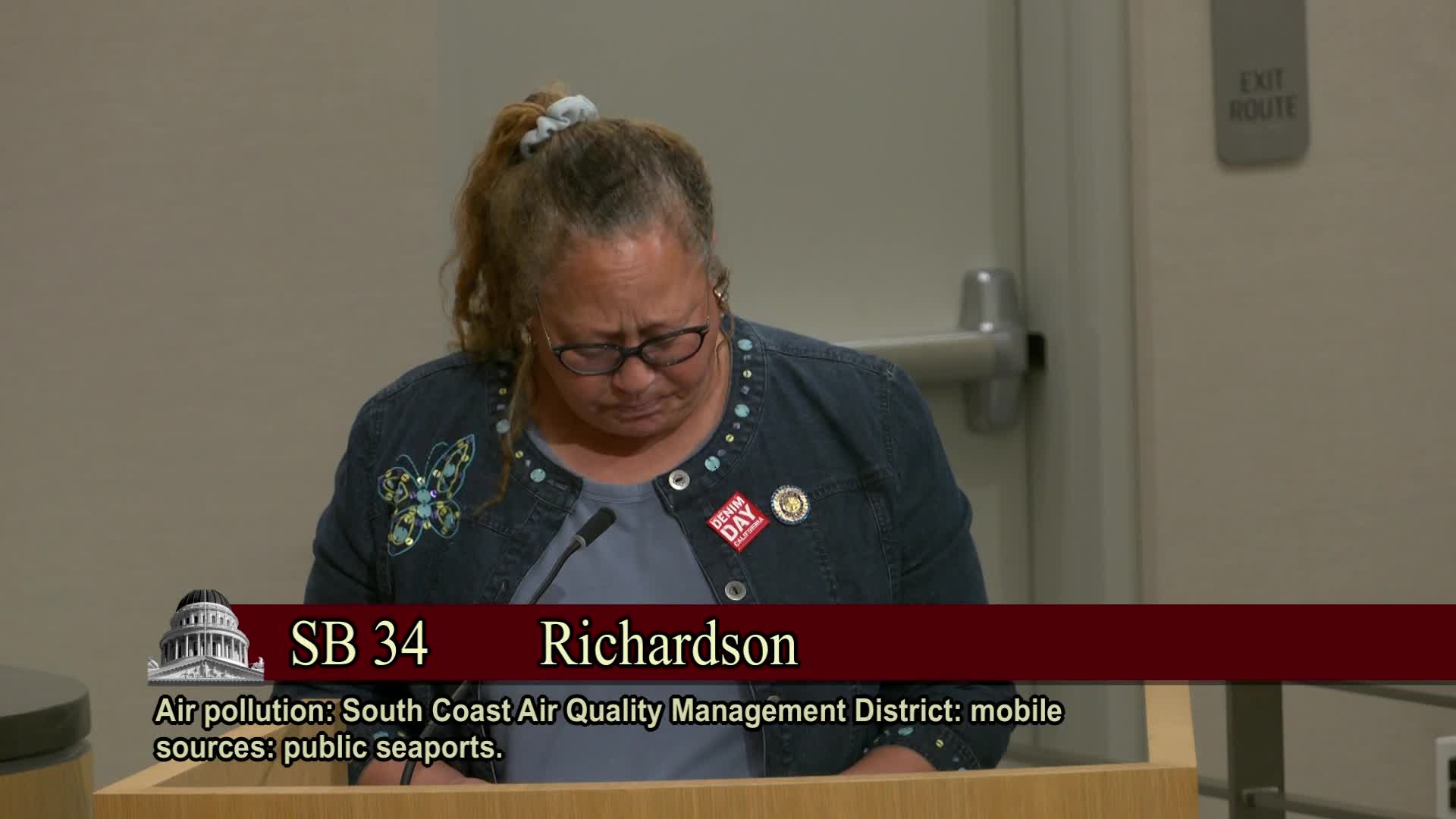
The Senate Transportation Committee advanced SB 34, a bill directing the ports of Los Angeles and Long Beach to prepare assessments and coordinated plans for energy demand, costs, funding, workforce and environmental impacts tied to achieving zero‑emissions goals. The committee passed the measure as amended and sent it to Appropriations.
Author Senator Richardson said SB 34 seeks to support the ports’ transition to cleaner operations while protecting jobs and keeping cargo moving. Supporters — including the International Longshore and Warehouse Union (ILWU) and the Pacific Merchant Shipping Association (PMSA) — argued the ports have already achieved large emissions reductions and that further progress requires coordinated infrastructure investment, including power grid upgrades that require outside partners.
Marvin Pineda of the ILWU and Mike Jacobs of PMSA described voluntary progress under the ports’ Clean Air Action Plan and urged a collaborative planning process to fund and deploy charging and fueling infrastructure without imposing abrupt operational caps that could divert cargo to other states.
Opponents — led by South Coast Air Quality Management District (South Coast AQMD), environmental justice groups, and public‑health organizations — said the bill would unduly constrain the district’s authority and hamper the agency’s tools for meeting federal air quality standards. Sarah Reese of South Coast AQMD said port pollution contributes roughly 250 premature deaths and $3.5 billion in annual health impacts across the region and said local regulators need all available authority to meet federal standards and avoid sanctions that could jeopardize federal highway funding.
Environmental justice witnesses emphasized longstanding air‑quality burdens in port‑adjacent communities and requested that the district retain regulatory tools. The author said the bill does not prevent cooperation or progress toward zero emissions and noted she had accepted committee amendments and was open to further work with opponents.
The committee vote to advance SB 34 as amended was recorded 13–0 with absent members left on call. The record shows the bill will proceed to the Senate Committee on Appropriations. Opponents and supporters signaled they will continue negotiating technical language and implementation guardrails in subsequent hearings.