Get Full Government Meeting Transcripts, Videos, & Alerts Forever!
Get email alerts on the Education Schedule topic
No spam. Unsubscribe anytime.
Board hears timeline for high school schedule change as teachers and residents urge more planning
Summary
Superintendent presented a timeline for implementing a new high school master schedule with board presentation in November 2025 and completion by August 2026; teachers, parents and students urged the board to slow the process, raise concerns about lost instructional time and impacts on specialized programs.
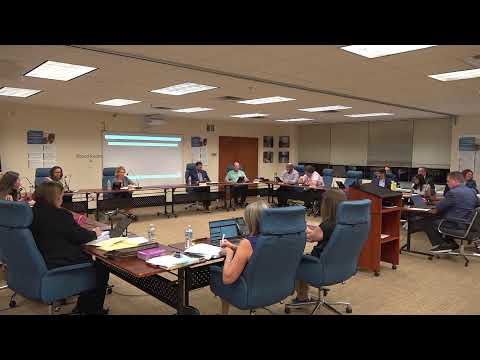
The West Chester Area School District superintendent outlined a timeline on April 28 for implementing a proposed high school master schedule change, while teachers, students and parents urged the board to delay the rollout to allow more planning, clearer budgets and fuller stakeholder input.
Superintendent Dr. Christopher told the board the district would aim to present a substantially completed plan in November 2025, with an expected board action date in February 2026 and construction or implementation work completed by August 2026. "The idea would be that we would have a substantially completed plan for what that would look like for a board presentation in November of 2025 with an expected school board action date in February, which will allow the board to take action on any financial things they may need to move forward with so that work could be completed by August of 2026," he said during his monthly report.
The superintendent described a set of benchmarks administrators are proposing to address facilities, food service, seating and collaboration space, lunch supervision, technology and safety supports, scheduling for specialty programs and graduation-requirement alignment. He also said the district plans a family town hall in May and ongoing building- and district-level governance meetings that would include teachers and students.
Why it matters: the proposed schedule would change how many minutes and how often classes meet; speakers at the meeting said the change could reduce total instructional contact in some courses and could affect students in specialized programs such as Allied Health and the Technical College High School (TCHS). Several speakers urged a slower, more collaborative approach to avoid curricular harm and costly retrofits.
Teachers and parents told the board the plan appears rushed. Nancy Wood, a West Bradford resident, said the change is "a top down push of a sweeping initiative that wasn't clearly defined, doesn't work for all students, doesn't have a budget, has no meaningful supporting data, and is lacking stakeholder support." She urged the administration to "show us a real plan" and to earn community trust.
Teachers emphasized practical concerns about instructional minutes, laboratory and career-program time and campus supervision during the proposed extended midday period. Henderson High School teacher Robin Melborn said students born during the COVID-era were among those who most need consistent instructional time and warned that the proposed schedule "gives us slightly longer class periods ... but the classes only meet 3 out of 4 cycle days. That is a big net loss of learning time."
Science teachers and classroom instructors asked the district to resolve unanswered implementation questions before moving forward, including how credits and graduation requirements will be adjusted, how supervision ratios during the midday period will be managed, and how professional-development time will be structured. "We are simply asking to finish building the plane before flying it," said biology teacher Joanna Nee.
Supporters of a measured approach said they back the goals but want more time. Bill Anderson, a Henderson teacher and alumnus, thanked the superintendent for beginning talks with the West Chester Area Education Association and said, "I hope that stakeholder input will be treated seriously." Several speakers cited neighboring districts that spent multiple years planning similar schedule changes and asked the board to allow comparable time.
Students, including juniors and seniors who participated in district panels, said the proposed rotating schedule is confusing and risks narrowing course offerings. Senior Veil Bender described being consulted on options and said some student opinions were not followed: "Clearly, many opinions have been disregarded when making this decision." Other students said longer individual class periods could worsen attention and fatigue for some learners.
The superintendent and administrators acknowledged outstanding implementation tasks and said many items will require board action tied to the capital plan or operating budget. Dr. Christopher said some facility work — a second serving area, seating and collaboration spaces, or badge readers and cameras — could require funding and a February action date so that bidding and work could proceed in time for an August 2026 completion.
The board did not take final action on the schedule at the April meeting. Administrators said they expect to bring progress reports to upcoming committee meetings and to the board in November. Several public speakers urged the board to delay final approval until a comprehensive plan, including timelines, budgets and clear stakeholder processes, is available.
Looking ahead: the district plans a family town hall in May and further governance-team meetings with staff and students. Board members and administration said they will continue work on benchmarks before any final vote.