Get Full Government Meeting Transcripts, Videos, & Alerts Forever!
Get email alerts on the Immigration 287g topic
No spam. Unsubscribe anytime.
Residents urge Carroll County commissioners to oppose 287(g) ICE deputization
Summary
Dozens of residents spoke at the April 28 Carroll County Commissioners meeting to oppose local participation in the federal 287(g) program, citing due-process, fiscal and policing concerns. Commissioners said the decision rests with the elected sheriff but agreed to forward public comments.
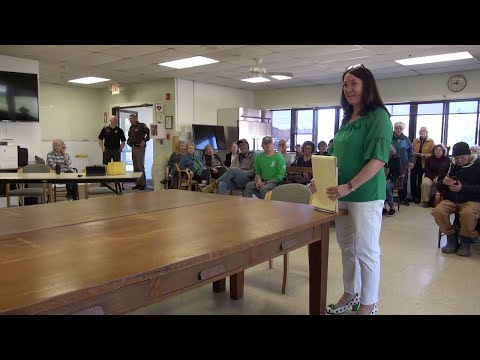
Dozens of Carroll County residents urged county commissioners on April 28 to oppose the federal 287(g) program, which deputizes local law-enforcement officers to assist Immigration and Customs Enforcement (ICE).
The comments filled the meeting’s public-comment period, with speakers from Wolfeboro, Tamworth, Conway, Moultonborough and other towns criticizing the program’s record and potential effects locally. Many cited due-process concerns, the risk of racial profiling, and the potential financial burden on county taxpayers if local officers must transport or detain people for ICE.
Bobby Budin, who organized the group’s appearance, said the community was “very concerned about the 287gs program, which would be deputizing our sheriff’s department as agents for, the ICE program.” State Rep. Anita Burrows (R) told commissioners she had not heard anyone reject the need for immigration enforcement but said the “way it’s being done is shocking. It violates our due process.”
Several speakers read or referenced court opinions and recent news accounts to underscore risks. Anne Glavin cited a federal judge’s opinion in the Abrego Garcia litigation, quoting the judge’s warning that executive removal powers exercised without court oversight could put “American citizens … at risk.” Beverly Woods and other commenters described specific cases where they said families, including U.S. citizens, suffered as a result of ICE actions. Jerry Curran and others said participating in 287(g) would damage trust between immigrant communities and local police, making victims and witnesses less likely to report crimes.
Commissioners clarified the scope of the county’s role. The board said the decision to sign on to 287(g) rests primarily with the elected sheriff, not the commissioners, but several speakers urged the commissioners to act because the commission controls the county budget. A meeting participant summarized the financing concern: training under the 287(g) models discussed would require about 40 hours of local officer time (paid by county taxpayers), and local agencies could incur additional transport and detention costs if local facilities could not hold detainees.
Commissioner Chuck McGee (chair) and others told the room they would forward the meeting record and public comments to the sheriff’s office. The board did not vote on participation in 287(g) or freeze any funds; no formal action on deputization was recorded.
Speakers also urged commissioners to consider nonfinancial harms. Several commenters described fear among documented visa holders, international students and seasonal workers; others warned of the psychological toll on officers who might be asked to carry out deportation-related tasks. Ellen Farnham and others noted local labor and health needs — including doctors and hospital staff on visas — and said aggressive local enforcement risks removing workers the county relies on.
The commissioners’ office said public input would be provided to the sheriff for consideration. No formal request from the sheriff to the commissioners appeared on the agenda, and commissioners repeatedly stated any final decision would be made by the elected sheriff and not by the commission itself.
Ending
The meeting record shows a lengthy public-comment period on 287(g) but no formal county decision. Speakers asked commissioners to consider using budget authority to block training funds; the board said it would pass public input to the sheriff and the delegation that approves the budget. The sheriff’s office or the sheriff — not the board of commissioners — would be the official body to request or sign any 287(g) agreement.