
Peoria Unified board approves new K–12 social studies textbooks after yearlong selection process
Get AI-powered insights, summaries, and transcripts
Sign Up Free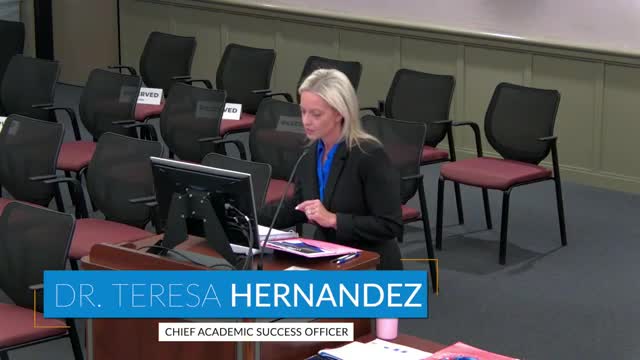
Summary
Peoria Unified School District’s governing board voted Thursday to adopt new history and social sciences textbooks for both K–8 and 9–12, following a multi‑month review by a 24‑member K–8 committee and a separate high‑school panel.
Peoria Unified School District’s governing board voted Thursday to adopt new history and social sciences textbooks for both K–8 and 9–12, following a multi‑month review by a 24‑member K–8 committee and a separate high‑school panel.
The board approved the K–8 recommendation — Savvas Learning’s My World Interactive Social Studies with the Savvas Realize platform (copyright 2026) — and approved high‑school adoptions that include Savvas (core Arizona and U.S. history, economics and government), Bedford, Freeman & Worth (AP courses) and Teachers’ Curriculum Institute (geography). The board’s roll calls for both items recorded unanimous ayes from members present.
Why it mattered: District leaders and the selection committees said the new materials align to the updated Arizona standards, offer more digital and teacher supports than the district’s 2003 resources and are designed to reduce platform training burdens by matching tools already used in math and science. Dr. Teresa Hernandez, chief academic support officer and the adoption presenter, told the board the committee’s work prioritized “consistency, continuity and capacity” so teachers and students would not need to learn another platform.
What the committees did: The textbook-selection process ran from December through April and used a staged “gateway” rubric that required vendors to demonstrate standards alignment, teacher supports, digital accessibility, scaffolding and engagement opportunities. Committee members evaluated submissions (Gateway 0), alignment (Gateway 1), scaffolding and teacher supports (Gateway 2) and digital features and engagement (Gateway 3). Vendors that met gateway benchmarks advanced to presentations; members reviewed public feedback collected during a 60‑day display window and vendor responses before making recommendations to the superintendent.
Vendor commitments and district follow‑up: Committee leaders said they requested attestation letters from vendors about how materials meet district expectations and state requirements. During the public board study session and in follow‑up letters provided to the board, publishers pledged to remove instructional elements not aligned with the district’s policy and Arizona law — for example, Savvas committed to remove references to social‑emotional learning from teacher editions for specified Arizona programs and BFW indicated it would remove contributors’ biographical material from student editions purchased by the district. Dr. Hernandez told the board that, for online materials, “it is changeable overnight” and that the district would work with vendors to toggle on or off elements during scope‑and‑sequence and implementation planning.
Implementation timeline and next steps: The district said business and procurement actions would begin immediately (pending final board approval) to obtain print materials and activate digital access. The “What Happens Next” documents handed to the board detail steps including the formation of a standards‑alignment implementation committee; creation of scope, sequence and pacing guides; selection of assessment items; and a multi‑year professional learning plan. Committee chairs and district staff emphasized that the materials adoption is the start of multi‑year work and that teachers will provide annual feedback to refine pacing and usage.
Public input at the meeting: Dozens of teachers and committee members who participated in the gateway reviews and vendor presentations addressed the board during public comment or study session testimony, praising the transparency of the process and the depth of review. Multiple committee members told the board the recommended resources showed stronger standards alignment and better teacher scaffolds than the district’s current texts.
What the board said: Board members repeatedly praised the scale of committee work and the transparency of the display period. Several trustees asked about safeguards if problems appear in print or digital materials; administrators said they would continue to escalate issues directly to vendor leadership and that the district has leverage to request corrections or temporary removal of problematic content.
Votes at a glance - K–8 history and social science adoption (Savvas Learning My World Interactive): approved by voice/roll call (5–0). Motion to approve was moved and seconded by board members during the closing action portion of the meeting. (See provenance.) - 9–12 history and social science adoption (Savvas, BFW, TCI for AP and core courses): approved by voice/roll call (5–0). (See provenance.)
What to watch: The district plans to begin vendor onboarding and professional learning in the months after approval; parents and community members will be able to review materials during school‑level curriculum nights and through district digital viewer access. The board asked for and administration agreed to documented follow‑up on vendor responsiveness and any requests to remove or revise non‑aligned content.
Sources: Presentation and Q&A by Dr. Teresa Hernandez, district documents in the board packet, public comments from selection‑committee members and the board’s roll‑call votes on both adoptions.