Get Full Government Meeting Transcripts, Videos, & Alerts Forever!
Get email alerts on the Performing Arts Commission Bylaws Handbook topic
No spam. Unsubscribe anytime.
Leesburg arts commission adopts handbook and bylaw edits, to advance marketing plan and community outreach
Summary
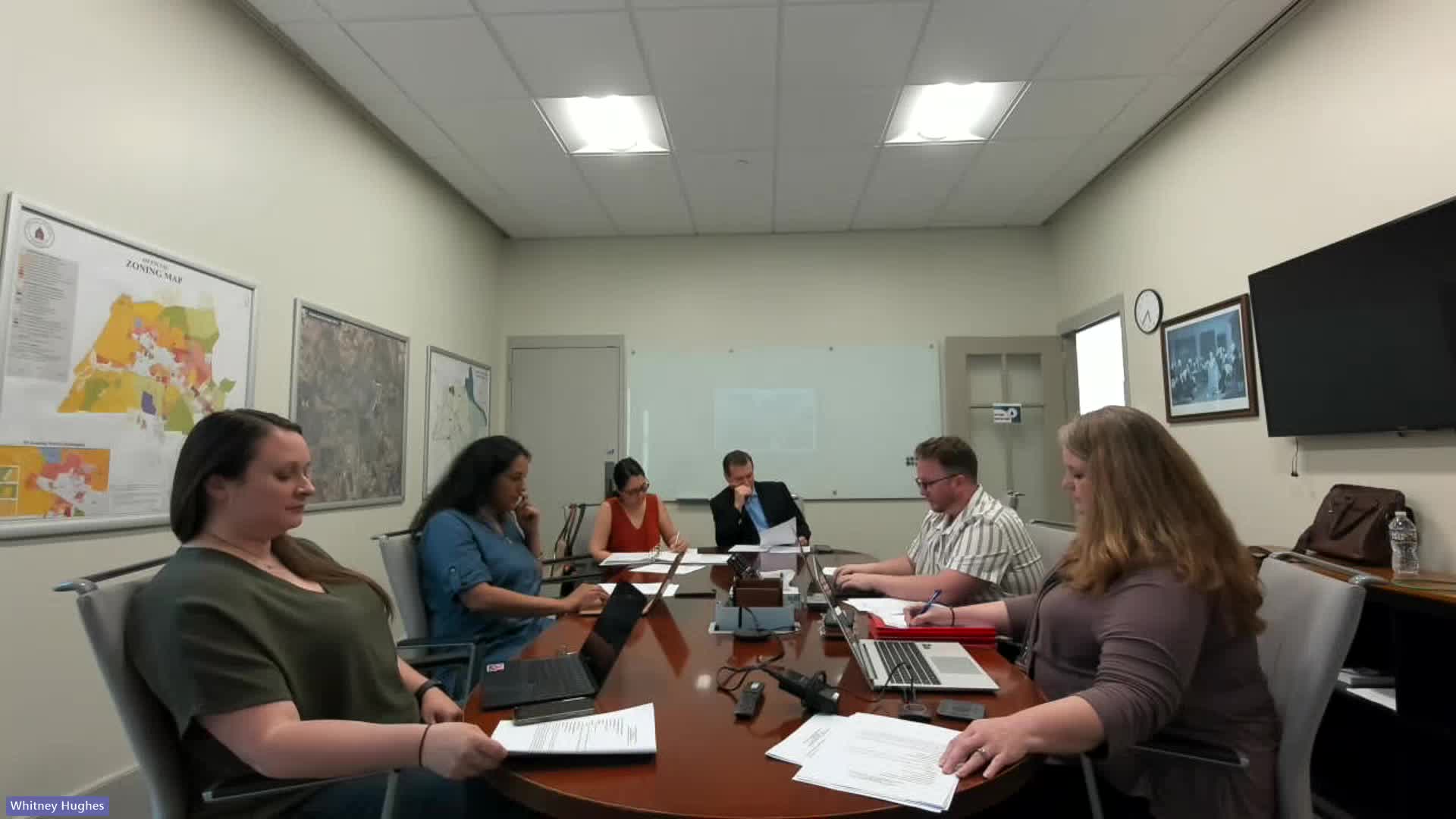
The Louise Green Performing Arts Commission on April (date not specified) approved revisions to its advisory handbook and bylaws intended to clarify the commission’s role, accessibility and community‑relevance standards, and agreed to develop materials for a council‑backed marketing and public‑education campaign.
The Louise Green Performing Arts Commission on April (date not specified) approved revisions to its advisory handbook and bylaws intended to clarify the commission’s role, accessibility and community-relevance standards and to proceed with planning for a council‑backed public education and marketing campaign.
Commission Chair (name not specified) told the commission the Town Council took a straw vote at a recent work session in favor of “option 2,” described as an advocacy and public‑education (marketing/visibility) campaign that would use part of the FY ’25 budget. The council will consider the proposal at a future meeting; the commission planned follow‑up work to prepare materials and a presentation.
Why it matters: The edits define what the commission may recommend to the council and attempt to balance artistic freedom with community standards and accessibility. The marketing campaign is intended to produce materials and public outreach that the commission and council can use to demonstrate demand and shape future funding or facility planning.
The commission voted to accept the handbook revisions “as amended,” adding language that projects should align with existing community standards and that final recommendations to council will “be made with care, centering community relevance and cultural responsibility.” The handbook language the commission adopted says, in part, that while artistic expression is subjective, the commission will “prioritize works that strive to foster inclusion and avoid material likely to be perceived as obscene, defamatory, or discriminatory based on race, ethnicity, religion, gender, sexual orientation, disability or any other protected status.”
Commission members debated the wording at length. Several commissioners said terms such as “offensive” and “obscene” are subjective and raised concerns about deputizing the commission as a censor. One commissioner suggested adding language about intent versus impact; another urged reliance on program notices and content warnings in promotional materials to reduce later disputes. The commission agreed to soften prescriptive wording and to emphasize that recommendations are advisory and subject to council approval.
On bylaws, the commission edited language describing its role in “presenting the performing arts” and limited that role to advising council on programming, funding support and coordination of logistics related to artistic bookings. The final wording the commission approved discourages—rather than bars—commission members from directing, performing or acting as a producing entity, with an exception “in the event of an emergency” to be assessed case‑by‑case.
Commissioners and staff discussed practical implications of that change. Several said the town’s procurement and ethics policies already address conflicts of interest (for example, a commissioner who submits a proposal should recuse from selection). Commissioners raised scenarios such as last‑minute performer cancellations and whether a commissioner might need to step in; the adopted emergency carve‑out is meant to allow staff and council to handle such rare instances without creating a standing exception.
Council and staff direction: Chair (name not specified) reported council members asked the commission to clarify “community relevance” in artist evaluations and to reinforce the commission’s advisory status. The commission agreed revisions would note community input (surveys, forums) as the primary way to demonstrate relevance and to remove financial or structural barriers to access where possible.
Marketing campaign and next steps: The commission outlined four deliverables for the Option 2 campaign discussed with council: printed brochures, digital advertising and web content, a short public survey (QR code), and at least one in‑person community engagement event (tabling or similar). The commission discussed framing—whether materials should primarily promote the commission’s role, solicit public priorities, or both—and agreed to a work session to develop copy and creative.
Practical deadlines mentioned on the record included a presentation to council in May (a May 8 presentation deadline and a May 13 council meeting were referenced in the meeting record). Staff liaison Whitney was reported to be preparing a memo to council and to update the commission’s presentation materials; the commission directed Whitney to file the revised drafts and to circulate them to commissioners before council review.
Outreach and partnerships: Mayoral appointee Barbara reported outreach contacts, including meetings with John Papp of Leesburg Movement and the town’s economic development staff. The Leesburg Movement is pursuing National Main Street America program work and event partnerships; Barbara said the group expressed interest in collaboration (examples discussed included participating in a December “mistletoe market” and low‑sound, low‑cost performances such as a brass quintet and high‑school choir caroling). Commissioners discussed broader venue strategy, referencing facilities like the Alden (McLean, Va.) and Reston Community Center as models and noting that a consultant study would be a typical first step for siting and sizing a major venue.
Administrative followup: The commission agreed to schedule a public work session to develop the marketing deliverables and survey, to be set by a doodle poll to commissioners and recorded per town public‑meeting rules. The commission also discussed standard conflict‑of‑interest language (recusal if applying to provide work) and asked staff to track council edits the commission must present.
Votes at a glance - Motion to adopt today’s agenda: passed (vote recorded as “all in favor”; tally not specified). - Motion to approve March 27 meeting minutes: passed (vote recorded as “all in favor”; tally not specified). - Motion to accept handbook revisions as amended: passed (motion seconded; “all in favor”; tally not specified). - Motion to accept bylaw/article edits (Article I, section V, and related edits): passed (motion seconded; “all in favor”; tally not specified). - Motion to send a doodle poll for a work session between now and the next meeting: passed (motion seconded; “all in favor”; tally not specified). - Motion to adjourn: passed (vote recorded as “all in favor”; tally not specified).
What’s next: Staff will circulate revised drafts and a memo to council as part of the council packet; commissioners will complete a work session (date to be set by poll) to produce the brochure copy, survey and event plan to support the May council presentation. The council retains final authority over funding and approval of programs and any bylaw/handbook language.