Get Full Government Meeting Transcripts, Videos, & Alerts Forever!
Get email alerts on the Rent Control topic
No spam. Unsubscribe anytime.
Committee advances bill to lower rent cap, expand tenant protections statewide
Summary
The Assembly Housing and Community Development Committee advanced AB 11 57 on a 7-5 vote after hours of testimony from tenants, landlords and housing industry groups. The bill would lower the annual rent increase cap, remove the single-family home exemption and make tenant protections permanent.
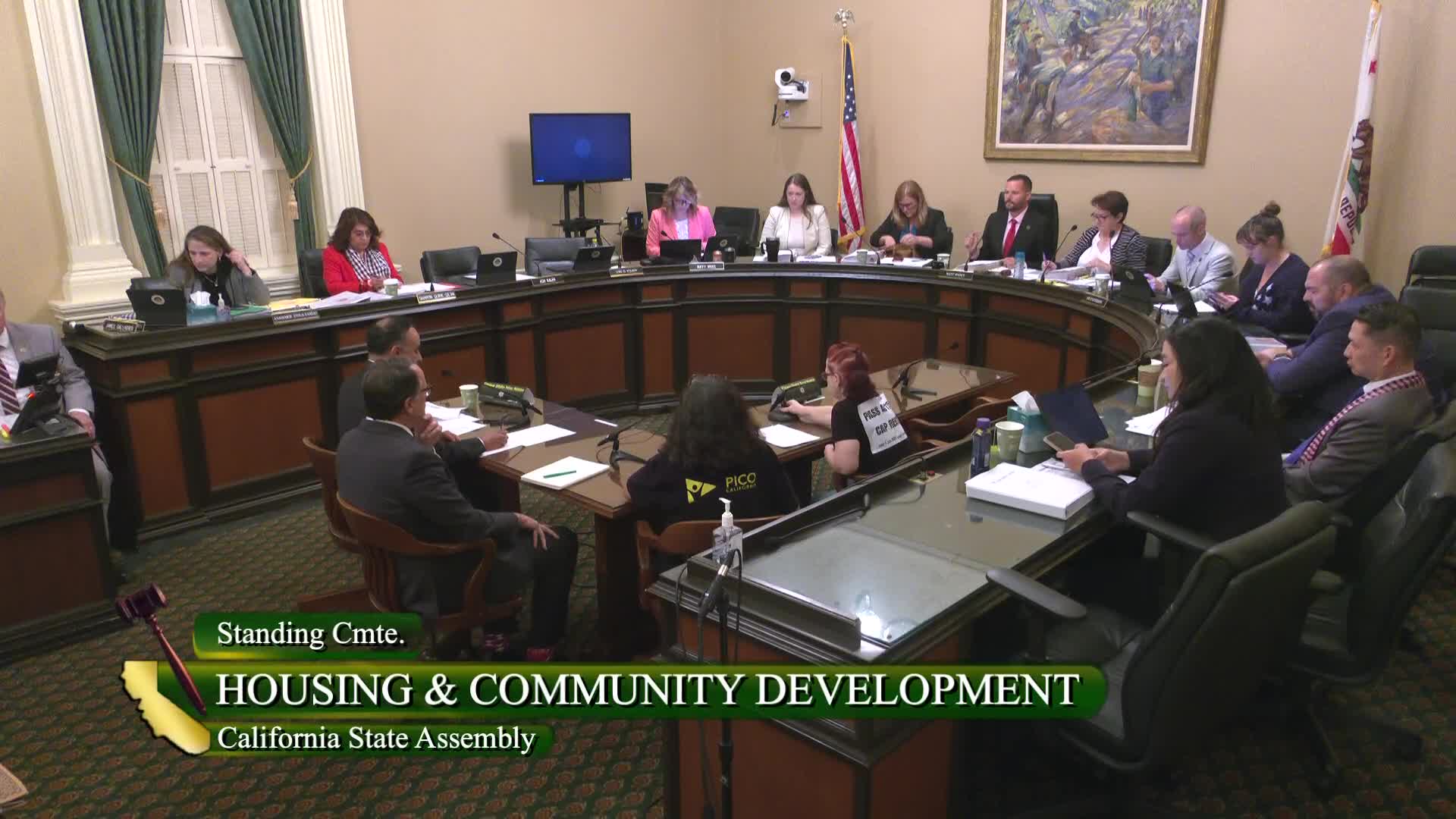
The Assembly Housing and Community Development Committee on Thursday advanced AB 11 57, the “Affordable Rent Act,” voting 7-5 to send the bill to the Assembly Judiciary Committee.
AB 11 57 would lower the statewide annual rent-increase cap to “CPI plus 2% or 5%, whichever is lower,” remove the existing exemption that excludes many single-family rental homes from tenant protections, and eliminate the law’s sunset date so the tenant protections would be permanent. Supporters said the changes would stabilize housing costs and reduce displacement; opponents said the measure risks chilling housing production and would harm small landlords.
Sponsor testimony described steep rent increases and a large affected population. “When we first moved into our home, our rent was $14.25 a month. It’s now $27.80. That’s a 95% increase,” said Tammy Alvarado, a renter from San Diego County, who testified in support. The bill’s author and coalition witnesses told the committee that roughly 17,000,000 Californians rent and that about 2,000,000 households live in single-family rental homes — roughly 34% of the state rental market, according to testimony.
Small landlords and industry groups urged a no vote. Deborah Carlson of the California Apartment Association told the committee the legislative analyst has found that “rent control discourages new housing,” and said previous voter rejections and local variations in law argue against broad, statewide changes. Kareem Griese of the California Building Industry Association said AB 11 57 would eliminate a narrowly drawn exemption intended to protect small, long‑held single‑family properties and remove a sunset that was scheduled to allow legislative review of the policy’s impacts.
Committee members voiced competing priorities. Members who supported the bill cited rising family homelessness and the need for immediate tenant protections. Members who opposed or raised caution argued that caps could discourage new construction or maintenance and that the state should protect housing production. Several members said they would press the author and stakeholders to negotiate amendments as the bill moves through later committees.
The committee’s roll call produced a 7-5 margin in favor of advancing the bill. The panel referred AB 11 57 to the Assembly Judiciary Committee for further consideration.
Votes at the hearing reflected sharp divisions among housing advocates, labor groups and industry organizations. Dozens of witnesses from tenant and community organizations testified in support, while trade associations and small‑owner groups testified in opposition. The committee allowed extensive public comment, and multiple speakers described recent rent increases, difficulty affording housing and concerns about displacement.
AB 11 57 references and builds on existing tenant-protection law passed in 2019 (commonly discussed at the hearing as AB 1482 or the Tenant Protection Act of 2019) and engages statutory and policy debates tied to Costa‑Hawkins, Proposition 13 and state reporting requirements referenced in testimony.
The committee record shows the measure advanced; future committee hearings will consider technical and policy amendments requested by multiple members and stakeholders.