Get Full Government Meeting Transcripts, Videos, & Alerts Forever!
Santa Cruz Planning Commission backs downtown plan expansion, narrows local density-bonus option
Summary
The Planning Commission voted 4-1 to recommend that City Council certify the final SEIR and adopt amendments to the Downtown Plan, General Plan, Local Coastal Program and municipal zoning with staff-proposed changes and two commission amendments: a transportation/active‑use provision and an encouragement for local-hire/apprenticeship language.
Planning Commission Chair Paul Hammis and a 4-1 majority on Thursday recommended that the City Council certify the Final Subsequent Environmental Impact Report (SEIR) and adopt a package of amendments to the Downtown Plan, the city general plan, the Local Coastal Program and local zoning that would add the South-of-Laurel area into the Downtown Plan and create a local “downtown density bonus” program.
The commission’s vote follows a multi-year staff process and a final SEIR posted in mid‑April. Commissioners approved staff’s recommendation with two amendments: added language on pedestrian, bicycle and transit enhancements and an explicit encouragement for developers to consider local-hire and apprenticeship strategies. Commissioner Dan voted no; Commissioners Kelly, Kennedy and McKelvey and Chair Hammis voted yes. Commissioner Gordon was recused for this item.
Why it matters
The package would expand the Downtown Plan boundary by roughly 29 acres south of Laurel Street, change allowed floor‑area intensity on a small number of parcels and create a locally administered downtown density-bonus mechanism intended to produce more affordable housing than the state density-bonus alternatives while keeping height limits and design review levers for the city. Staff told the commission the mix of changes is designed to increase housing capacity near jobs and transit and to promote public-realm improvements connecting downtown to the river and beach.
What staff told the commission
Lee Butler, director of Planning and Community Development, said the city had received about 1,500 pieces of public feedback while drafting the plan and that the final SEIR did not identify new significant impacts that would require recirculation. Butler said staff designed the downtown density-bonus to be more competitive than the state density-bonus options and to “limit building heights and provide more affordable housing.” Sarah Noisy, senior planner, and consultant Bill Wiseman presented the project concept, which centers on four redevelopment blocks, a new Spruce Street plaza, improved riverfront connections, and an arena site option on Block C or D.
Staff noted the downtown density-bonus includes multiple developer pathways: on-site affordable units, off-site units in the downtown/coastal zone, and an in‑lieu fee. They also proposed an additional land‑dedication option staff would refine before the council hearing to respond to financing timing risks for deeply subsidized affordable projects.
Public comment
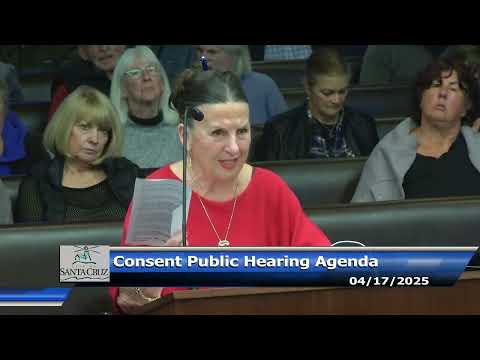
More than 30 members of the public spoke during the two‑hour comment period. Critics, including Frank Barron of Santa Cruzans for Responsible Development, urged the commission not to expand local height limits and warned that state law (the recent high-percentage density‑bonus statute discussed in the hearing) could allow much taller projects than the city intends. Barron said, “Don’t give away our local control.”
Other speakers urged more time to review the final SEIR and asked the city to address traffic, fire‑safety egress, water supply and displacement risks for existing low‑income and supportive housing. Several commenters, including representatives of the NorCal Carpenters Union, asked the commission and staff to add language encouraging local hiring, apprenticeship pathways and prevailing wages on downtown projects.
How the downtown density-bonus works (as presented)
- Floor area ratio (FAR) remains the primary control on building volume; the…
Already have an account? Log in
Subscribe to keep reading
Unlock the rest of this article — and every article on Citizen Portal.
- Unlimited articles
- AI-powered breakdowns of topics, speakers, decisions, and budgets
- Instant alerts when your location has a new meeting
- Follow topics and more locations
- 1,000 AI Insights / month, plus AI Chat