Get Full Government Meeting Transcripts, Videos, & Alerts Forever!
Get email alerts on the Veterans Services topic
No spam. Unsubscribe anytime.
Umatilla County human services director highlights veteran-claim gains, developmental-disability workload and Medicaid risk
Summary
Human Services Director Kim Beck told commissioners veterans services helped bring $500,000 into the county year-to-date and that over the last 20 months county developmental-disability supports represented about $55 million in services; she warned potential Medicaid cuts would have large downstream impacts.
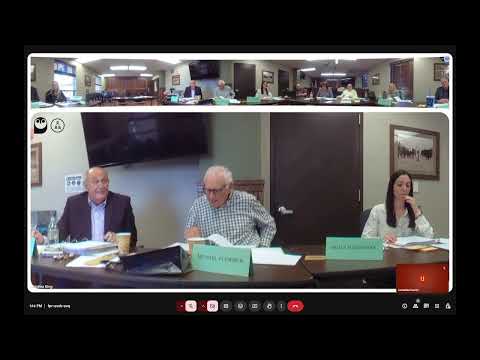
Kim Beck, director of human services, briefed the Umatilla County Board of Commissioners on veteran services and the county developmental-disabilities (DD) program during the budget hearing.
Beck told the board the county's veteran-services staff have stabilized at three positions and are fielding more than 1,100 calls per year; the office already facilitated about $500,000 in veteran benefit payments to local residents this year. She said staff completed about 370 claims in the prior year and that, year-to-date, the office is roughly one-third ahead of last year's pace.
"We are the front door," Beck said of the county DD office, describing the department as the eligibility and intake hub for people seeking paid supports in the community. She noted the county's DD program has grown substantially in 10 years: over the most recent 20-month span, providers and services supporting people with developmental disabilities used roughly $55 million in payments in Umatilla County. Beck said roughly $28 million of that sum flowed directly to businesses and providers operating in the county.
Beck described the county's role as case-management, licensing and abuse-investigation duties for adults who qualify for state DD services, and she urged caution because funding to deliver paid services is heavily Medicaid-dependent. She warned that any state or federal changes to Medicaid reimbursement or to Office of Developmental Disabilities Services formulas could quickly reduce the services available and shift costs locally.
Beck outlined program capacity and partners: Horizon Projects Inc. and RISE provide residential and supported-living services; the county runs the eligibility and paperwork functions and contracts for many direct-support providers (including some brokered services through Eastern Oregon Support Services Brokerage).
On outreach, Beck reported success with a regional "stand-down" event for veterans, coordinated with the Confederated Tribes veterans service office and the VA; the event increased attendance over prior years and county staff increased gas-card and gift-card assistance to remove travel barriers to services.
Beck and commissioners also discussed several line items in the department budget — training and dues, cell-phone allocations, and use of emergency preparedness (ARPA) grants — and confirmed staff would work with finance on fine-grained line-item placement. Beck asked commissioners to accept that many program dollars are forecast by state algorithms and not at the direct control of county managers.
The commissioners did not alter the department's requested program levels but directed staff to correct an inaccurately carried FTE in veterans services that would otherwise affect future grant forecasting.