Get Full Government Meeting Transcripts, Videos, & Alerts Forever!
Get email alerts on the Bridgecard Portal Verification topic
No spam. Unsubscribe anytime.
Lawmakers Question DHHS BridgeCard Portal’s Front‑end Checks, Seek Data on Verification and Fraud
Summary
The House Oversight Committee on State and Local Public Assistance Programs spent a hearing pressing the Michigan Department of Health and Human Services (DHHS) over how the BridgeCard application portal handles guest applications, identity verification and fraud detection.
The House Oversight Committee on State and Local Public Assistance Programs spent a hearing pressing the Michigan Department of Health and Human Services (DHHS) over how the BridgeCard application portal handles guest applications, identity verification and fraud detection.
Committee members raised concerns that the portal lets users start and even submit applications without entering Social Security numbers or other identity documents, and that some pages accept self‑attested answers that are checked only later in the process. DHHS officials said the system intentionally accepts partial or “guest” applications to avoid blocking applicants who lack phones, email addresses or regular internet access and that verification occurs later in the Bridges mainframe and by specialist staff.
The issue matters because the portal is the intake point for food and cash assistance that can be renewed over months or years and, lawmakers said, the front‑end design affects how much hands‑on follow‑up DHHS must perform and how quickly emergency benefits are issued.
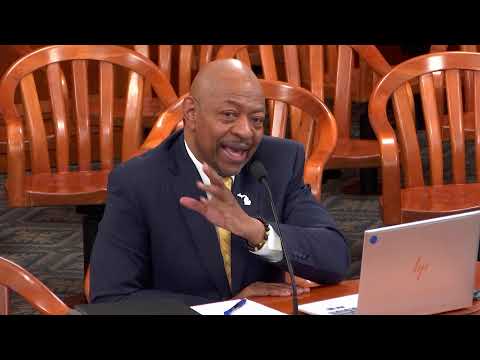
Dwayne Haywood, senior deputy director of the Economic Stability Administration at DHHS, told the committee that guest applications are converted into the Bridges system and subjected to the agency’s verification processes before any benefits are issued. "Once it actually goes in as a guest, then it actually is transposed through the My Bridge system into the Bridges system, and then it drops for the actual verifications, the income. And so it goes through the entire...to get us to a actual, benefit. So the benefits are not even if as a guest, they're not, actually, receiving benefits until they go through the portal until we actually do our checks that we need to do," Haywood said.
Why guest applications exist
Several lawmakers said they understood the agency’s aim to maximize access for people without stable online accounts, phones or email but pressed for why so little is required to move through the front pages of the form. DHHS officials repeatedly said certain front‑end elements are set to comply with federal rules and that the portal is designed to collect preliminary information while the agency’s back‑end verification process — which includes automated matching and manual specialist review — completes eligibility checks.
Haywood offered to provide the committee with DHHS’s verification checklists and data on unfinished applications. "I would be glad to give the committee, all of the verification checklists that we go through," he said. He also said DHHS refers suspected fraud to the Office of Inspector General (OIG) immediately: "We refer every single case that we feel that might be fraudulent activities. The minute we see it...we refer." The committee requested data on how often unfinished applications are submitted, how many are later certified, and cross‑matching reports for citizenship verification.
Expedited benefits, automated flags and manual review
Lawmakers asked how the department issues expedited food assistance mandated by federal rules, which requires a short timeline for issuance. Haywood said expedited claims are processed under federal standards that require DHHS to act quickly and then continue verification after benefits are issued. He repeatedly emphasized that automated matches (Social Security, IRS and other databases) and human specialists together determine final certification.
Committee members also tested the portal during the hearing and showed that some form fields can be manipulated to bypass obvious front‑end red flags (for example, implausible birthdates or household ages). DHHS said those cases are flagged and routed for specialist review or OIG referral and that benefits are not released until certification is complete.
Scope, numbers and system upgrades
Lawmakers asked for counts and operational detail. In committee exchanges Haywood cited the volume of applications the system handles (DHHS references in the hearing ranged from about 2,500,000 to 2,600,000 applications) and said the department is preparing a new platform, referred to in the hearing as Bridges 3, to improve front‑end and back‑end handling. He also told the committee DHHS had identified program integrity savings after working with oversight units, citing a $50,000,000 figure in savings from prior anti‑fraud efforts.
Authorized users and BridgeCard use
Members also questioned portal options that allow a BridgeCard owner to designate an authorized user and whether that feature increases fraud risk. DHHS replied that BridgeCard remains a PIN‑protected tool for beneficiaries, that some authorized‑user arrangements are in place to help people with disabilities and seniors who cannot shop themselves, and that technology and policy updates are being pursued to protect card integrity.
Formal actions and committee requests
At the start of the meeting Representative Menser moved to adopt minutes for the March 20 meeting; the motion prevailed by unanimous consent. During the hearing members asked DHHS to provide multiple data sets and staff briefings: the number and disposition of unfinished applications; counts of approved applications and total people served; details of cross‑matching for citizenship verification; results of employment and asset cross‑matches; and the verification checklists used by DHHS. DHHS officials agreed to provide those materials and to consider bringing technical staff to demonstrate the portal and planned Bridges 3 improvements.
What remained unsettled
Committee members repeatedly voiced concern that front‑end self‑attestation can create additional manual workload for DHHS staff and may allow more follow‑up work to be required. DHHS repeatedly said it must remain within federal guidelines for intake and verification and that automated and manual checks together are the agency’s control points before benefits are certified and paid. Members asked for written evidence — the verification checklists and cross‑match reports — to better evaluate whether different front‑end requirements could reduce downstream workload or fraud risk.
The committee adjourned after the hearing concluded; DHHS committed to returning the requested data and to follow up with technical staff on system improvements and verifications.