Get Full Government Meeting Transcripts, Videos, & Alerts Forever!
Get email alerts on the Liquor Control Operations topic
No spam. Unsubscribe anytime.
MLCC reports strong spirit sales, online renewals and October SIPs go‑live; seeks two FTEs
Summary
Kristen Belcher and Michigan Liquor Control Commission staff briefed the same House subcommittee on licensing, detailing more than 14,000 stocked spirit SKUs, a multibillion‑dollar sales footprint, an IT replacement (SIPs) scheduled to go live in October 2025, and a request to authorize two additional FTEs.
Kristen Belcher, chair of the Michigan Liquor Control Commission, and MLCC staff told a House appropriations subcommittee that the commission continues to modernize licensing and wholesale operations while maintaining revenue flows to the state and local governments.
"We feel very proud of that work," Belcher said, introducing commissioners and MLCC staff who presented licensing, distribution and technology updates. Carrie Kron, business manager, and David Marvin, executive services director, described the agency’s licensing volumes, wholesale operations and an information‑technology replacement project known as SIPs (Sales, Inventory and Purchasing System).
MLCC officials said the commission manages more than 14,000 spirit SKUs, over 20,000 retail, wholesale and manufacturer licenses and permits statewide, and annual spirit case sales in the low‑to‑mid tens of millions of cases. Kron told the committee that the commission’s wholesale and excise activities generate nearly $2.0 billion in sales dollars and that the agency collects excise taxes on beer and wine in addition to spirit revenue.
On licensing, MLCC said more than 22,000 individual renewals were due in the current annual renewal cycle; about 18,000 had been completed through the agency’s online renewal process at the time of the presentation. Kron said the online renewals and a recent change allowing licensees to print licenses at their location have reduced back‑end manual processing work for MLCC staff.
Marvin described the SIPs replacement for MLCC’s legacy sales and inventory system — which the presentation described as roughly 50 years old — and said the project is in functional testing and is scheduled to go live in October 2025. "We are actually in functional testing right now," he said; the presentation said the agency will move next into end‑to‑end testing.
MLCC reported current authorization for 150 FTEs in the executive budget but funding for 148 positions; the commission said it was asking the governor’s office to authorize the two additional FTEs in the executive recommendation so it can fill to the full allotment. MLCC said its current on‑board personnel count was 131, with active backfills in progress.
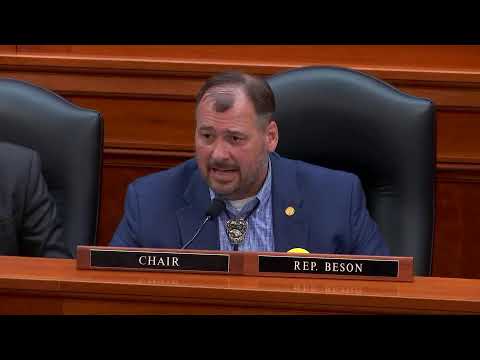
During questions, Representative VanWert asked about timing and scope of the SIPs rollout and when the system would go live; Marvin said the project’s go‑live target is October and testing was underway. Representative Snyder asked whether smoke alarms installed through a LARA program complied with a recently enacted Senate bill on 10‑year non‑replaceable batteries; LARA staff answered that the alarms already installed are compliant.
Representative Steele raised the prospect of a bottle deposit statute that could later include liquor containers. Belcher said the deposit question is not an MLCC initiative; MLCC staff told committee members the commission would adapt operations if the legislature changes law to include liquor containers and that the agency would work with partners to address implementation details.
Ending: The commission asked appropriators for authorization for two additional FTEs and continued funding for IT work projects; MLCC staff said SIPs is a multi‑year modernization effort that will connect ordering, inventory and ADA (authorized distribution agent) partners and move the agency to daily inventory balancing.