Get Full Government Meeting Transcripts, Videos, & Alerts Forever!
Get email alerts on the Long Term Care Oversight topic
No spam. Unsubscribe anytime.
LARA seeks $2.7 million for faster nursing‑home investigations, plus staffing for homes‑for‑the‑aged oversight
Summary
Director Marlon Brown told a House appropriations subcommittee that the Department of Licensing and Regulatory Affairs' FY2026 recommendation would maintain much of current spending while adding targeted resources: $2.7 million (including 7 FTEs) for nursing‑home complaint investigations and $700,000 (3 FTEs) to oversee homes for the aged.
At a House appropriations subcommittee presentation, Marlon Brown, director of the Michigan Department of Licensing and Regulatory Affairs (LARA), outlined the department’s fiscal year 2026 budget recommendation and asked lawmakers for additional staff and operating dollars to speed investigations and inspections in long‑term care.
"Our mission at LARA is to protect people and to promote business in Michigan through transparent and accessible regulatory solutions," Brown said, summarizing the department’s priorities and its FY2026 funding request. Dan Horn, LARA’s director of finance and administrative services, gave the subcommittee the financial details.
LARA’s FY2026 recommended gross budget is $650,600,000, Horn told the committee. He said 43% of that total supports state grant programs administered by LARA to local units of government and that roughly $301,500,000 (about 46% of the department total) is supported by general‑purpose general fund dollars. Horn added that most day‑to‑day departmental operations are paid from state restricted funds and user fees.
The department requested a set of targeted increases for oversight of vulnerable residents. Horn said the package includes $2,700,000 to boost oversight of hospitals, nursing homes and other licensed acute and continuing care facilities. That amount includes $2,400,000 and seven FTEs aimed at improving the timeliness of complaint investigations and routine inspections, and a little more than $300,000 and two FTEs to strengthen the complaint intake unit. "These investments in the LARA budget are critical to protecting nursing home residents," Horn said, noting Centers for Medicare & Medicaid Services (CMS) timelines that require on‑site investigation of “immediate jeopardy” complaints within three business days.
Horn also asked for $700,000 and three FTEs to enhance oversight of Michigan’s 348 licensed homes for the aged (HFAs). He said the HFA program had been sustained by eight healthcare surveyors since 2017 despite a roughly 35% increase in licensed HFAs during that period. Horn referenced audit findings issued by the Office of the Auditor General in March 2023 that identified inspection‑process and documentation weaknesses and noted a reported HFA licensure shortfall of about $900,000 in fiscal 2021.
Brown and Horn framed the requests as necessary to meet both federal and state obligations and to address workforce shortfalls. "We are acutely aware of burnout with our own team members and their ability to respond to a growing number of immediate jeopardy requests in a timely manner," Horn said.
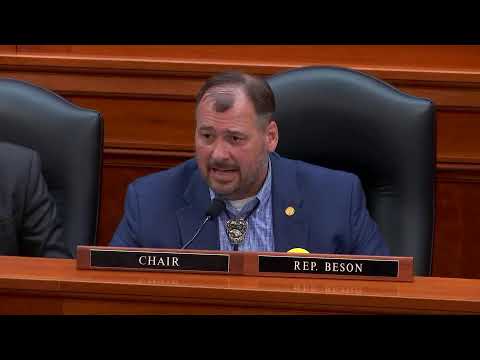
Committee members pressed for detail on overlap with other agencies and on workforce requirements. Representative Steele asked whether LARA’s proposal overlapped with the Department of Insurance and Financial Services (DIFS) or other regional federal or state programs; Brown said he had not reviewed DIFS’s budget in detail and promised to follow up with the representative’s office and the committee to clarify differences. "I'll make sure that we follow up with your office and also with this committee to clarify where the differences in those asks might be," Brown said.
Representative McKinney, who raised concerns about staffing and conditions in some nursing facilities, asked how the department enforces standards and supports facilities to correct deficiencies. Brown and Horn described LARA’s mix of inspection, training and partnership with long‑term care ombudsman services and said monetary penalties and disciplinary action are used when facilities do not correct violations in the required timeframes.
The presentation also described LARA initiatives beyond enforcement: a Regulatory Effectiveness Office established last year to centralize process improvement, outreach, and recruitment; upgrades to online licensing and renewal systems; and a medication‑aid training and registration program created under previously enacted law.
The subcommittee adopted the minutes from its April 17, 2025, meeting at the start of the hearing on a motion by Rep. Steele; no roll‑call tally was recorded in the transcript.
What happens next: Brown and LARA staff offered to provide supplementary information to committee members, including clarifications about overlap with other departments, more detail on staffing and FTE authorizations, and follow‑up on elevator‑inspector qualification questions raised by members. The department emphasized that many proposals are intended to respond to federal requirements and to address vacancies that have left programs understaffed.
Ending: LARA officials said they welcomed continued dialogue with the subcommittee as the budget process continues and repeated that the requests were intended to maintain compliance with federal rules and to protect senior residents and patients in licensed facilities.