Get Full Government Meeting Transcripts, Videos, & Alerts Forever!
Get email alerts on the County Budget Meeting topic
No spam. Unsubscribe anytime.
Umatilla County budget committee hears department priorities as state and federal uncertainty looms
Summary
Umatilla County’s budget committee met in May 2025 to review department budget requests and capital priorities amid state and federal funding uncertainty, hearing detailed briefings on IT cyber‑backup grants, election and records costs, a courthouse roof estimate of roughly $1.2–$1.3 million, and correctional medical and staffing pressures.
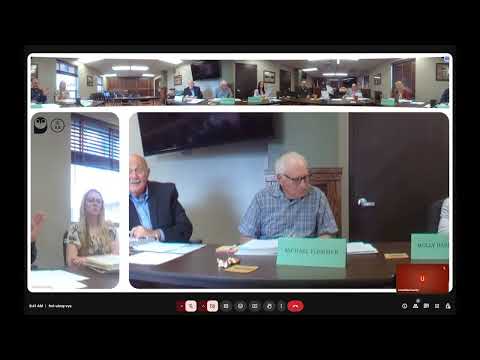
The Umatilla County Budget Committee on May 2025 met to review department budget requests and capital priorities as county leaders warned of continued uncertainty in state and federal funding. Budget committee members elected George Murdock as chair and formally approved the meeting agenda. During a brief board action while the committee briefly adjourned, the Board of Commissioners approved a CAFA grant.
County administrative services staff described information-technology investments already under way and requested continued funding for backups, cyber resilience and server upgrades. Dan Lanai, Umatilla County director of administrative services, told the committee the county secured an Oregon Emergency Management grant of about $325,000 to implement an “air-gapped cyber vault” and that the installation is complete and now in testing; reimbursement paperwork is delayed by federal-level funding changes. Lanai also briefed the committee on two county data centers, geo-diverse backups and ongoing work on network segmentation and zero-trust approaches.
Elections officials reported the operational cost to run the most recent general election was roughly $85,800 after offsetting filing fees. Steve Cragan, the county’s elections supervisor, said year-to-year costs vary with temporary staff needs for major elections and that the office is budgeting for about the same scale of expense for the coming year. Cragan reviewed a standard “cost per vote” calculation the office uses (it showed roughly $2.65 per vote in a recent cycle) and said outreach work to raise turnout—signs, radio, billboard and other paid items—has been useful but is captured across multiple budget lines.
Records and recording activity was also shown as a material revenue source: the Recorder’s office recorded about 9,000 documents in the most recent reporting year, producing about $1.8 million in receipts (much of which is remitted to the state). That office has developed a large new training manual and has begun sharing it with other Oregon counties, staff said.
Facilities and maintenance staff outlined a list of deferred and planned projects, including parking-lot repairs, plumbing fixture replacement at the jail and additional HVAC/roof work. Lanai noted the county has received contractor estimates of roughly $1.2–$1.3 million to properly replace the courthouse roof. He characterized that as a high-priority item for future capital planning but cautioned funds are limited this cycle.
The sheriff’s office presented its budget pressures, with corrections and medical costs the largest single growth driver. Capt. Kathy Frank said the county operates 24/7 medical coverage at the jail; those contracts and correctional health insurance have been rising nationally and locally. The sheriff’s command also described higher staffing needs tied to more complex medical and behavioral-health presentations among detainees, and noted the jail had carried roughly 3,700 intakes in the last year.
Community Development staff summarized economic development and tourism programs funded with state lottery and other grants. The department reported roughly $200,000 awarded in 2024 through a competitive county small-project grant program to support non‑profits, small-business building upgrades and parish/park improvements. Staff also described plans to update two “farm loop” visitor brochures and a Umatilla River Trail project funded by a nearly $6 million Oregon Community Pathways grant to build roughly two miles of multifacility river trail between Umatilla and Dunstan Road.
Other departments briefed the committee on their budget packets. IT described a multiyear equipment replacement plan, including upgrades to dispatch and camera recording systems and additional storage for public-safety video/data. Extension and 4‑H staff described a small net increase needed for salary and program support tied to a Hermiston office move and continued internship programming. The fair board’s proposed budget was reviewed and committee members raised concern that fair revenue projections and variable event costs left less cushion than in prior years.
Committee business: the body unanimously elected George Murdock as budget committee chair and approved the meeting agenda. The Board of Commissioners temporarily convened and voted to approve a CAFA grant; commissioners voted to approve the grant after a motion and second, and the grant approval was recorded as approved. Committee members were reminded that the compensation review for elected officials will be discussed later in the session; staff confirmed recommendations had been circulated for committee consideration at the end of the budget hearings.
Where the budget stands: staff and committee members repeatedly warned the committee that uncertainty at the state and federal level — including possible reductions in federal pass-throughs and a still-developing state legislative and revenue picture — means the county is taking a conservative approach to hiring and new ongoing programs. Several presenters noted that one-time grant funds (OEM cyber vault, trail grants, election grants) support projects this cycle but do not replace core operations.
The committee scheduled further sessions to continue department-level line-item review and to consider formal budget adoption, with staff advised to provide follow-ups on outstanding capital timing questions (courthouse roof, the county’s long‑term vehicle/rock‑crusher purchase plans) and responses to committee requests for more granular cost estimates on elections and correctional medical insurance.
Ending: Committee members agreed to reconvene the next day for additional line-item review; staff said they would supply prioritized lists of unfinished facility projects and updated quotes where available.