Get Full Government Meeting Transcripts, Videos, & Alerts Forever!
Get email alerts on the Foreign Policy Local Reaction topic
No spam. Unsubscribe anytime.
Grass Valley meeting features sharply divided public comments over council’s earlier ceasefire resolution
Summary
At public comment dozens of people urged the council either to defend or to rescind a previously passed ceasefire resolution, with speakers alternately praising the council’s moral stance or saying the council overstepped its jurisdiction and amplified outside groups.
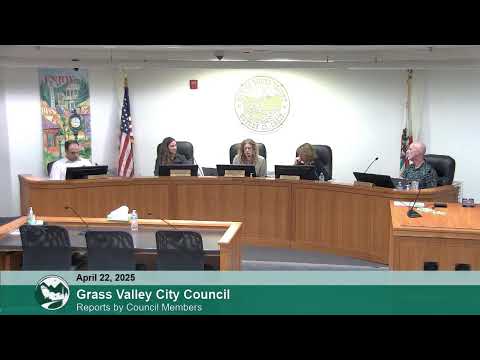
Public commenters at the Grass Valley City Council meeting on April 22 sharply disagreed about a ceasefire resolution the council adopted at a prior meeting, with multiple speakers praising the council’s action and others urging the council to rescind or reconsider it.
Mikos Faberson, who identified himself as a resident and advocate, opened the sequence of remarks urging the council to “defend its passage” of the resolution, which he said resulted from public advocacy demanding a ceasefire and an end to killing. “If anything, the resolution should have been stronger,” Faberson said, calling for a broader arms embargo in remarks to the council.
Several speakers praised the council for taking what they described as a moral stand. Noga Wazanski said the council had “demonstrated moral clarity and courage” by passing the resolution and urged the community to support the action. Don Fraser and Jeffrey Gottesman echoed that support, thanking the council for the vote and citing international human‑rights reports in their remarks.
Other speakers opposed the resolution and asked the council to reverse it. Jedidiah Watson and other callers asserted the resolution was written by outside groups and argued the council had exceeded its municipal authority. One caller said the document was authored by an organization he called CARE and urged the council to acknowledge a mistake and withdraw the resolution. Another speaker who identified herself as an Israeli American said she feared the resolution’s language had real‑world consequences for Jewish residents’ safety.
Speakers on both sides referenced national and international reporting and legal standards; several opponents said the council’s action risked polarizing the local community. Supporters described the motion as an exercise of moral responsibility and urged adherence to U.S. laws that restrict arms transfers to governments that commit human‑rights abuses.
Council members did not take new action on the resolution during this meeting; the portion of the agenda for public comment recorded these statements and returned the council to its agenda business after commenters finished. No formal reconsideration, motion to rescind or staff report on the resolution occurred during this session.
The comments reflected sustained public engagement on the topic: the meeting’s public‑comment period included multiple callers who identified themselves for and against the earlier action, and several speakers asked the council to either stand by the resolution or to start a formal process to walk it back.