Get Full Government Meeting Transcripts, Videos, & Alerts Forever!
Get email alerts on the Zone0 Home Hardening topic
No spam. Unsubscribe anytime.
Board advances 'Zone 0' rulemaking as pilots show high per‑home hardening costs
Summary
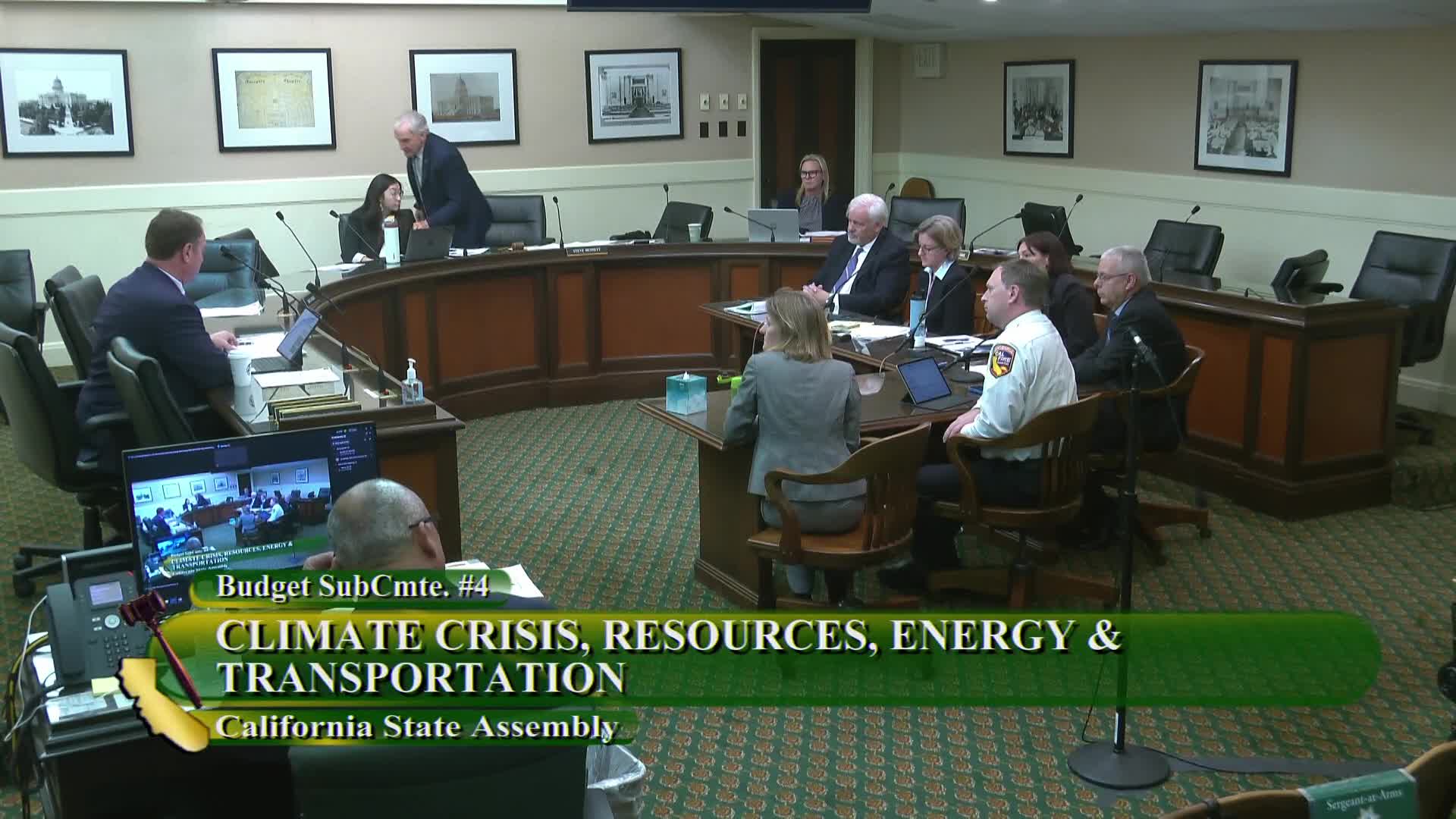
At a Budget Committee hearing, the Board of Forestry outlined draft Zone 0 rules requiring a largely ember‑free first five feet around structures; Cal OES and CAL FIRE presented pilot retrofit costs and benefit‑cost data that underscore both high per‑home costs and potential returns.
The California Board of Forestry and state wildfire agencies told lawmakers the board is preparing formal regulations to require an ember‑resistant ‘‘Zone 0’’—the first five feet around homes—and that state pilots to retrofit at‑risk houses are producing high per‑home costs but promising benefits.
Dan Stapleton of the Board of Forestry described draft Zone 0 guidance being developed under statute and an executive order. The board’s proposed rule defines Zone 0 as the first five feet around a structure and would bar combustible landscaping and materials there; the draft allows small potted plants (currently proposed at a five‑gallon maximum) and places limits on tree placement and peninsulas of combustible vegetation. Stapleton said parallel or attached fences must be noncombustible on replacement and outbuildings would need to meet State Fire Marshal 7A standards. The board plans additional public workshops, a formal rulemaking package later this year and a regulatory effective schedule that would apply immediately to new construction and allow three years for existing structures to comply once guidance and regulations are final.
State officials said compliance and local capacity are central implementation hurdles. Daniel Berlant, the state fire marshal, said the state will use guidance and qualified‑entity training to help local partners perform assessments; CAL FIRE reported roughly 300,000 defensible‑space inspections in the last fiscal year and a target universe in the State Responsibility Area of about 800,000 homes. Berlant told the committee the state has focused on Zone 0 because the first five feet is where ember accumulation most often leads to structural ignition.
Cal OES and CWMP pilot results presented to the committee show material costs and site complexity drive high retrofit prices: Cal OES reported preliminary averages of about $44,500 per structure for comprehensive home hardening and about $14,000 per structure for defensible‑space work in completed pilot homes, with variation by county and property. Lake County’s completed homes averaged just over $40,000; San Diego’s two completed homes averaged about $82,800, Cal OES said. Cal OES also reported an expected benefit‑cost ratio of roughly 4.88 for the pilot portfolio, meaning $4.88 in avoided expected damages for each dollar spent on these pilot projects, though staff cautioned that per‑home costs and scalability depend on site specifics, permitting and federal reimbursement rules.
The Insurance Institute for Business & Home Safety (IBHS) stressed that Zone 0 is the ‘‘linchpin’’ of parcel‑level protection from ember attack. Steve Hock of IBHS summarized field post‑fire investigations and lab work showing embers as the primary mechanism that spreads fire into neighborhoods: ‘‘Embers bring the fire right to your home’s doorstep,’’ he said. IBHS is preparing standards for wildfire‑prepared homes and neighborhoods that focus on roof, structure and defensible space as a system.
Panelists identified practical bottlenecks: grant reimbursement delays; shortage of qualified contractors and locally available noncombustible materials in some regions; and the need for verification or certification systems that insurers will accept as the basis for premium discounts. Committee members asked agencies to return with a consolidated checklist of regulatory language, low‑cost retrofit options, program delivery models (block grants, clearinghouses, qualified‑entity inspectors), and suggested incentives (tax credits, insurance premium discounts, property‑market signals) to accelerate retrofits at scale.
Stapleton said the Board of Forestry will continue public workshops and submit initial rule materials and an initial statement of reasons this year; the board expects formal rulemaking to proceed with public comment and hearings later in the year. Cal OES and CAL FIRE asked for legislative direction on prioritization and for continued budget support to expand pilots and build local inspection and contractor capacity.