Get Full Government Meeting Transcripts, Videos, & Alerts Forever!
Get email alerts on the Legislative Proceedings topic
No spam. Unsubscribe anytime.
Appropriations panel advances package of bills on consent and suspense calendar; topics include animal shelters, court interpreters, housing rules and consumer-
Summary
The Assembly Appropriations Committee on April 23 advanced a package of bills from the consent and suspense calendars covering animal-shelter reporting, court-interpreter bargaining, housing-permit changes, consumer privacy and other issues.
The California State Assembly Appropriations Committee on April 23 approved a proposed consent calendar and advanced a group of bills from the regular order and suspense calendars. Several measures drew brief presentations and largely supportive testimony before being moved for roll-call consideration.
Key items advanced or presented at the April 23 hearing (summaries below reflect testimony in committee and the committee—s procedural action):
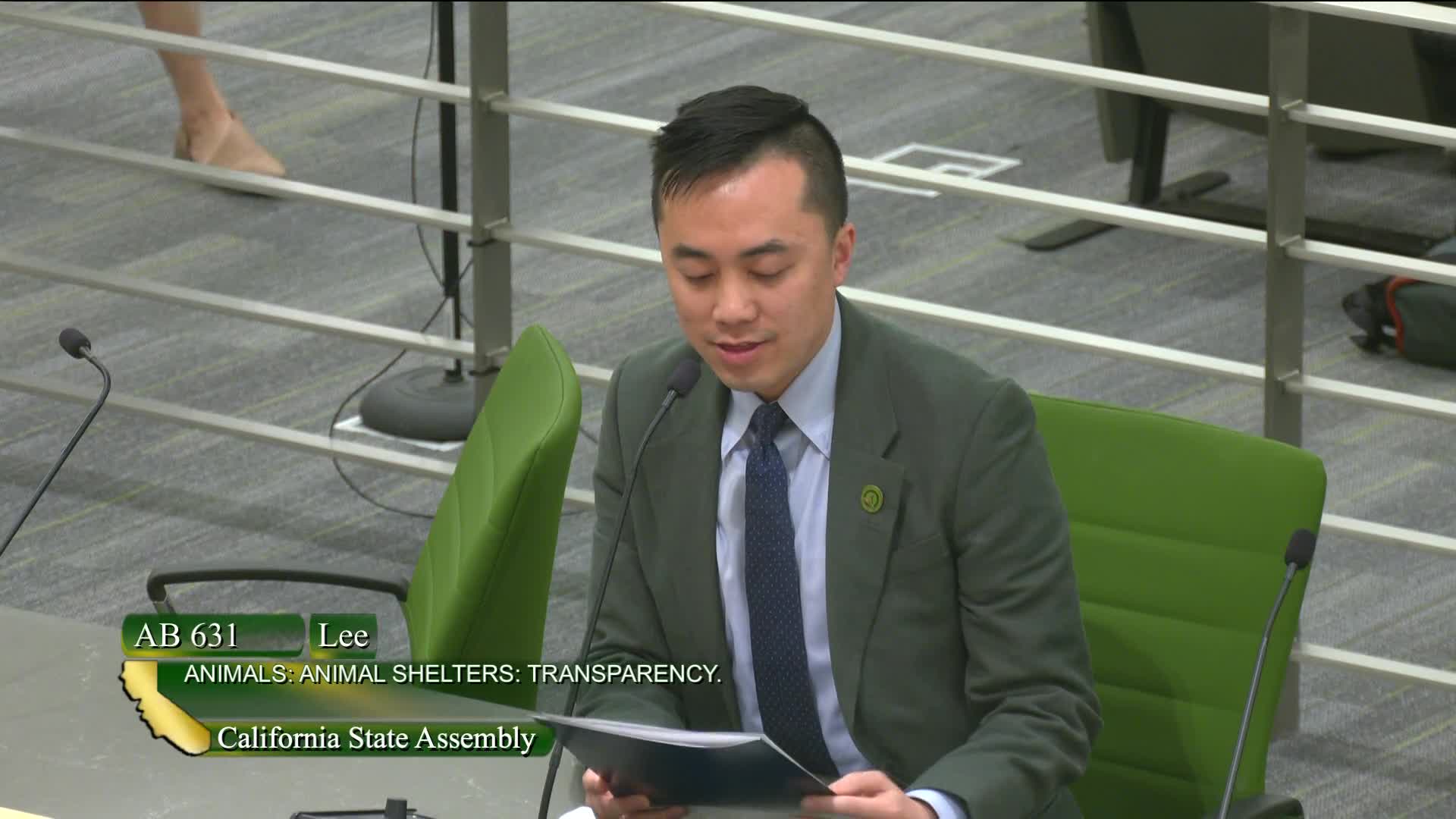
AB 631 (animal-shelter data): The bill would require animal shelters to post online data on intake sources and outcomes. The author said shelters already collect the information and costs would be minimal. CalAnimals (California Animal Welfare Association) registered "support if amended." The committee moved the bill out for roll-call consideration.
AB 792 (court interpreters bargaining): The bill would allow consolidation of regional bargaining for court interpreters when multiple regional contracts are negotiated simultaneously; the California Federation of Interpreters testified in support, noting understaffing and recruitment challenges. The committee advanced the measure; a minority conservative member voted no on a prior committee action per the record.
AB 867 (declaw ban for cats): The bill would prohibit surgical declawing of cats except when medically necessary. The Humane Veterinary Medical Alliance and the Paw Project spoke in strong support; committee analysis described fiscal costs to the Veterinary Medical Board as minor and absorbable. The committee advanced the bill; record shows Republicans did not vote on the roll call at that time.
AB 1206 (preapproved housing programs): The bill would require local agencies to establish preapproved housing programs for single-family homes and small (2—10 unit) residential developments as part of a housing-permit package. Habitat for Humanity California and other housing groups testified in support. The committee advanced the bill on a roll-call vote; a minority of Republicans did not participate in some votes per the record.
AB 787 (health-plan provider directories): The bill would require health plans to help patients find in-network providers, requiring a one-business-day response for assistance and a two-business-day list of available providers. The California Medical Association and other health groups supported the bill; the committee advanced it for roll-call consideration.
AB 596 (employee face coverings): The bill would affirm an employee—s right to wear a face covering at work unless it poses a safety hazard. The committee advanced the bill; a roll-call record noted some Republicans did not vote and one Republican voted no on a related item in the transcript.
AB 282 (housing-voucher preference clarification): The bill would clarify that prioritizing applicants who qualify for rental-assistance programs does not constitute discrimination based on source of income, permitting preferences for voucher households. The Department of Fair Employment and Housing (civil-rights enforcement) said costs would be minor and absorbable. The committee advanced the bill for roll-call consideration.
AB 738 (solar standards for disaster rebuilds): The bill would allow homeowners rebuilding after a governor-declared disaster to rebuild under the solar-energy standards in place when their home was originally constructed, rather than meeting newer, potentially costlier standards. The sponsor emphasized the measure is a narrow exemption for disaster survivors. The committee moved the bill out for a roll call.
AB 566 (consumer global opt-out): The bill would require browsers and mobile operating systems to provide an easy, global opt-out mechanism to exercise privacy rights under California law. Consumer and privacy advocates supported the bill; the Silicon Valley Leadership Group registered respectful opposition. The committee advanced the bill.
Procedure and next steps: The committee approved a proposed consent calendar, then read and deemed the suspense calendar approved for the meeting. Multiple bills were moved to roll-call consideration (A or B roll calls as recorded). Several roll-call notes in the record indicate some members of the Republican caucus did not vote on certain items; in a few instances a named member was recorded as voting no. Bills advanced from Appropriations will proceed through subsequent floor and fiscal deadlines.
Votes at a glance (committee procedural status from the hearing): AB 631 (advanced); AB 792 (advanced); AB 867 (advanced); AB 1206 (advanced); AB 787 (advanced); AB 596 (advanced); AB 282 (advanced); AB 738 (advanced); AB 566 (advanced).