Get Full Government Meeting Transcripts, Videos, & Alerts Forever!
Get email alerts on the Water Policy topic
No spam. Unsubscribe anytime.
Committee hears opposition to bill extending temporary flow rules for Klamath tributaries; farm and local officials express concern
Summary
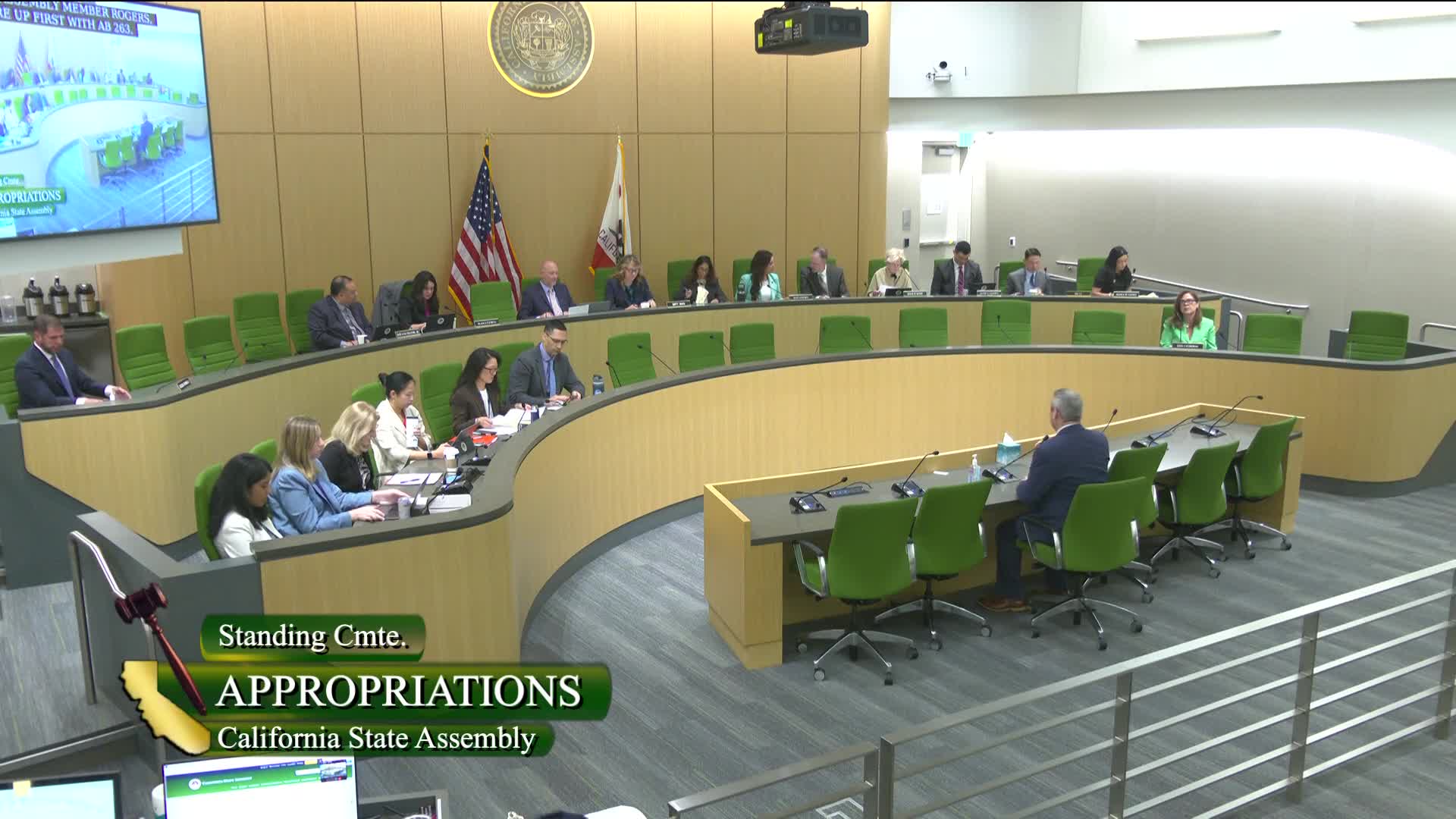
AB 263, which would allow temporary flow regulations on the Smith and Shasta rivers to remain in place for five years or until permanent rules are adopted, was presented to the Assembly Appropriations Committee on April 23 and advanced for roll-call consideration.
The Assembly Appropriations Committee on April 23 considered AB 263, a district bill that would extend temporary flow regulations on the Smith and Shasta rivers into the Klamath for five years or until permanent Department of Fish and Wildlife regulations are completed. The bill—s sponsor said the change shifts the requirement from annual reapprovals to a five-year term and that the approach would save the state an estimated $2 billion over five years.
What the author said: The bill—s presenter described AB 263 as a district measure that would "allow for those temporary regulations to hold for 5 years or until the department finishes the permanent regulations they're already working on." The presenter said that by avoiding yearly reapprovals the change "saves the state about $2,000,000,000 over the next 5 years, or, potentially more if it was going to take even longer for these regulations to get in place."
Opposition testimony: Clifton Wilson, speaking on behalf of the Siskiyou County Board of Supervisors, registered respectful opposition and asked for continued dialogue. Alex Barron, representing the California Farm Bureau, also testified in respectful opposition and described the issue as complex and potentially precedential "in terms of putting regulation inside of the water code." Melissa Kosachuk of Western Growers also registered respectful opposition.
Committee action: After witnesses testified, committee members moved the bill out for a roll-call vote. The bill was placed for an upcoming roll-call consideration in the committee schedule.
Context and limitations: Opponents emphasized the potential precedent of embedding regulatory mechanisms in the Water Code and asked for more conversation with local officials and agricultural stakeholders. The author framed the proposal as a cost-saving administrative change tied to ongoing rulemaking by the relevant state department; the committee did not adopt amendments at the hearing.