Get Full Government Meeting Transcripts, Videos, & Alerts Forever!
Get email alerts on the Criminal Justice topic
No spam. Unsubscribe anytime.
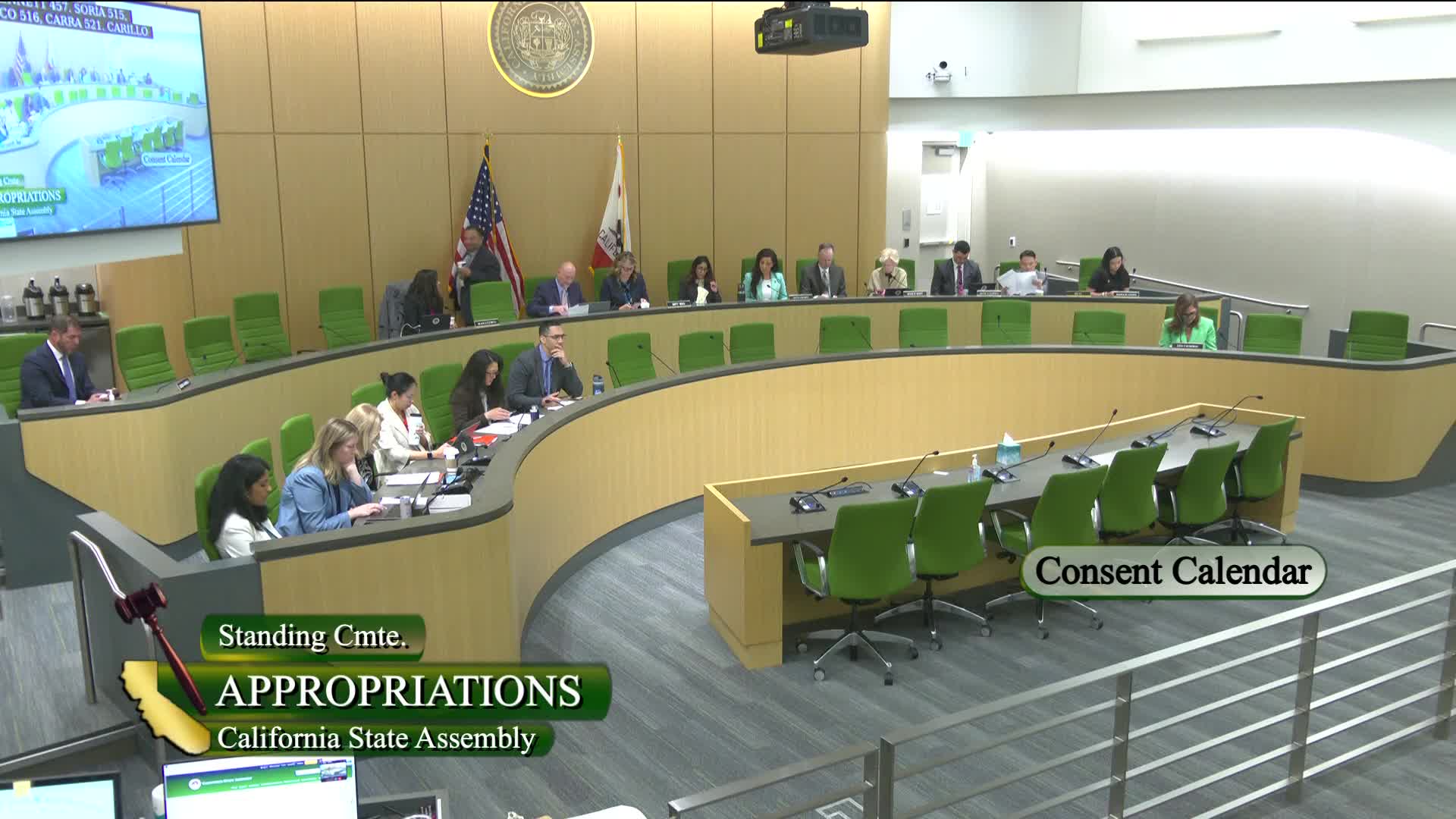
Appropriations Committee advances bill clarifying CDCR credit rules for indeterminate sentences
Summary
The California State Assembly Appropriations Committee on April 23 advanced AB 622, which clarifies that CDCR may issue credits that advance minimum eligible parole dates for people serving indeterminate sentences.
The California State Assembly Appropriations Committee on April 23 advanced AB 622, which clarifies that the Department of Corrections and Rehabilitation (CDCR) may issue credits that advance the minimum eligible parole dates of people serving indeterminate sentences.
Supporters told the committee the change restores a longstanding CDCR practice, encourages rehabilitation and produces budget savings. Assemblymember Coller, the bill—s sponsor, said the measure aims to resolve a discrepancy that has delayed parole eligibility despite parole-board recommendations and that the committee—s analysis projects tens of millions of dollars in savings and reduced staff workload if credits are clarified.
Why it matters: The bill affects people serving indeterminate terms (a range of years), a category that can include serious felonies. Backers argued the measure does not guarantee release; it restores a process by which earned credits influence the parole eligibility date and leaves actual release decisions to the parole board and subsequent review.
What supporters said: Glenn Backus, a policy consultant for the Ella Baker Center for Human Rights, told the committee that CDCR—s practice of awarding credits had demonstrable public-safety benefits and cited low recidivism for people who complete rehabilitative programming. Backus said the recidivism rate for people covered by the bill is about 2—4 percent and under 1 percent for felony crimes against another person. He also said the committee analysis estimates the bill would save more than $50 million over the next two to three years and avoid roughly 50,000 hours of additional CDCR staff work.
Opposition and concerns: Dax Proctor, speaking on behalf of a coalition that includes Bridges of Hope and the Ella Baker Center, listed support organizations; other witnesses and associations raised concerns. A representative who described positions aligned with the Peace Officers Research Association of California, Crime Victims United and the California District Attorneys Association urged caution, arguing the bill could risk public safety and noting that life and long indeterminate sentences are imposed for serious crimes. That representative also said rehabilitation data is difficult to obtain and questioned whether the bill—s public-safety impacts had been fully examined.
Author—s response and committee debate: The bill—s presenter emphasized that AB 622 would not direct the parole board to release anyone or alter parole-board procedures; it would only clarify how credits are applied so that earned credits taken into account can produce the parole-board eligibility dates the board and CDCR previously expected. The presenter said the bill is a narrow fix limited to addressing a discrepancy in credit calculation.
Committee action: The committee moved AB 622 out on a B roll call. The clerk recorded the bill as forwarded; the committee report noted one member (Pacheco) did not vote on that roll call.
Context and limitations: The committee—s discussion noted that indeterminate sentences are typically reserved for serious offenses; witnesses emphasized victims— rights to participate in parole hearings. Supporters highlighted cost savings and low recidivism among those who complete programming, while opponents said the bill raises public-safety questions and pointed to limited available rehabilitation metrics.
What—s next: AB 622 was advanced by the committee and will proceed through the legislative process for additional consideration and possible floor votes.