Get Full Government Meeting Transcripts, Videos, & Alerts Forever!
Get email alerts on the Ports And Freight Rail topic
No spam. Unsubscribe anytime.
MDOT, railroad trade group tell House panel Michigan ports and freight rail need sustained grants, partnerships
Summary
The Michigan House Appropriations Subcommittee on State and Local Transportation heard from MDOT and the Michigan Railroads Association about port and freight-rail capacity, funding and safety, with officials urging continued grants and partnerships to leverage private investment and address congested crossings.
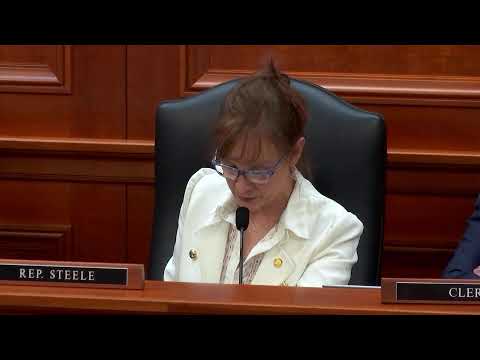
The Michigan House Appropriations Subcommittee on State and Local Transportation heard presentations Wednesday from Michigan Department of Transportation officials and the Michigan Railroads Association on the condition, use and funding needs of the state’s ports and freight rail network.
Alicia Wolf, freight policy specialist for the Michigan Department of Transportation, told the committee that Michigan has 33 active cargo ports handling about 46,100,000 tons of cargo annually, a figure she said the department values at around $9,000,000. Wolf said waterborne commerce accounts for roughly 9% of the state’s freight tonnage and 1% of freight value, and that most Michigan marine terminals are privately owned and operated.
“The maritime system in Michigan is very essential to the transportation system and the overall economy of Michigan,” Wolf said, noting ports rely on a mix of private revenue and federal and state grants. She described MDOT’s new Michigan Maritime and Port Facility Assistance Grant Program, created by Senate Bill 744 (2022) and funded with a one-time $5,000,000 appropriation in fiscal 2024, which awarded five projects designed to strengthen competitiveness, reduce freight costs and mitigate environmental impacts. Wolf said the program leveraged roughly $25,000,000 in investment and attracted 12 applications requesting about $17,000,000.
Peter Anister, director of rail at MDOT, described Michigan’s freight rail: about 3,600 miles of rail in the state, roughly 665 miles owned by MDOT, and operations by 29 railroads (four Class I carriers and 24 short lines, plus Amtrak on some corridors). Anister said MDOT’s Office of Rail has budget authorization for 41 FTEs (not all currently filled) and that most program funding (Amtrak operations, freight grants) is held in a rail operations and infrastructure line funded from the Comprehensive Transportation Fund.
Anister outlined two state grant programs: the Freight Economic Development Program (FEDP), which can fund up to 50% of shipper-side rail infrastructure and has supported about 40 projects since FY2020 producing an estimated 25,000 new carloads per year; and the Michigan Rail Enhancement Grant Program (started FY2023), a competitive program that can cover up to 70% of project costs and has funded 34 projects that MDOT estimates leveraged about $87,000,000 in private investment.
John Cool, president of the Michigan Railroads Association, emphasized safety and industry investment. He cited Federal Railroad Administration data showing a decline in derailments per million train miles over 20 years and said hazmat accident rates have fallen since 2005. “More than 99.99% of all hazmat carloads shipped in this country arrive accident release free,” Cool said.
Cool described several state programs and needs highlighted by railroad members: a local Surface Program that helps repair rough vehicle crossings (funded historically at $3,000,000 per year and increased by a one-time $2,000,000 appropriation in the most recent budget to $5,000,000 total for the period), and a grade-separation program created by recent legislation that has received initial deposits (Cool said $10,000,000 and then $5,000,000 were deposited to date). He urged continued and sustained funding for both programs and noted that grade separations often require combined local, railroad, state and federal funding.
Committee members asked MDOT and railroad representatives about ownership and operations. Wolf said MDOT does not own or operate commercial ports except that the department provides 50% of operating and capital support to the Detroit Wayne County Port Authority under state law; she said MDOT’s direct maritime staff consists of one person dedicated to maritime issues but that staff across MDOT work on related items. Anister said MDOT has operating agreements with rail operators on state-owned corridors; where a railroad operates under agreement it generally maintains and funds day-to-day maintenance, and in other arrangements carriers pay MDOT to use state-owned lines.
Members also sought examples of project impacts. Anister cited a recent FEDP-supported project in Holland in which roughly a $1,000,000 grant helped a box manufacturer create 58 jobs and generate about 450 rail carloads per year. Cool described a Grayling particleboard facility that added rail service after outreach from Lake State Railway and MDOT FEDP support; he said the site’s annual carloads have grown each year since it opened.
Questions from the committee covered comparative rail service (Anister said Michigan benefits from four Class I carriers and a dense industrial base), how MDOT charges for use of state-owned corridor (fees exist in some circumstances), and staffing and budget lines for rail and maritime. Wolf said the only ongoing MDOT line item specifically tied to a port is the 50% support for Detroit Wayne County Port Authority (she stated the department’s contribution at "hundred thousand" during the hearing). Anister said MDOT’s rail operations and infrastructure funding is primarily CTF-funded and supports Amtrak and freight grant programs.
The committee and presenters flagged several projects and program priorities for follow-up: continued competitive pursuit of federal Port Infrastructure Development Grant Program funds administered by MARAD (participants said historically little has gone to Great Lakes ports), further development of the Michigan maritime strategy (a co-funded effort by MDOT, EGLE and MEDC with University of Michigan support), additional Surface Program funding, and continued investment in grade separations and targeted rail enhancements that leverage private investment.
Votes at a glance: Representative Robinson moved to adopt the minutes of the March 16 meeting; the motion prevailed by unanimous consent. Representative Borton moved to excuse absent members; the motion prevailed by unanimous consent.
The subcommittee chair closed the meeting and said the panel expects additional stakeholder testimony in future hearings, including ports that use maritime freight facilities and other freight stakeholders.