Get Full Government Meeting Transcripts, Videos, & Alerts Forever!
Get email alerts on the Building Permits topic
No spam. Unsubscribe anytime.
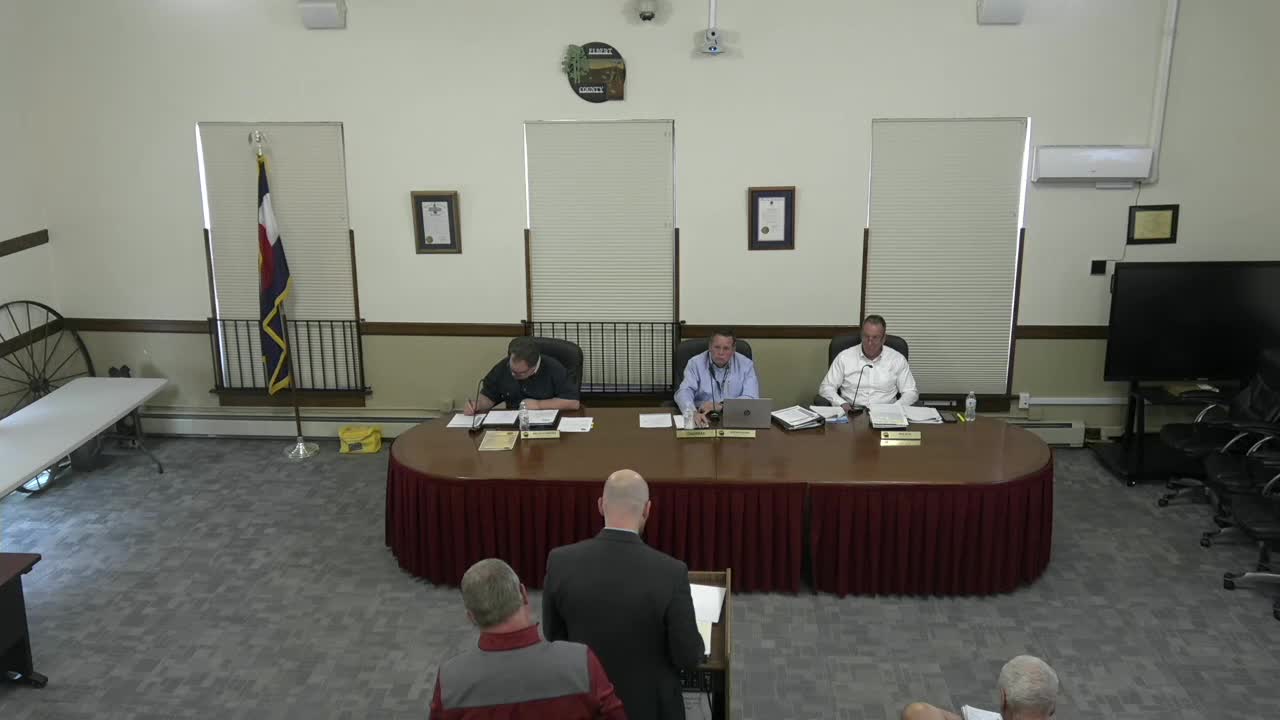
Elbert County staff propose cuts to accessory-structure and other permit fees; commissioners weigh budget impact
Summary
County staff presented options to lower permit fees for Group U (accessory structures), update IRC/ICC fee tables, reduce plan-review percentages and streamline other permit line items; commissioners requested more data on budget effects and contractor-license residency.
Elbert County staff recommended several changes to the county building permit fee schedule, including a 25% reduction for Group U (accessory structures) and updates to the International Residential Code (IRC) and International Code Council (ICC) fee tables.
The recommendations, given during a work study discussion, would lower the current ICC Group U price per square foot (presently $66.48 under the county's table) to about $49.86 if a 25% modifier is applied, staff said. Staff also proposed moving the county's formulas for residential permits from an older Universal Building Code-based table to a more recent IRC permit-fee schedule (the county could adopt the 2024 IRC fee schedule now or transition on a rolling January 1 schedule), and applying a similar Group U modifier to that table.
County staff described how the 25% reduction would apply directly to the fee formula: for example, a valuation band that currently charges $993.75 for the first $100,000 would drop to roughly $745.31 under the reduced formula, with proportional decreases to the per-$1,000 line item.
Why it matters: Staff framed the changes as targeted relief for typical homeowners doing small projects (pole barns, greenhouses, storage sheds) and as an incentive to encourage permit pulls. "Ideally, if we get them in line and it doesn't seem... fair to the citizen," a commissioner summarized when discussing the goal of increasing permit compliance.
Other proposals discussed - Plan-review fee: The county's plan-review fee is currently set at 65% of the permit fee. Staff proposed reducing that percentage only for Group U permits to either 50% or 35%, noting that other jurisdictions studied mostly keep a 65% ratio. Staff gave an example: the current plan-review portion on a sample accessory project would fall from about $900 to roughly $700 (at 50%) or $500 (at 35%). - "Other permits" flat rates: Staff proposed simplifying disparate line-item rates (for example, basement finishes) into flat fees of $30'$40 in that category instead of the existing per-square-foot structure. The current example cited: a basement finish currently priced at $141.84 per square foot under the county table would move to a flat rate under the proposal. - Contractor licensing fees: The county instituted annual contractor licensing fees in 2023 to curb transient "fly-by-night" companies. Licensing fees currently range from $100 to $125. Commissioners asked for a breakdown of how many licensees are in-county versus out-of-county; staff did not have that figure on hand and agreed to return with analysis. Staff estimated that cutting the licensing fee in half would reduce revenue roughly by $30,000 annually.
Budget implications Staff ran fourth-quarter 2024 figures forward to estimate fiscal impact. The staff estimate showed roughly $265,000 in reduced revenue for the permit-fee adjustments discussed (Group U modifier, other-permit flat rates, and plan-review reductions). For context, the 2025 building-department projections listed expenses near $1.5 million and projected permit-fee revenues of about $2.6 million (staff noted that the department has added staff and is moving away from contract services, which could generate savings of roughly $200,000). Staff also warned that building-permit activity has slowed in 2025 so far and that first-quarter results trailed projections by roughly $100,000.
Commissioner questions and follow-ups Commissioners pressed staff for additional detail on the distribution of contractor-license holders (in-county vs. out-of-county), the specific budget model tying fee reductions to personnel changes, and historical comparisons with peer counties. Staff agreed to provide the residency breakdown for contractor licenses, more precise revenue projections tied to the proposed fee changes, and to bring recommended language for any fee ordinance or schedule change back to a future public hearing.
What happened next: No formal vote was taken on fee changes during the meeting; staff said they would return to a future public hearing with more information. The presenters also said they would update the building-department web pages to explain use-tax and permit-payment options for the public.
Ending Staff signaled they will return with a proposed ordinance/schedule and detailed budget impact numbers. Commissioners asked staff to return with the county contractor-licensing residency breakdown and refined revenue estimates before any final action.