Get Full Government Meeting Transcripts, Videos, & Alerts Forever!
Get email alerts on the Mega Credits topic
No spam. Unsubscribe anytime.
Lawmakers Hear Treasury, Critics on MEGA Credits, Tax Liability and Disclosure
Summary
Treasury officials told a House subcommittee that MEGA credits are administered via certificates from the Michigan Economic Development Corporation and that Treasury lacks enforcement authority; outside critics urged greater transparency and a review of whether the state is receiving promised fiscal benefits.
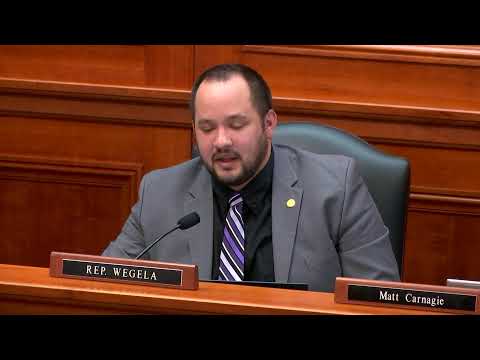
LANSING — Officials from the Michigan Department of Treasury told the House Oversight Subcommittee on corporate subsidies and state investments on May 20 that MEGA (Michigan Economic Growth Authority) tax credits remain sizable on the state’s books and are administered using certificates issued by the Michigan Economic Development Corporation, while a policy analyst from the Mackinac Center for Public Policy called for greater transparency and a reevaluation of the program’s fiscal effects.
At the hearing, Amanda West, deputy treasurer for advocacy, policy and analysis, and Chief Deputy Treasurer Jeff Guilfoyle outlined the history of Michigan’s business taxes and summarized how legacy MEGA credits interact with the state’s current corporate income tax (CIT). “Taxpayers with certificated credits like MEGA continue to file under the MBT until their credits end,” Guilfoyle said, describing the filing rule that requires taxpayers to compute liability under the old Michigan Business Tax (MBT) and the CIT and to pay the greater of the two before refundable credits are applied.
The distinction matters because MEGA credits are refundable: when a certificated credit exceeds a taxpayer’s liability, the excess is paid as a refund. Guilfoyle said Treasury’s most recent compilation, drawn from Michigan Economic Development Corporation (MEDC) reports, shows roughly $3 billion in outstanding certificated MEGA credits tied to tax years 2023–2029; those credits will affect state fiscal years 2025–2031. He further said about eight companies still claim MEGA credits, supporting roughly 100,000 created and retained jobs and roughly $11 billion in compensation as presented in MEDC/Treasury reports.
Guilfoyle told the committee Treasury administers the MBT filings and uses MEDC-issued certificates to document claimed credits but does not have statutory authority to verify MEGA compliance. “The Treasury Department does not have a role in ensuring compliance with the MEGA credits. That role is the MEDC’s exclusively under statute,” he said. He added that Treasury treats individual taxpayer information as confidential under the state revenue law and typically refers requests for company-specific MEGA documentation back to the MEDC in light of a recent Michigan Supreme Court decision.
Several committee members pressed the department on the program’s fiscal effects and on what information is publicly available. Guilfoyle summarized recent tax-year data presented on the committee slide deck: for the most recent tax year Treasury still had about 80 taxpayers filing under the legacy MBT; MBT liability before refundable credits was shown as about $69 million, an adjustment to reflect the greater-of-MBT-or-CIT calculation added about $61 million, and MEGA refundable credits were listed at about $495 million, producing a net MBT-paid figure that was negative roughly $370 million for that tax year. Guilfoyle also noted those companies pay other state taxes, such as withholding (reported around $250 million in the most recent year), sales and property taxes.
Representative Posky and others asked about disclosure after a Supreme Court ruling. Guilfoyle said the court’s decision requires disclosure at least of the MEGA program cap and that MEDC is the entity to contact for company-specific certificate details; he said Treasury shares tax data with other state entities including the Office of the Auditor General under tax-sharing agreements that impose confidentiality protections.
James Hohman, director of fiscal policy at the Mackinac Center for Public Policy, urged statutory changes to improve transparency and questioned whether MEGA delivers promised net fiscal benefits. “MEGA credits have turned the Michigan business tax from something that raises revenue for the state government to something that delivers public funds to 8 to 12 specific companies,” Hohman said. He told the committee his review found that past state economic-development job announcements frequently fell far short of initial promises and urged lawmakers to consider performance standards and statutory clarification on disclosure.
During Q&A, members asked whether MEGA refunds comply with the Michigan Constitution’s appropriation and public-record provisions (Article 9, sections 17 and 23 were cited during the hearing). Treasury witnesses responded that refunds to entitled taxpayers are paid under existing statutory authority and that adjustments to confidentiality law (the Revenue Act provision referenced during the hearing) would be a legislative remedy if members seek broader disclosure of individual taxpayer information.
The hearing included detailed questioning about how MEGA credits were calculated, the legacy MBT credits that remain in force for some taxpayers, and whether the state benefits on net from the credits awarded decades earlier. No formal policy votes or new legislative actions were taken at the hearing; members indicated ongoing interest in pursuing statutory changes or requesting further information from the MEDC and the Office of the Auditor General.
Treasury and MEDC materials cited at the hearing and an annual certificated-credit report were referenced repeatedly; the department said the MEDC provided a copy of the certificated-credit report at the MEDC presentation and that members can request it if they need a copy.
Committee business at the start of the meeting included a motion by Representative Bierlein to approve the minutes of the April 16 meeting; the motion passed without objection.